
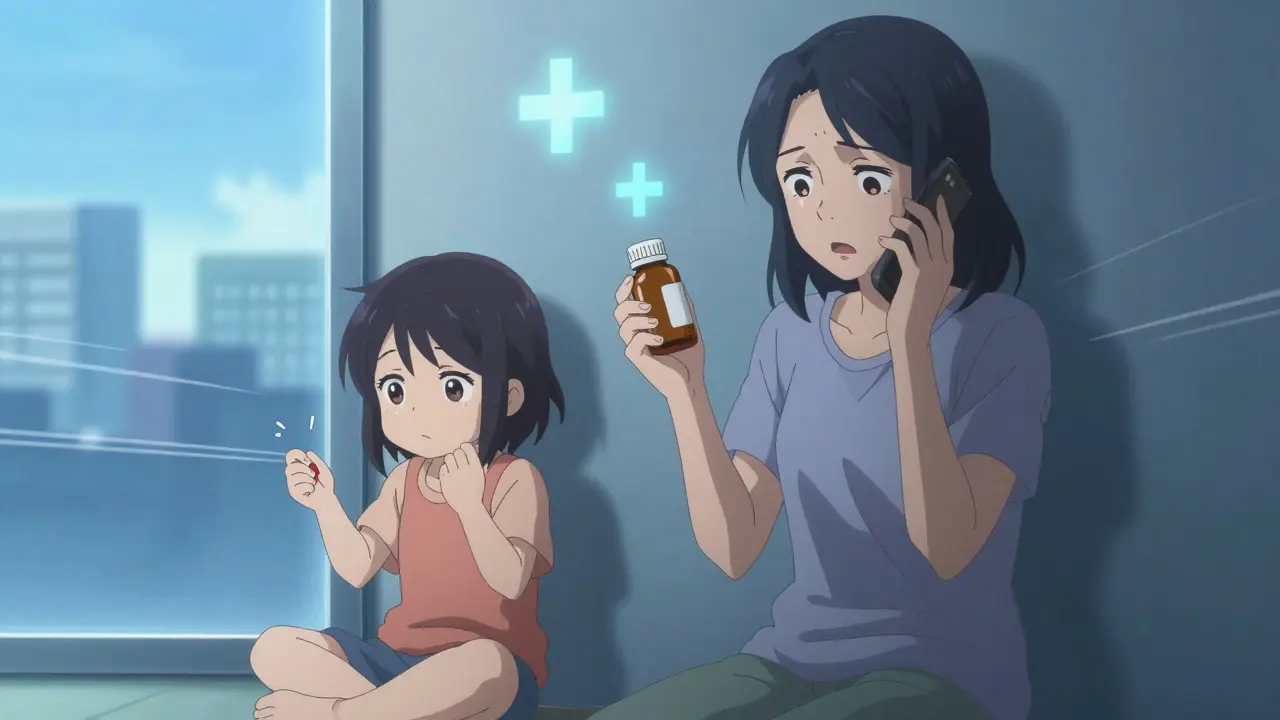
Every year, over 2.1 million people in the U.S. call the Poison Control Hotline because of a medication mistake. It could be a child swallowing a parent’s pill, an adult mixing painkillers with sleep aids, or someone unsure if a new prescription is safe with their other meds. These calls don’t always mean a trip to the ER. In fact, 60% of medication-related poison exposures are handled safely at home - thanks to expert advice you can get in under five minutes, for free.
How the Poison Control Hotline Actually Works
The number is simple: 1-800-222-1222. You don’t need to pay, register, or even give your name. Just call. Your call gets routed to the nearest accredited poison control center based on your area code. There’s no waitlist. No voicemail. A specialist answers - usually a pharmacist, nurse, or doctor trained in toxicology. These specialists don’t guess. They use over 1,500 evidence-based algorithms developed by toxicology experts. Each one is built on real-world data from millions of past cases. When you call about a medication, they don’t ask, “Did they take too much?” They ask: What’s the exact name? How much? When? How old and how much does the person weigh? Are they showing any symptoms? You can also text “poison” to 797979 or use the webPOISONCONTROL tool online. The web tool walks you through six questions - substance, amount, age, weight, time, and zip code - and gives you a risk level and action plan in about 2.6 minutes. It’s 97% accurate compared to human specialists.What You Must Report About Medications
Don’t say “I took Tylenol.” That’s not enough. Say: “My 3-year-old swallowed 12 tablets of Tylenol Extra Strength, 500mg each, at 2:45 PM today. She weighs 15 kilograms and has been vomiting since 3:10 PM.” Why so specific?- Brand and generic names matter. Tylenol, acetaminophen, and paracetamol are the same drug. But some people don’t know that. If you say “Tylenol,” they’ll know. If you say “acetaminophen,” they’ll know. But if you say “painkiller,” they might miss it.
- Strength is critical. A 325mg acetaminophen tablet is different from a 500mg one. Taking five of the 500mg tablets can be dangerous. Five of the 325mg might not be.
- Weight in kilograms. Dosing is calculated by body weight. A 20kg child and a 70kg adult need completely different responses to the same dose.
- Time since ingestion. For some drugs, the first 2-4 hours are the most critical. If you took a drug 30 minutes ago, they might tell you to wait and watch. If it’s been 8 hours, they might say you need to go to the hospital now.
- Symptoms. Nausea? Drowsiness? Trouble breathing? Sweating? Each one changes the risk level.
Why This Service Saves Lives - and Money
In 2019, poison control centers saved the U.S. healthcare system $1.8 billion by preventing unnecessary ER visits and hospitalizations. For every dollar spent on the service, society gains $7.67 in saved medical costs and lost productivity. The majority of calls - 45% - involve medications. Of those, nearly half are accidental ingestions by children. In 83% of pediatric cases, specialists prevent hospital trips by giving clear home-care instructions. One real example: A mother in Ohio called after her 2-year-old ate 15 pills of her antidepressant. The specialist told her to give activated charcoal, monitor breathing, and watch for drowsiness. They called back at 4, 8, and 24 hours. The child never needed an ER visit. The mother later said, “They knew exactly what to do - I didn’t even know what to ask.”
What They Don’t Handle - And What to Do Instead
The hotline doesn’t handle intentional overdoses. If someone is trying to harm themselves, call 988 (the Suicide & Crisis Lifeline) or 911 immediately. The system also can’t manage exposures to more than two substances at once. If someone took a mix of pills, alcohol, and a recreational drug, you still call 1-800-222-1222 - but expect to be transferred to a specialist who can handle complex cases. They also don’t replace emergency care. If someone is unconscious, having seizures, struggling to breathe, or turning blue - call 911 right away. Poison control can help you while you wait, but they won’t send an ambulance.How the System Keeps Improving
Every poison exposure is logged into the National Poison Data System (NPDS), the only real-time national database of poisoning cases. It’s updated every 15 minutes. This lets experts spot new threats fast. In 2019, NPDS flagged a spike in gabapentin overdoses. In 2021, they identified synthetic cannabinoid-related bleeding disorders. Both led to updated guidelines within weeks. Since 2023, the CDC has funded $4.7 million to improve algorithms for new painkillers, weight-loss drugs, and psychoactive substances. Some centers now offer video consults for complicated cases. And 42 major hospitals now automatically send poison exposure data to the system - cutting response time and improving tracking.
What to Do If You’re Not Sure
If you’re wondering whether something is dangerous - call. Don’t wait. Don’t Google it. Don’t ask a friend. Don’t assume it’s “probably fine.” Here’s what to do:- Find the medication bottle. Write down the full name, strength, and number of pills missing.
- Check the person’s weight in kilograms (if you don’t know it, estimate - better than nothing).
- Write down when it happened and what symptoms you see.
- Call 1-800-222-1222. Or text “poison” to 797979.
- Keep the email summary they send you. It includes exact instructions and when to call back.
Common Myths About Poison Control
- Myth: “I’ll get in trouble for calling.”
Truth: No one is judged. No one is reported. It’s confidential. The goal is to help, not punish. - Myth: “It’s only for kids.”
Truth: Over half of calls involve adults - especially seniors mixing meds or people taking new prescriptions. - Myth: “If they say ‘it’s fine,’ it must be safe.”
Truth: Some drugs cause delayed damage. Acetaminophen can kill your liver in 72 hours. That’s why they call you back. - Myth: “I can just wait and see.”
Truth: For many toxins, timing is everything. Waiting even an hour can change the outcome.
Final Thought: Don’t Wait Until It’s Too Late
Medication errors are common. They happen to good people. The Poison Control Hotline exists so you don’t have to panic alone. You don’t need to be an expert. You just need to call. Keep 1-800-222-1222 saved in your phone. Put it on your fridge. Tell your family. It’s not a last resort. It’s your first line of defense.Is the Poison Control Hotline really free?
Yes. There is no charge to call 1-800-222-1222 or use the webPOISONCONTROL tool. The service is funded by government grants, hospital support, and state programs. You don’t need insurance. You don’t need to pay anything.
Can I call for a pet’s medication overdose?
The Poison Control Hotline handles human exposures only. For pets, contact the ASPCA Animal Poison Control Center at 1-888-426-4435. There’s a fee for this service, but they’re specialists in animal toxicology. Never wait to call if your pet ate a human medication - some are deadly even in tiny amounts.
What if I don’t know the exact medication name?
Bring the bottle to the phone or take a photo. If you can’t, describe the pill: color, shape, markings (like “M 15” or “V 3097”), and what it was prescribed for. Specialists can often identify it from that. Don’t guess - say “I’m not sure” and let them help.
Do they speak languages other than English?
Yes. The hotline offers translation services in over 150 languages. Just say the language you need when you call. A translator will join the call within seconds. No need to find someone to translate for you.
Will calling poison control get me in trouble with my doctor?
No. Poison control centers are confidential and do not report calls to doctors, pharmacies, or law enforcement unless there’s an immediate threat to life (like a child in danger). Their job is to help, not judge. You’re not breaking any rules by calling - you’re doing the right thing.
How fast do they respond?
Most calls are answered within 15 seconds. The average consultation lasts 8-12 minutes. For webPOISONCONTROL, you get a response in under 3 minutes. If you’re calling about a child or a serious overdose, they prioritize your call.
What if I’m not sure if it’s an emergency?
Call anyway. The specialists are trained to tell the difference between a minor exposure and a life-threatening one. Even if you’re wrong, they’ll tell you. It’s better to call and be told it’s fine than to wait and risk something serious.
 Medications
Thomas Anderson
December 15, 2025 AT 12:14Just saved 1-800-222-1222 in my phone right after reading this. My niece is always climbing on counters and grabbing stuff. I used to panic and Google it - now I know I can just call and get real help in minutes. No judgment, no cost, no hassle. Seriously, everyone should have this number.
Alexis Wright
December 17, 2025 AT 01:02Let’s be real - this whole system is a band-aid on a gunshot wound. We live in a society where people can’t read labels, don’t know what acetaminophen is, and still think ‘natural’ means ‘safe.’ Poison Control exists because we’ve collectively dumbed down healthcare to the point where a 3-year-old can outsmart a parent’s pill bottle. The real problem? Pharma companies pushing 15 different versions of the same drug under different names. The hotline doesn’t fix that - it just cleans up the mess.
Daniel Wevik
December 18, 2025 AT 07:00As a former ER nurse turned toxicology consultant, I’ve seen the data. This system isn’t just convenient - it’s revolutionary. The NPDS database is the most underappreciated public health asset in America. Every 15-minute update? That’s real-time surveillance. That’s how we caught the gabapentin spike before it became a national crisis. This isn’t just a hotline - it’s a national early-warning system. And it’s free. You’re welcome.
Tim Bartik
December 19, 2025 AT 09:50Y’all act like this is some miracle from the gods but lemme tell ya - this is just the government’s way of keeping us docile. Who pays for this? Who’s really behind the ‘free’ hotline? Big Pharma? The AMA? They don’t want you dying in the ER - they want you calling them first so they can steer you away from lawsuits. And don’t get me started on ‘webPOISONCONTROL’ - that’s just a corporate funnel. They ain’t saving lives, they’re saving $$$.
Rich Robertson
December 20, 2025 AT 11:17My dad’s from Mexico City and he used to say, ‘En casa, la medicina se guarda como el dinero.’ At home, medicine is kept like money - locked away, counted, respected. That’s the cultural difference. In the U.S., we treat pills like candy. Poison Control works because it bridges that gap - it doesn’t judge, it just guides. And yeah, they speak Spanish, Tagalog, Arabic, Mandarin - all of it. That’s not just service. That’s dignity.
Natalie Koeber
December 20, 2025 AT 13:46Did you know the CDC has been quietly using this data to track ‘pharmaceutical social decay’? The spike in weight-loss drug overdoses? That’s not an accident. It’s a targeted destabilization of working-class families. The ‘free hotline’ is just a PR tool to make people think they’re safe while the real agenda - controlling drug access through fear and dependency - plays out behind closed doors. I’ve seen the documents. They’re not helping us. They’re managing us.
Wade Mercer
December 20, 2025 AT 17:38I called this line once after my sister took 3 Advil with her wine. She was fine. But I felt like a terrible person for even thinking it might be a problem. Then the specialist said, ‘You did the right thing.’ That’s the moment I realized: this isn’t about punishment. It’s about compassion. And we need more of that.
Dwayne hiers
December 20, 2025 AT 20:20For those asking about pediatric dosing: the 15kg example isn’t arbitrary. Acetaminophen toxicity thresholds are weight-based at 150 mg/kg for acute ingestion. That’s 2.25g for a 15kg child. A 500mg tablet is 1/4 of that threshold - so 5 tablets = 2.5g = toxic. The hotline’s algorithm accounts for pharmacokinetics, hepatic metabolism, and time-dependent NAPQI accumulation. WebPOISONCONTROL’s 97% accuracy comes from 2.3 million validated cases in NPDS. This isn’t guesswork. It’s precision toxicology at scale. And yes - it’s free. Use it.