
Antihistamine-Alcohol Risk Calculator
How Safe Is Your Combination?
Based on the article research, mixing antihistamines and alcohol significantly increases drowsiness risk. Enter your specific combination to see your risk level.
Warning: Even one drink significantly increases drowsiness risk with antihistamines. This combination can impair driving, cause falls, or lead to respiratory depression. Never mix these substances if you need to operate machinery or drive.
It’s easy to think of antihistamines as harmless - you take one for a stuffy nose, itchy eyes, or a sneeze attack, and you go about your day. But if you’ve ever had a drink after popping a pill, you might not realize how risky that combo really is. Mixing antihistamines and alcohol doesn’t just make you a little tired. It can turn a normal night into a medical emergency.
Why This Mix Makes You Sleepier Than Either Alone
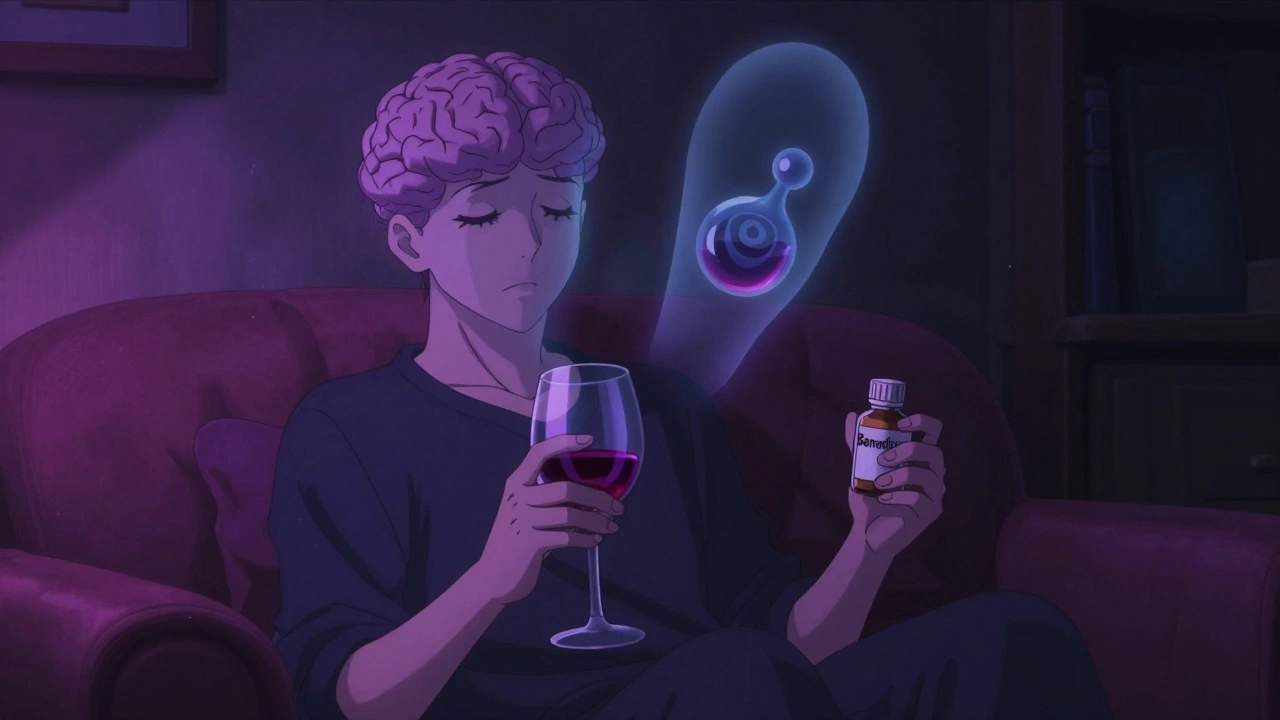
Both alcohol and first-generation antihistamines like diphenhydramine (Benadryl) slow down your brain. They don’t work the same way, but together, they amplify each other. Alcohol boosts calming signals in your brain (GABA) and shuts down alerting ones (NMDA). Benadryl blocks histamine, a chemical that keeps you awake. When you combine them, your brain gets hit from both sides. The result? A 300% increase in drowsiness compared to using either one alone, according to the National Institute on Alcohol Abuse and Alcoholism.
Think of it like hitting the brakes with both feet. One foot (alcohol) slows you down. The other foot (antihistamine) slams them harder. You don’t just feel sleepy - you can’t stay awake. And it doesn’t matter if you’re drinking one beer or three. Even small amounts can push you past safe limits.
Not All Antihistamines Are the Same
There’s a big difference between old-school antihistamines and the newer ones. First-generation drugs like diphenhydramine (Benadryl), chlorpheniramine, and doxylamine were designed to cross into your brain. That’s why they make you drowsy - and why they’re used in sleep aids. About half of people who take them feel sleepy. When you add alcohol, that number jumps to 60% or higher.
Second-generation antihistamines like loratadine (Claritin), cetirizine (Zyrtec), and fexofenadine (Allegra) were made to avoid the brain. They’re called "non-drowsy" for a reason. Alone, they cause drowsiness in only 6-15% of users. But alcohol changes that. With just one drink, Zyrtec users report drowsiness in up to 45% of cases. Claritin goes from 10% to 35%. That’s not a small risk - it’s a sharp spike.
And here’s the catch: even "non-drowsy" labels don’t warn you about alcohol. The FDA doesn’t require OTC products to mention it. So you’re left guessing. You think you’re safe because you picked Zyrtec. You’re not.
The Real Danger: Driving, Falling, and Stopping Breathing
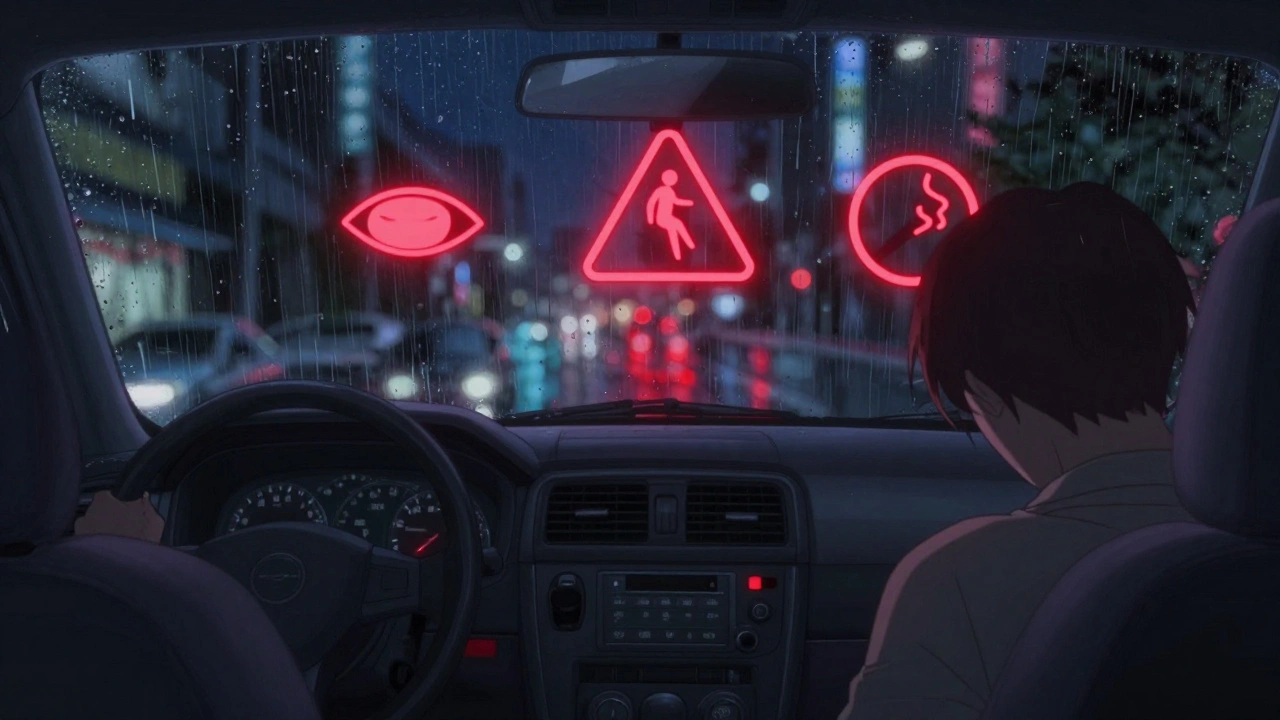
Drowsiness sounds mild until it’s not. The CDC found that 28% of traffic deaths in 2021 involved drivers with both alcohol and sedating medications in their system. That’s not just sleepy eyes - it’s delayed reaction time, poor judgment, and microsleeps behind the wheel.
Studies show that taking two Benadryl tablets (50mg) with three drinks creates impairment equal to a blood alcohol level of 0.12-0.15%. That’s 50% over the legal driving limit in every U.S. state. You don’t need to be "drunk" to be dangerous.
It’s not just cars. Older adults are at even higher risk. People over 65 experience 2.3 times more brain slowdown from this combo than younger people. That means more falls, more hip fractures, and more confusion. One study found that 53% of seniors who mixed even a small drink with antihistamines reported memory loss or disorientation.
And yes, it can stop your breathing. In emergency rooms, 42% of cases involving this mix required hospitalization because of severe respiratory depression. That’s not rare. It’s common enough that the American Academy of Allergy, Asthma & Immunology called it a "public health concern."
Where You Might Not Expect to Find Antihistamines
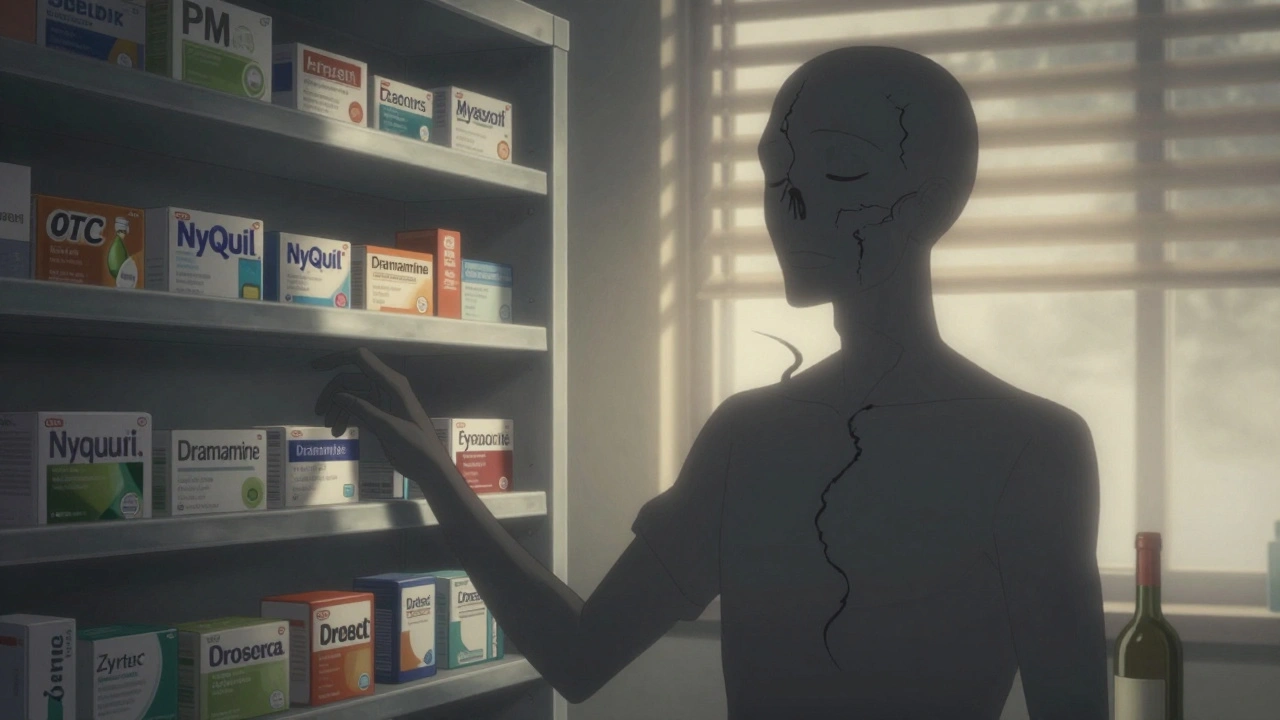
You might think you’re only taking one thing. But diphenhydramine hides in plain sight. It’s in 72 different over-the-counter products. That includes:
- 34 sleep aids (like Tylenol PM, Nytol, Sominex)
- 18 cold and flu medicines (like NyQuil, DayQuil Severe)
- 20 motion sickness pills (like Dramamine)
If you took a cold medicine at night, had a glass of wine, and woke up groggy - that’s why. You didn’t mean to mix them. You just didn’t know.
Read labels. Look for "diphenhydramine," "doxylamine," or "PM" on the ingredients list. If you see it, avoid alcohol completely that day.
What About Second-Generation Antihistamines? Are They Safe?
No. Not really. Even if you take Claritin or Zyrtec, alcohol still increases drowsiness. Clinical data shows that when alcohol is involved, drowsiness rates jump from 10% to 30-45%, depending on the drug and dose.
Dr. Purvi Parikh, an allergist with the American Academy of Allergy, Asthma & Immunology, says: "The misconception that non-drowsy antihistamines are safe with alcohol is dangerous."
One study of 3,500 medication reviews found that 41% of people who took Claritin and drank alcohol reported unexpected drowsiness. For Zyrtec, it was 37%. These aren’t outliers. They’re the norm.
And here’s something most people don’t know: alcohol slows down how your liver breaks down antihistamines. That means the drug stays in your system 25-40% longer. So even if you wait a few hours after taking your pill, the alcohol is still making it stronger.
What Should You Do Instead?
If you need allergy relief and plan to drink, here’s what actually works:
- Use nasal sprays like Flonase or Nasacort. These don’t enter your bloodstream the same way. No drowsiness. No interaction with alcohol.
- Try leukotriene blockers like Singulair. These are taken daily and don’t interact with alcohol - but they take 3-7 days to work, so plan ahead.
- Switch to non-sedating options like cetirizine (Zyrtec) or loratadine (Claritin) - but still avoid alcohol. Just because it’s "less" drowsy doesn’t mean it’s safe.
- Wait 12-16 hours after taking Benadryl or similar drugs before drinking. For Claritin or Zyrtec, wait at least 8-12 hours.
And if you’re ever unsure - skip the drink. Your body doesn’t need the extra stress.
Why People Keep Doing It
A 2023 Consumer Reports survey found that 63% of antihistamine users regularly drink alcohol within 12 hours of taking their meds. Only 28% knew the risks.
Why? Because the warnings are buried. Labels say "may cause drowsiness." They don’t say "can kill you if you drink." Social media is full of people bragging about "Benadryl and wine" as a sleep hack. It’s normalized. But it’s not safe.
Emergency visits for this mix have risen 37% since 2018. The biggest jumps? Adults 50-64 and women. Why? Because more people in these groups are using OTC meds regularly - and more are drinking.
What’s Next?
Pharmaceutical companies are working on third-generation antihistamines like bilastine, which show almost zero brain penetration even with alcohol in the system. But these aren’t available in the U.S. yet. And even if they were, the advice would still be the same: don’t mix.
The science is clear. The risks are real. The consequences can be deadly.
You don’t need to give up your weekend drinks. You just need to know when to put the pill down - and when to put the glass down.
Can I have one drink with Zyrtec?
Even one drink can increase drowsiness with Zyrtec from 15-20% to 40-45%. You might feel fine, but your reaction time, balance, and decision-making are impaired. It’s not worth the risk, especially if you’re driving, operating machinery, or need to be alert.
Is Benadryl more dangerous with alcohol than other antihistamines?
Yes. Benadryl (diphenhydramine) is a first-generation antihistamine designed to cross into the brain. When combined with alcohol, it causes severe drowsiness in 60% or more of users. It also increases the risk of breathing problems, falls, and accidents more than any other OTC antihistamine. Avoid alcohol completely if you take Benadryl.
What if I take antihistamines for sleep and drink at night?
This is one of the most dangerous habits. Many sleep aids contain diphenhydramine or doxylamine. Adding alcohol doesn’t just make you sleep deeper - it can suppress your breathing and cause you to stop waking up when you need to. People have been found unconscious the next morning after combining these. Don’t do it.
How long should I wait after taking antihistamines before drinking alcohol?
For first-generation antihistamines like Benadryl, wait at least 12-16 hours. For second-generation ones like Claritin or Zyrtec, wait 8-12 hours. But keep in mind: alcohol slows how your body clears the drug, so the wait time isn’t guaranteed. If you’re unsure, skip the drink.
Are there any allergy meds that are safe with alcohol?
Nasal corticosteroids like Flonase and Nasacort, and leukotriene inhibitors like Singulair, have no known interaction with alcohol. They’re not instant relief like antihistamines - they take days to work - but they’re your safest bet if you plan to drink. Talk to your doctor about switching if you drink regularly.
 Medications
Rich Paul
December 9, 2025 AT 15:05bro i took benadryl before a party last month and thought i was being chill with my 2 beers… turned out i blacked out for 40 mins and woke up on the couch with my dog licking my face. no joke. the docs said my bAC was .08 but the benadryl made it feel like .18. brain just shut off. never again.
Delaine Kiara
December 9, 2025 AT 21:45OMG I JUST REALIZED I’VE BEEN DOING THIS FOR YEARS. ZYRTEC + WINE = MY SUNDAY NIGHT ROUTINE. I THOUGHT I WAS JUST ‘RELAXING’… BUT NOW I’M WORRIED I’VE BEEN SLEEPWALKING AND FORGETTING THINGS BECAUSE OF THIS. MY DOG STARTED BARKING AT ME AT 3AM LAST WEEK AND I DIDN’T EVEN REMEMBER GETTING UP. IS THIS A THING? IS THIS WHY I’M SO MESSY ALL THE TIME??
Ruth Witte
December 11, 2025 AT 05:53YESSSS THIS IS SO IMPORTANT 💪✨ I used to think ‘non-drowsy’ meant ‘safe with wine’… NOPE. 🚫🍷 I switched to Flonase and my life changed. No more 3pm naps, no more ‘did I text my boss?’ panic. You deserve to be alert, not zombie-mode. Go get that nasal spray! 🏆🌈
Katherine Rodgers
December 12, 2025 AT 03:44so let me get this straight… the fda lets companies sell drugs that can kill you if you drink… but they won’t make them put a skull emoji on the bottle? genius. i’m sure the pharma bros are sipping chardonnay while drafting those labels. ‘may cause drowsiness’ lol. i’ll take my chances with the ghost of benadryl.
Lauren Dare
December 13, 2025 AT 14:55the fact that ‘non-drowsy’ is a marketing term, not a clinical guarantee, is criminal. you’re not ‘safe’ just because the label says ‘claritin’ - you’re just *less* likely to crash your car. that’s not safety, that’s a statistical loophole. read the full ingredients list. if it says ‘PM’ - it’s a sedative. period.
Gilbert Lacasandile
December 15, 2025 AT 08:21i didn’t know this was a thing until my mom got hospitalized after mixing nyquil and a glass of wine. she’s 62. didn’t even realize nyquil had benadryl in it. now she uses flonase and i get her those little nasal spray holders. it’s weird how something so common can be so dangerous if you don’t know the fine print.
Lola Bchoudi
December 15, 2025 AT 17:42if you’re using antihistamines regularly, you need a plan. don’t just wing it with whatever’s on the shelf. talk to your pharmacist - yes, they’re actually trained for this. ask: ‘what’s the safest option if i drink occasionally?’ they’ll point you to flonase or singulair. it’s not hard. you just have to ask. your future self will thank you.
Morgan Tait
December 15, 2025 AT 23:07you know who’s behind this? the sleep aid industry. they want you to think ‘benadryl + wine’ is a chill combo so you keep buying it. but what if the government is letting this happen because they want us tired? think about it - sleepy people don’t protest. sleepy people don’t organize. sleepy people just scroll. they’re turning us into zombies with a side of zzz’s. 🕵️♂️👁️🗨️
Darcie Streeter-Oxland
December 16, 2025 AT 16:02It is, regrettably, a matter of considerable public health concern that the pharmacological interactions between first-generation antihistamines and ethanol remain insufficiently highlighted on over-the-counter packaging. The regulatory lacuna is, frankly, indefensible. One would expect a more rigorous approach to consumer safety in a developed nation.
Christian Landry
December 16, 2025 AT 18:05wait so if i take claritin at 8am… can i have a beer at 7pm? i mean… i did wait 11 hours… 🤔 or am i still being dumb? anyone else do this and live to tell about it?
Maria Elisha
December 16, 2025 AT 20:20lol i just read this and realized i did this last weekend. i took zyrtec, had two glasses of wine, and woke up thinking my alarm was a ghost. i’m just glad i didn’t drive.
Angela R. Cartes
December 18, 2025 AT 12:37Wow. I’m so disappointed in modern medicine. You’d think after 50 years of pharmaceutical marketing, someone would’ve put a warning that says ‘DO NOT COMBINE WITH ALCOHOL’ in bold, 24pt font. Instead, we get ‘may cause drowsiness’ like we’re all just casually sipping chamomile tea. 😒