

Want to lose weight? You’ve probably heard conflicting advice: cardio burns more calories, but strength training changes your body shape. So which one should you do? The truth isn’t as simple as picking sides. Both work - but in different ways. And the best results come from using them together.
Cardio Burns Calories Fast - But Only While You’re Doing It
Cardio - running, cycling, swimming, brisk walking - is the go-to for people who want to see the scale drop quickly. And for good reason. In 30 minutes, a 155-pound person can burn 300-400 calories jogging, or up to 600 cycling hard. That’s a lot of energy spent in half an hour.That immediate calorie burn is why cardio feels so effective at first. You step off the treadmill, look at the screen, and see you’ve burned half a meal’s worth of calories. It’s motivating. But here’s the catch: once you stop moving, your metabolism snaps back to normal. The calories stop burning.
And after 8-12 weeks, most people hit a plateau. Your body gets efficient. You burn fewer calories doing the same workout. You have to run longer, faster, or farther to keep losing weight. That’s why so many people quit cardio after a few months - the results stall.
Strength Training Burns Fewer Calories - But Keeps Burning After You Stop
If you’ve ever tried strength training for weight loss, you might’ve been frustrated. Thirty minutes of lifting weights? You only burn 90-150 calories. That’s less than a 10-minute jog. So why bother?Because strength training doesn’t just burn calories during the workout - it keeps burning them for up to 48 hours after. This is called EPOC: excess post-exercise oxygen consumption. Your body works hard to repair muscle tissue, restore energy stores, and cool down. That takes fuel.
More importantly, muscle burns more calories at rest than fat. Every kilogram of muscle uses 13-15 calories a day just to stay alive. Fat? Only 4.5-5. So if you gain 2kg of muscle and lose 2kg of fat, your body burns an extra 16-20 calories every single day. That’s about 1.5kg of fat lost per year - just from being more muscular, no extra workouts needed.
Body Composition Matters More Than the Scale
This is where most people get tripped up. The scale doesn’t tell the whole story.One study tracked 6-month weight loss results across three groups: cardio-only, strength-only, and a mix of both. The cardio group lost 9.7% body fat - but also lost 0.3kg of muscle. The strength group lost 7.1% fat - but gained 2.3kg of muscle. The combo group? They lost 12.4% fat and gained 1.8kg muscle. That’s the sweet spot.
Think about it: two people lose 5kg. One loses muscle and fat - they look thin but soft. The other loses fat and gains muscle - they look lean, toned, and tighter. Clothes fit better. Posture improves. You feel stronger. That’s body recomposition - and it’s what real, lasting weight loss looks like.
Women’s Health Magazine analyzed data from the National Weight Control Registry - people who lost 30kg or more and kept it off for over 5 years. The most successful ones didn’t just do cardio. They did strength training 3+ times a week. They knew the scale wasn’t the goal. Their goal was to keep the weight off - and muscle helped them do that.
HIIT: The Middle Ground
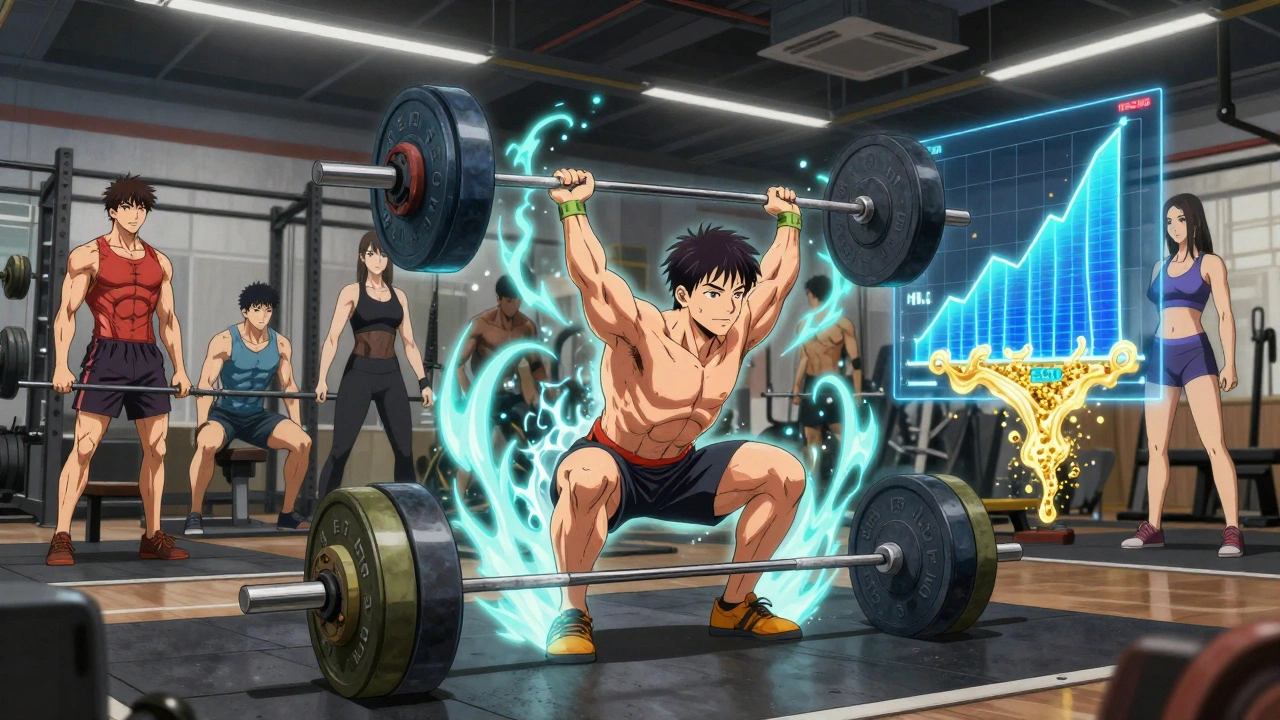
If you’re short on time but want the benefits of both, high-intensity interval training (HIIT) is your best bet. A 20-minute HIIT session - think 30 seconds sprint, 60 seconds walk, repeat - can burn 25-30% more calories than steady-state cardio. It also spikes EPOC 12-15% higher than regular cardio.Studies show HIIT improves insulin sensitivity, reduces belly fat, and boosts metabolism without needing hours on the treadmill. It’s brutal, but efficient. And you don’t need equipment - bodyweight sprints, jump squats, burpees, and mountain climbers work just fine.
What Experts Actually Recommend
The American College of Sports Medicine (ACSM) doesn’t pick sides. Their 2023 guidelines are clear: for weight loss, do 150 minutes of cardio and 120 minutes of strength training each week. That’s about 30 minutes of cardio five days a week, and two full-body strength sessions.Dr. Timothy Church, a leading obesity researcher, says a 2:1 cardio-to-strength ratio works best for 78% of people. Dr. Kelly St. George, an exercise physiologist, found that combining both leads to 37% more fat loss than either alone. Even Dr. James Levine, who argues that everyday movement matters more than workouts, admits that structured exercise still plays a key role.
It’s not about choosing one. It’s about layering them.
Why People Fail - And How to Avoid It
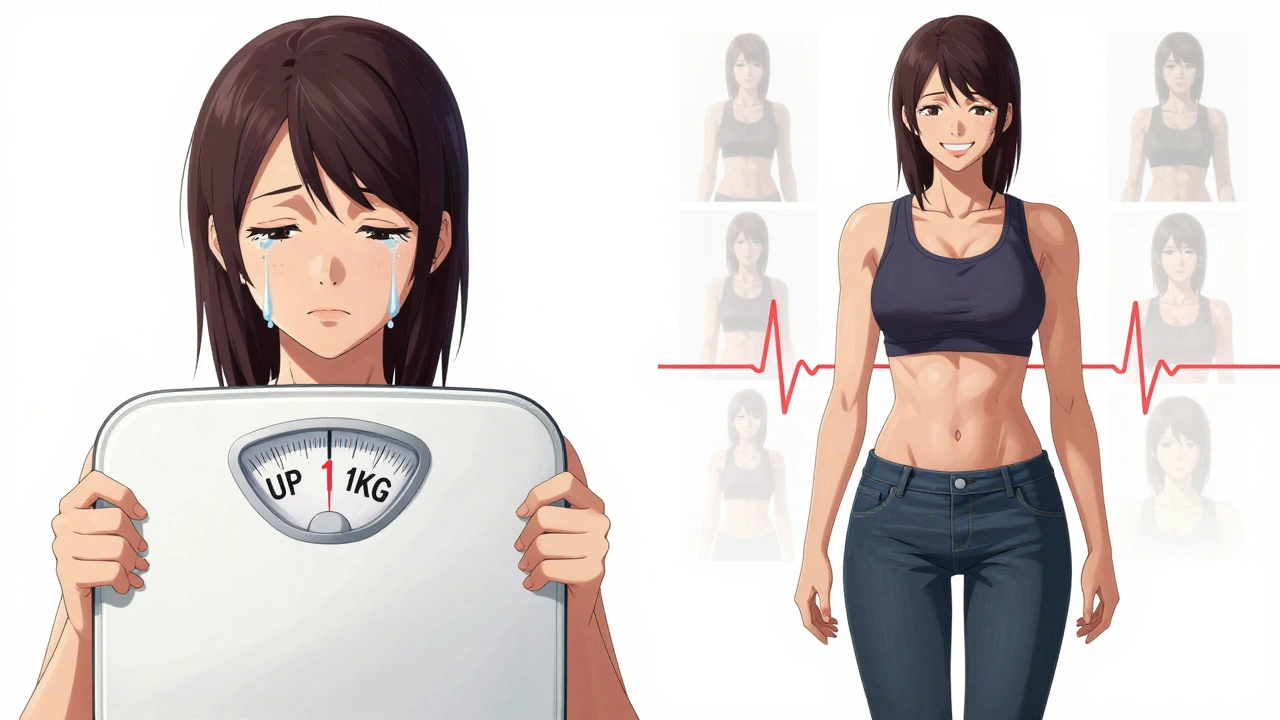
Most people don’t fail because they’re lazy. They fail because they do the wrong thing.Cardio-only folks plateau because they keep doing the same routine. Strength-only folks get discouraged because the scale doesn’t move - or even goes up. That’s normal. When you start lifting, your muscles hold more water. You might gain 1-2kg in the first few weeks. That’s not fat. That’s your body adapting.
The biggest mistake? Not eating enough protein. To build muscle, you need 1.6-2.2 grams of protein per kilogram of body weight. Only 32% of people trying to lose weight hit that mark. Without protein, your body breaks down muscle for energy - even if you’re lifting weights.
Another issue: not progressing. If you’re doing the same weights every week, you’re not getting stronger. And if you’re not getting stronger, you’re not building muscle. Increase the weight by 2.5-5% every week. That’s all it takes.
What Works Best in Real Life
Look at real people, not just studies. On Reddit’s r/Fitness, a top thread with over 3,400 upvotes asked: “6 months of cardio vs weights for fat loss.”68% of people who did both lost more than 15% body fat. Only 42% of cardio-only and 31% of weights-only did.
Cardio users loved the immediate energy boost and stress relief. Strength users loved how their clothes fit better - even when the scale didn’t budge. One person wrote: “I lost 8kg but gained muscle. My jeans went from size 12 to 8. The scale said I gained 1kg. I didn’t care. I looked better.”
And here’s the kicker: people who tracked both cardio and strength training kept 72% of their weight loss after 18 months. Those who did only one? Only 48% kept it off.
Where to Start - Simple Plan for Beginners
You don’t need a gym membership or fancy gear. Here’s what works:- Do 3 days of cardio: brisk walking, cycling, or dancing. 30 minutes each time. Keep it at a pace where you can talk but not sing.
- Do 2 days of strength: bodyweight squats, push-ups (on knees if needed), lunges, planks. Add dumbbells or resistance bands when you can.
- Eat protein at every meal: eggs, chicken, tofu, Greek yogurt, lentils. Aim for 20-30g per meal.
- Progress slowly: add 1-2 reps or 1kg more weight every week.
- Rest: sleep 7-8 hours. Recovery is when muscle grows.
After 4-6 weeks, you’ll notice more energy. After 8-12 weeks, your clothes will fit differently. After 6 months, you’ll look and feel like a completely different person.
The Future Is Combined Training
The fitness industry is shifting. More people are signing up for “body recomposition” - not just weight loss. Wearables like Apple Watch and Garmin now track EPOC and metabolic rate. Apps are starting to blend cardio and strength into one plan.Research is moving toward personalization. Scientists are testing AI that recommends workouts based on your genes, metabolism, and recovery. But for now, the best advice is still simple: move often, lift weights, eat protein, and don’t trust the scale alone.
Cardio gets you out of breath. Strength gets you stronger. Together, they get you lean, healthy, and lasting.
Is cardio or strength training better for losing belly fat?
Neither one alone is the best. Belly fat responds best to a combination of both cardio and strength training. Cardio burns the calories needed to reduce overall fat, while strength training preserves muscle and improves insulin sensitivity - which directly impacts abdominal fat storage. Studies show that people who do both lose more belly fat than those who do only one. High-intensity interval training (HIIT) is especially effective for targeting stubborn fat.
Why does the scale go up when I start lifting weights?
It’s not fat - it’s water and muscle. When you start strength training, your muscles store more glycogen, and each gram of glycogen holds about 3-4 grams of water. That’s a quick 1-2kg gain. Plus, muscle is denser than fat, so you might weigh the same or more, but you’ll look slimmer and tighter. Don’t rely on the scale. Measure waist circumference, take progress photos, or notice how your clothes fit.
Can I lose weight with strength training alone?
Yes - but slowly. Strength training burns fewer calories during the workout, so weight loss will be slower than with cardio. But it builds muscle, which increases your resting metabolism. Over time, that leads to fat loss. A 2012 study found strength training alone reduced body mass by 1.6% over 8 months - less than cardio’s 4.3%. But it added 1.4kg of muscle. If your goal is long-term metabolic health and body shape, strength training alone can work - but combining it with cardio gives faster, better results.
How much cardio should I do to lose weight?
For weight loss, aim for 150 minutes of moderate cardio per week - that’s 30 minutes, five days a week. If you want faster results, increase to 200-250 minutes. But don’t overdo it. Too much cardio can lead to muscle loss, fatigue, and burnout. The goal is sustainability. Walking, cycling, swimming, or dancing are all great. Pick what you enjoy so you’ll stick with it.
Do I need to lift heavy to build muscle and lose fat?
Not necessarily. You can build muscle and boost metabolism with light weights and higher reps - as long as you’re challenging yourself. The key is progressive overload: gradually increasing resistance, reps, or sets over time. A beginner can make gains with bodyweight exercises or resistance bands. Heavy weights aren’t required - just consistent effort. Focus on form, not how much you can lift.
What’s the best time of day to exercise for weight loss?
There’s no magic time. The best time is the one you can stick to consistently. Some people feel more energetic in the morning and burn more fat on an empty stomach, but studies show total weekly calorie burn matters more than timing. If you’re more likely to exercise after work, do it then. Consistency beats timing every time.
 Medications
Kylee Gregory
December 5, 2025 AT 20:31It’s funny how we treat weight loss like a competition between cardio and weights, when really it’s about harmony. Your body isn’t a machine with one correct setting-it’s a living system that thrives on balance. I’ve seen people burn out from endless treadmills, and others get discouraged because their scale didn’t move after a month of lifting. Both are valid struggles. But when you stop chasing the number and start listening to how your body feels-stronger, more energized, less bloated-you realize the real win isn’t on the scale. It’s in the way you move through the world.
And honestly? The most sustainable habit isn’t the workout. It’s the protein. Eating enough of it changes everything.
Just saying.
Michael Dioso
December 7, 2025 AT 00:46Oh here we go again. The ‘combine both’ fairy tale. You know what actually works? Eating less. No magic combo, no sciencey EPOC buzzwords. Just calories in < calories out. The rest is marketing. Gym bros sell muscle. Runners sell endurance. Everyone’s got a product. The truth? You don’t need to lift. You don’t need to run. Just stop eating so damn much. And stop believing the fitness industrial complex.
PS: If your jeans fit better but the scale went up-you’re not ‘recomposing.’ You’re just delusional.
Katie Allan
December 7, 2025 AT 23:19Michael, you’re not wrong about calories-but you’re missing the point. People don’t fail because they eat too much. They fail because they’re exhausted, stressed, and demotivated. Strength training gives you agency. It tells your brain: ‘You’re not powerless.’ That’s why people stick with it. Cardio can feel like punishment. Lifting feels like power. And when you feel powerful, you make better food choices-not because you’re restricting, but because you respect yourself more.
It’s not about the math. It’s about the mindset.
sean whitfield
December 8, 2025 AT 02:40Wow. So you’re saying feelings > physics? That’s adorable. Next you’ll tell me ‘intention’ burns fat. Science doesn’t care if you ‘feel powerful.’ It cares about ATP. And if you’re not in a deficit, you’re not losing fat. Period. Your ‘mindset’ is just a placebo wrapped in spandex.
Deborah Jacobs
December 8, 2025 AT 12:02I used to think the scale was my enemy. Then I started lifting and realized my body was just… rearranging. I lost 10 pounds of fat, gained 6 of muscle. The scale said +4. I cried. Then I took a photo. Then I put on my old jeans. They zipped. I didn’t care about the number anymore. Now I track how high I can jump, how many push-ups I can do, how my shoulders feel when I carry groceries. That’s my win. Not the scale. Never the scale.
Also, protein is my new best friend. Eggs for breakfast, chicken for lunch, lentils for dinner. I’m not a robot. I eat cookies. But I eat protein first. And it changes everything.
Laura Saye
December 9, 2025 AT 15:33The concept of EPOC is often overstated in fitness discourse. While it’s true that resistance training elevates metabolic rate post-exercise, the magnitude is frequently misrepresented. Studies show the average EPOC contribution is roughly 6-15% of total energy expenditure during the session-not the 50% some influencers claim. The real value lies in the cumulative effect of increased lean mass on basal metabolic rate. A 2kg muscle gain adds approximately 18-22 kcal/day. That’s not a magic bullet-it’s a slow, steady compounding advantage. And yes, it’s measurable. But it requires patience. And protein. And sleep. And consistency. Not just ‘lift heavy or die trying.’
Also, HIIT is fantastic-but it’s not for everyone. If you’re chronically stressed, it can spike cortisol and sabotage fat loss. Context matters more than protocol.
Lucy Kavanagh
December 10, 2025 AT 16:27Did you know the American College of Sports Medicine is funded by Big Gym? And those ‘studies’? All sponsored by supplement companies. The truth? You don’t need to lift. You don’t need to run. Just avoid processed carbs and sit less. The government’s dietary guidelines were written by agribusiness lobbyists. Your ‘weight loss’ is a distraction. Real health is in the soil, the sun, and the silence. No machines. No apps. No protein powder. Just you, your body, and the earth. They don’t want you to know that.
Also, your scale is probably hacked. It’s sending your data to the FDA.
James Moore
December 12, 2025 AT 08:20Let’s be brutally honest: the entire fitness industry is a cult. Cardio? That’s just punishment for eating bread. Strength training? That’s how you convince men they’re not weak. And protein powder? A $200-a-month placebo that makes you feel like a god while your kidneys scream. The real solution? Stop listening to people who sell supplements. Stop watching YouTube gurus who flex in front of mirrors. Just walk. Eat real food. Sleep. And stop obsessing over whether your glutes are ‘activated.’
And for God’s sake, if you’re doing 150 minutes of cardio a week and still gaining weight, maybe the problem isn’t your workout. Maybe it’s your stress. Maybe it’s your sleep. Maybe it’s your damn cortisol. But nope-we’ll just add another 20 minutes on the elliptical. Because that’s what we do in America. We fix problems with more effort. Not with wisdom.
Stephanie Fiero
December 12, 2025 AT 08:32Y’all are overthinking this. I’m a single mom of three. I don’t have time for 150 minutes of cardio or fancy protein shakes. I do 20-minute bodyweight workouts 3x a week. Walk with the kids after dinner. Eat chicken and beans. Drink water. Sleep when I can. Lost 35 lbs in 8 months. No gym. No tracker. No podcast. Just consistency. You don’t need a PhD to lose weight. You just need to show up.
And if your scale goes up? Good. That means you’re building something stronger. Now go hug your kid. That’s your real workout.
Stephanie Bodde
December 13, 2025 AT 02:56YES. THIS. 😭 I did exactly this. Started with just walking and squats. No weights. Just me, my living room, and a YouTube video. My jeans went from ‘I need to buy new ones’ to ‘I can’t believe these fit!’ And I didn’t even notice the scale until my sister asked, ‘Did you lose weight?’ I said, ‘I don’t know. But I can pick up my toddler without crying.’ That’s my win. 💪❤️
Krishan Patel
December 13, 2025 AT 20:59It is an egregious fallacy to suggest that strength training alone can yield significant fat loss. The thermogenic efficiency of resistance exercise is statistically insignificant compared to aerobic expenditure. Moreover, the assertion that muscle mass increases resting metabolic rate by 13–15 kcal/kg/day is a misinterpretation of basal metabolic rate studies; the actual contribution is closer to 6–8 kcal/kg/day. The National Weight Control Registry data is anecdotal and suffers from selection bias. Furthermore, the notion that ‘body recomposition’ is superior to caloric deficit is pseudoscientific. Fat loss is a thermodynamic law, not a philosophical preference. You cannot out-train a poor diet. End of story.
Norene Fulwiler
December 15, 2025 AT 20:56My grandmother in Nigeria lost weight by walking 5 miles to market every day, cooking yams over fire, and never eating processed food. She didn’t know what EPOC was. Didn’t own a scale. Didn’t care. She moved. She ate real food. She rested. She lived. Maybe the answer isn’t in the gym. Maybe it’s in the way we’ve forgotten how to live.
Just saying.
William Chin
December 16, 2025 AT 08:32While the empirical data presented is methodologically sound, the presentation of exercise recommendations lacks sufficient nuance regarding individual variability in genetic predisposition to adiposity, insulin sensitivity, and neuromuscular efficiency. Furthermore, the reliance on self-reported adherence in the Reddit cohort introduces significant recall bias. A more rigorous approach would involve DEXA scans, indirect calorimetry, and controlled dietary interventions. Until such methodologies are standardized across population samples, any generalized recommendation remains speculative at best.
Jimmy Jude
December 16, 2025 AT 21:14Cardio is for people who hate themselves. Strength training is for people who want to become gods. The scale is a lie. The gym is a temple. And if you’re still using ‘HIIT’ as a buzzword, you’re still in the matrix. Wake up. Lift heavy. Eat meat. Sleep. Don’t listen to the influencers. They’re all broke. And they’re all lying. I’ve seen it. I’ve been there. Now I’m 280 pounds of pure muscle. And I’ve never done a single run. Ever. You’re welcome.