
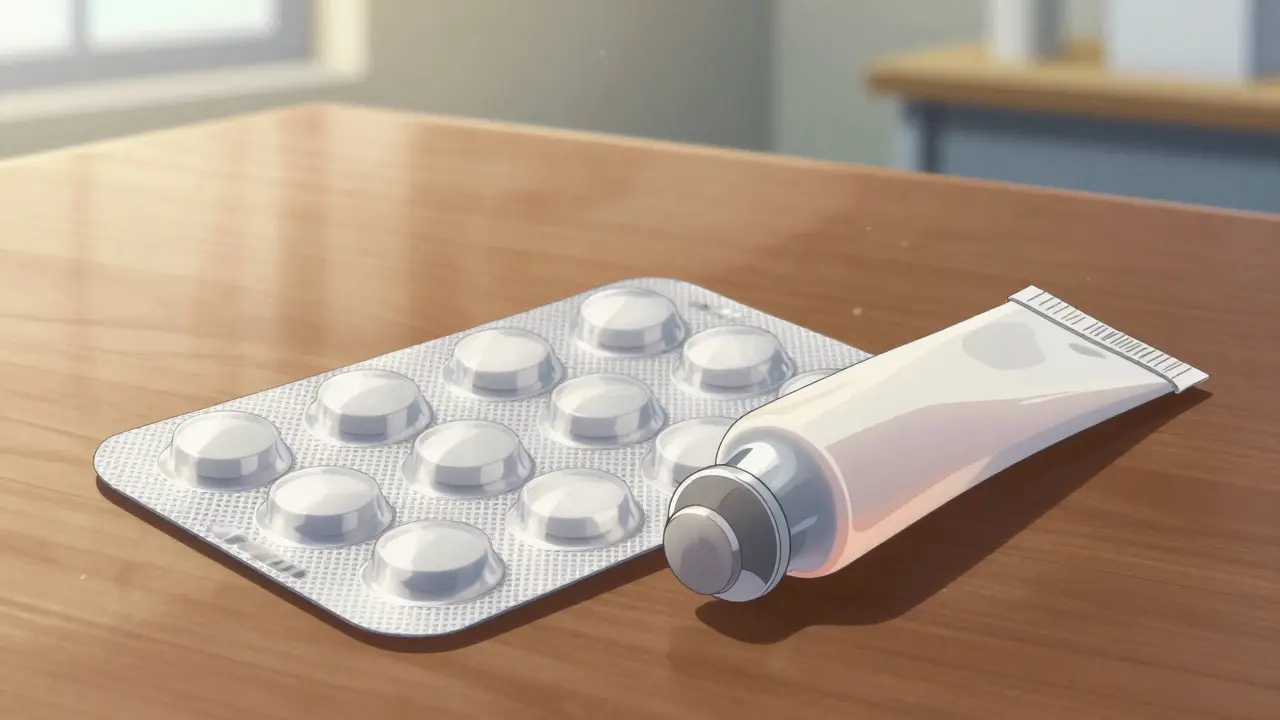
You've probably been there. You're dealing with chronic knee pain or a stubborn migraine, and your doctor hands you two options. One is a pill you swallow with water. The other is a gel you rub onto the sore spot. Which one keeps you out of the hospital? Which one actually hits the target without wrecking your stomach? That's the real question behind topical medications versus their oral counterparts. It isn't just about preference; it's about how your body handles the chemistry.
While we often assume pills are the gold standard for medicine, they come with hidden costs. When you swallow a tablet, your digestive tract becomes part of the equation. Your liver processes everything before it reaches your bloodstream. With topical creams or gels, the drug bypasses most of that machinery. In 2024, regulatory reviews highlighted this distinction clearly. Safety data shows that patients over 65 face a significantly lower risk of serious complications when using localized delivery systems instead of ingested drugs.
The Mechanics of Systemic Absorption
To understand why one might be safer than the other, you have to look at where the drug goes. Oral medication is designed for systemic circulation. You swallow a pill, it dissolves in the stomach, travels through the intestines, and gets absorbed into the blood. From there, it floods your entire body. Only a fraction ends up where you actually need it. For instance, studies indicate hepatic first-pass metabolism reduces oral drug bioavailability by an average of nearly 60%. That means almost two-thirds of the medicine never does its intended job because your liver burned it up immediately.
In contrast, topical delivery works differently. It targets specific tissues directly. Think of a sprained ankle. If you take a pill, the drug circulates everywhere before reaching the joint. If you apply a cream, the concentration is highest right at the application site. Research from major rheumatology journals found muscle tissue concentrations beneath topical application sites can match or exceed those achieved orally, while plasma levels remain low. This minimizes the chance of side effects in unrelated organs like the kidneys or heart.
However, "topical" doesn't mean "zero absorption." That's a dangerous myth. Some drugs cross the skin barrier entirely too well depending on the surface area. Large patches or broken skin allow chemicals to slip through faster than expected. Standard hydrogels typically penetrate 0.5 to 1.0 mm deep, but specialized formulations can push deeper. Understanding these penetration rates is crucial for anyone managing chronic conditions with transdermal patches or high-potency gels.
Safety Profiles: Stomach vs. Skin
When people weigh the risks, the numbers tell a stark story. Gastrointestinal bleeding is a silent killer associated with oral anti-inflammatory drugs. Hospitalizations linked to stomach issues from oral NSAIDs number in the thousands annually. Conversely, adverse event reporting systems track far fewer incidents for topical versions. Data suggests roughly 14.7 adverse events per 10,000 prescriptions for oral versions compared to 1.2 for topical. The most common complaint with topicals is minor contact dermatitis-just a redness or rash-which resolves quickly once you stop application.
The American Geriatrics Society explicitly recommends topical versions for elderly patients. Why? Because aging stomach linings handle acid poorly. Elderly individuals face an 82% higher risk of GI bleeding when taking oral painkillers. Shifting to a cream can slash that relative risk by up to 78%. Dr. Michael R. Johnson from the Mayo Clinic warns, however, that assuming zero risk is reckless. There are documented cases where extensive application led to toxic plasma levels. Balance is key.
| Metric | Topical Medication | Oral Medication |
|---|---|---|
| Systemic Bioavailability | < 5% | 70-90% |
| Gastrointestinal Events | < 1% | ~15% |
| Cutaneous Reactions | 10-15% | N/A |
| Drug Discontinuation Rate | 22% | 78% |
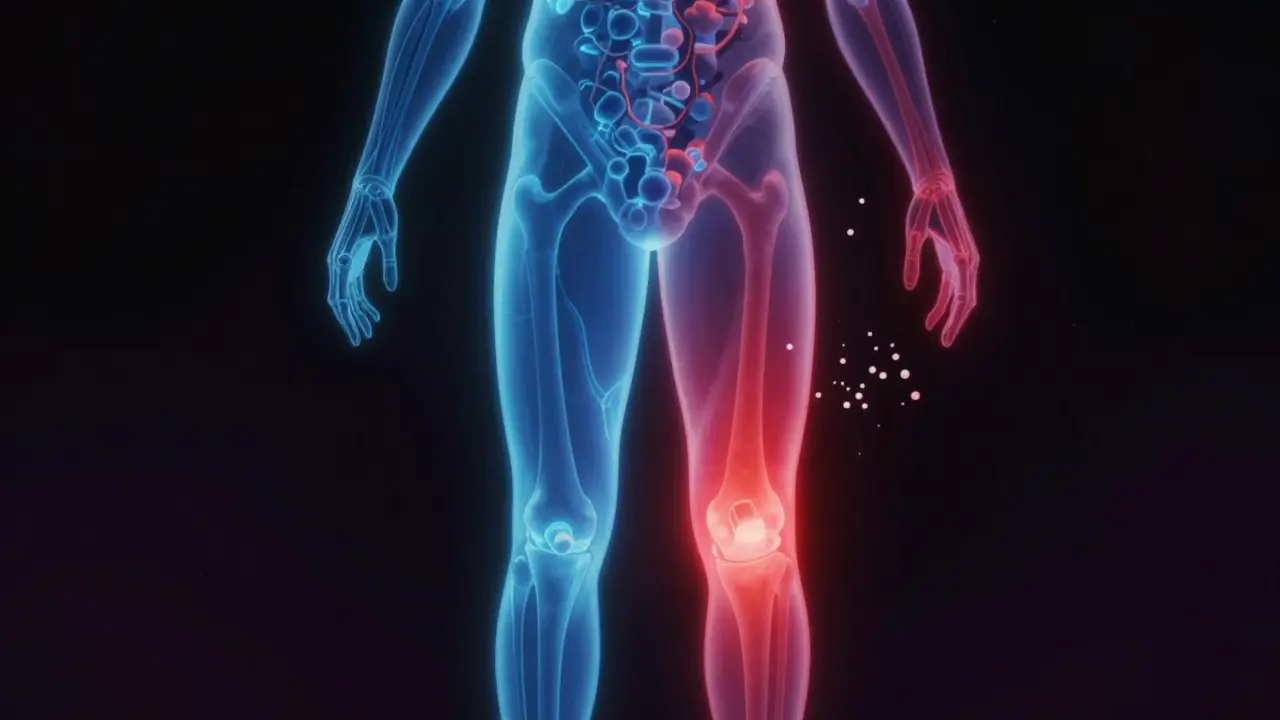
Efficacy in Real-World Scenarios
Safety is useless if the medicine doesn't work. Do topical options deliver relief equal to pills? Surprisingly, yes, for localized pain. For osteoarthritis in the knee or elbow, clinical trials show efficacy ranging from 18% to 92%, heavily dependent on the formulation quality. Patients surveyed in 2023 noted comparable pain relief scores between both types, with slightly higher satisfaction reported for creams due to fewer stomach issues.
This dynamic changes if the condition isn't on the surface. An ear infection or a fever requires systemic reach. A cream cannot fix an infection deep within a lung or joint. Topical antibiotics achieve local tissue concentrations 100 times higher than systemic levels, which is great for a scratch on the knee, but they won't clear a urinary tract infection. Knowing the depth of the problem dictates the delivery method. If the issue is systemic (whole body), oral remains the king. If it's structural (skin, joints, muscles), topical shines.
Practical Application Challenges
Convenience plays a huge role in whether you keep using the treatment. Pills are easy. Throw a bottle in your bag, swallow one morning and night. Creams require effort. You need to find time to clean the area, apply the gel, wait for it to absorb so it doesn't transfer to your clothes. Surveys found that 41% of failures resulted simply from incorrect application amount. Under-dosing happens constantly because instructions vary.
There are also environmental factors. Cold weather thins the skin's blood flow, slowing absorption. A study noted reduced efficacy in winter months unless skin temperature was maintained above 32°C. On the flip side, pills can interact with food. Taking levothyroxine with breakfast can cut its effectiveness by half. With topicals, you skip the kitchen chaos, but you must ensure skin prep is correct. Wash the area, dry it, and apply. Consistency drives results more than the drug itself sometimes.

Cost and Access Considerations
Price matters when insurance formularies change. Generic oral options are cheap, often under $10 a month. Topical gels, particularly branded versions with penetration enhancers, can cost more upfront. Insurance coverage reflects safety trends though; Medicare Part D shows higher reimbursement rates for topical NSAIDs now that evidence backs their safety profile. Long-term costs might favor topicals if they prevent expensive emergency room visits for bleeding ulcers. The market has shifted toward these formulations, driven by a projected 35% growth in non-oral pain solutions by 2030.
Frequently Asked Questions
Can topical medications cause internal side effects?
Yes, although rare. While designed for local action, some drugs can pass through the skin barrier. Risks increase if you apply large amounts or use damaged skin. Always monitor for unusual symptoms.
Which is better for stomach pain or nausea?
Neither, generally. If you have active gastritis, even swallowing a pill can irritate. Consult your doctor for rectal or IV alternatives if oral intake worsens the condition.
Do topical creams work for arthritis?
They work very well for superficial joints like knees and elbows. Deeper joints may receive less benefit because the skin barrier blocks deeper penetration. Combination therapy is often effective here.
How much of the drug actually enters my body?
Most topical applications result in less than 5% systemic absorption. This is significantly lower than oral methods, which often absorb over 70% of the dose.
Is it safe to combine both types of meds?
Combining them increases total exposure to the active ingredient. Doctors usually advise caution and monitoring liver function to avoid toxicity from overlapping doses.
Why do some topicals leave stains on clothing?
Oils or solvents in the carrier base haven't fully evaporated. Rubbing into the fabric causes staining. Letting the product dry completely before dressing prevents this mess.
Can children use these medications safely?
Pediatric safety depends on the drug type. Aspirin is contraindicated in children regardless of route. Always verify pediatric dosing guidelines before applying adult formulations.
Does age affect absorption rates?
Skin thins with age, potentially increasing absorption efficiency in seniors. However, circulation slows, which can hinder distribution. Monitoring is vital for elderly populations.
 Medications