
Alcohol Use Disorder Medications: What Works, What to Know
When someone struggles with alcohol use disorder, a medical condition where drinking causes harm and loss of control. Also known as alcohol dependence, it’s not a matter of willpower—it’s a brain disorder that changes how reward, stress, and self-control work. The good news? There are proven medications that help people regain control, reduce cravings, and stay off alcohol. These aren’t magic pills, but they’re powerful tools when used with counseling and support.
Three FDA-approved drugs are most commonly used: naltrexone, a blocker that reduces the pleasurable effects of alcohol, acamprosate, which helps stabilize brain chemistry after stopping drinking, and disulfiram, a deterrent that makes drinking unpleasant. Each works differently. Naltrexone targets the brain’s opioid system, so alcohol doesn’t feel as rewarding. Acamprosate calms the overactive brain after withdrawal. Disulfiram forces the body to react badly to alcohol—nausea, flushing, rapid heartbeat—so people avoid it. None of them cure addiction, but they make it easier to stick with recovery.
People often wonder if these meds are right for them. Naltrexone is usually the first choice because it’s well-tolerated and doesn’t require daily supervision. Acamprosate works best for those who’ve already stopped drinking and need help staying stopped. Disulfiram is for highly motivated people who want a strong deterrent—but it’s risky if someone drinks anyway. You can’t just pick one off the shelf. A doctor needs to check your health, liver function, and other meds you’re on. For example, if you’re on antidepressants or have liver disease, some of these drugs may not be safe. Even though they’re pills, they’re medical treatments, not supplements.
What you won’t find in most ads is that these drugs work best when paired with real support—therapy, peer groups, or even just a consistent routine. Medication alone won’t fix a life built around drinking. But when you combine it with behavioral changes, success rates jump. Studies show people on naltrexone are 10-15% more likely to stay sober after six months than those on placebo. That’s not huge, but for someone trying to break a cycle that’s lasted years, it’s life-changing.
There’s also a growing number of off-label options being studied, like topiramate and baclofen, which aren’t FDA-approved for alcohol use disorder but show promise in trials. These aren’t yet standard care, but they’re part of why treatment is evolving. What’s clear is that no single drug fits everyone. The right one depends on your body, your history, and your goals. If you’ve tried quitting before and relapsed, medication might be the missing piece—not a crutch, but a bridge.
Below, you’ll find real-world insights from people who’ve used these medications, stories about managing side effects, how to talk to your doctor about them, and what to watch out for when switching or stopping. You’ll also see how these drugs interact with other prescriptions, why some people feel better on one than another, and how to avoid common mistakes that lead to treatment failure. This isn’t theory—it’s what actually happens when people use these tools to rebuild their lives.
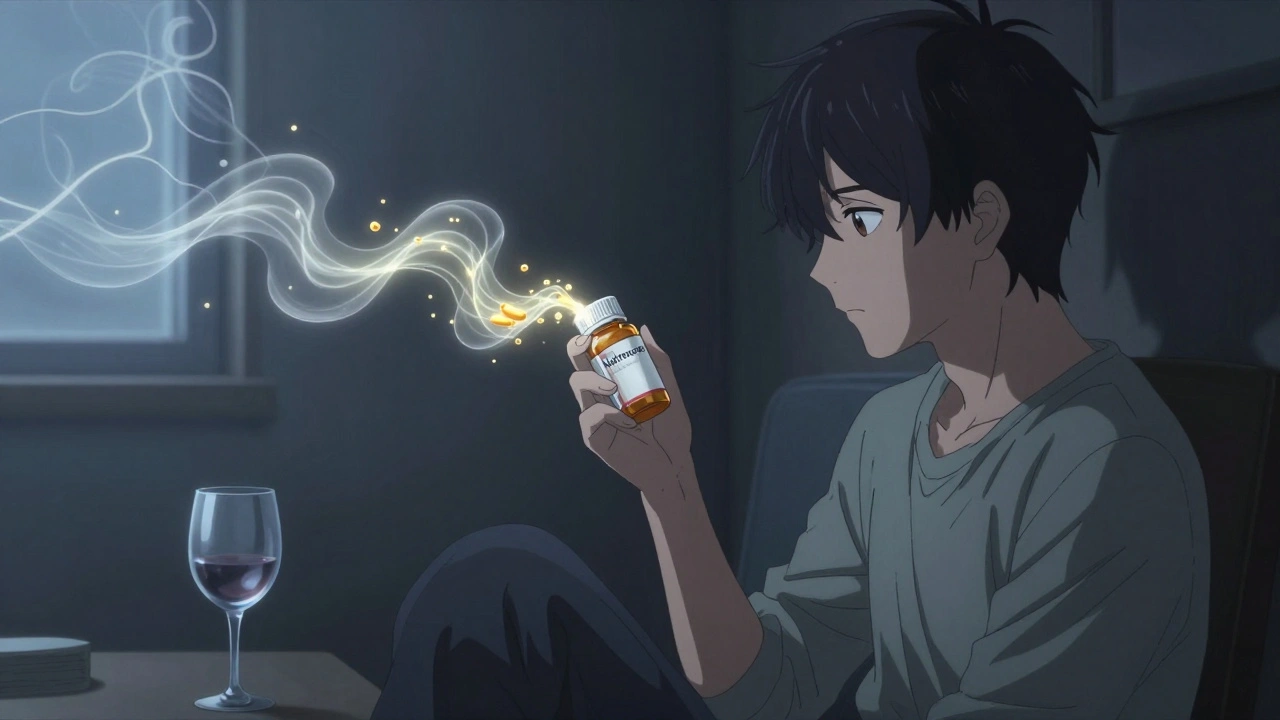
Medications like naltrexone, acamprosate, and disulfiram can reduce relapse risk in Alcohol Use Disorder - but only if used correctly. Learn how each works, who benefits most, and why most people stop taking them.
 Medications