
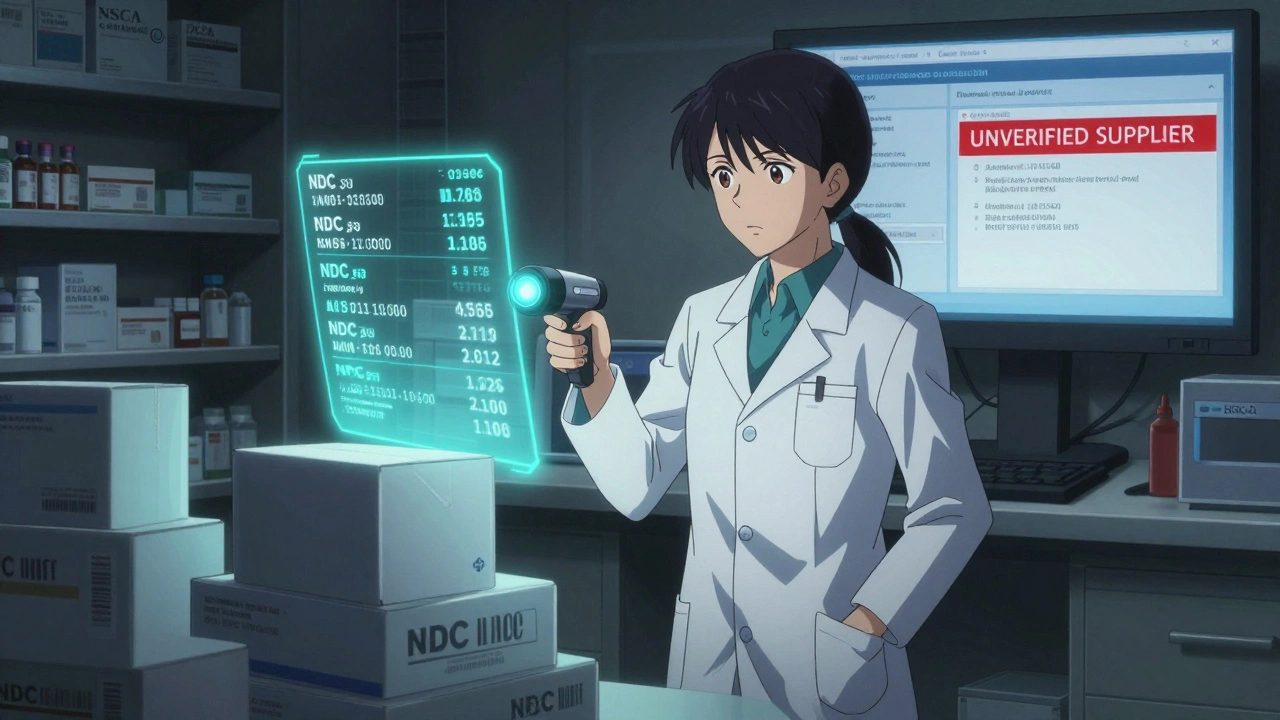
Every pill, injection, or capsule that ends up on a pharmacy shelf didn’t just appear there. It traveled through a complex web of manufacturers, distributors, and regulators - and if even one link in that chain is broken, someone could get a fake, contaminated, or expired drug. That’s not speculation. The World Health Organization estimates that 1% of the global pharmaceutical supply is counterfeit. In dollar terms, that’s $200 billion a year in fake or stolen medicines. For pharmacies, especially small ones, staying compliant isn’t just about following rules - it’s about keeping people alive.
What Makes a Drug Source Legitimate?
Legitimate drug procurement isn’t about who you buy from - it’s about how you verify them. The U.S. Drug Supply Chain Security Act (DSCSA), passed in 2013 and fully enforced by November 2023, requires every pharmacy to track prescription drugs electronically from manufacturer to patient. That means every box, vial, or bottle must come with a unique identifier: a product identifier that includes the National Drug Code (NDC), serial number, lot number, and expiration date. If your supplier can’t provide that data electronically, you can’t legally accept the shipment. Beyond DSCSA, the FDA requires all suppliers to be registered and licensed. That’s not optional. A supplier claiming to be “FDA-approved” might sound reassuring, but the FDA doesn’t approve distributors - it registers them. You need proof they’re registered with the FDA and licensed in your state. Most states follow the National Association of Boards of Pharmacy’s Verified-Accredited Wholesale Distributors (VAWD) program. As of 2023, 49 states require it. Mississippi is the only exception. If your supplier isn’t VAWD-accredited and you’re not in Mississippi, you’re taking a legal risk.The Seven Checks Every Pharmacist Must Do
The American Society of Health-System Pharmacists (ASHP) laid out a clear checklist for vetting suppliers. Here’s what you need to verify before signing any contract:- Current FDA registration - Check the FDA’s website. If it’s expired or revoked, walk away.
- State pharmacy license - Every state has its own licensing board. Call them. Don’t trust a PDF.
- cGMP compliance - Good Manufacturing Practices aren’t optional. Ask for a recent audit report. If they say “we’re audited annually,” ask for the last one.
- History of recalls or adverse events - Search the FDA’s recall database. If a supplier had three recalls in two years, that’s a red flag.
- Supply chain security measures - Do they use tamper-evident packaging? Do they monitor temperature during transit? If they’re shipping insulin and can’t prove cold chain integrity, don’t accept it.
- Financial stability - A company that goes bankrupt overnight can’t deliver on traceability. Check Dun & Bradstreet or similar reports.
- DSCSA compliance - They must be able to exchange electronic transaction information (TI), transaction history (TH), and transaction statement (TS) with you. If they’re still using fax or email, they’re not compliant.
Pharmacies that use all seven checks cut medication errors related to sourcing by 63%, according to the Pharmaceutical Benefits Management Institute. Those using three or fewer? They’re flying blind.
White Bagging vs. Brown Bagging - Why They’re Dangerous
You’ve probably heard terms like “white bagging” or “brown bagging.” These are workarounds pharmacies use to get specialty drugs - often expensive cancer or autoimmune treatments - without going through traditional channels. White bagging means the specialty pharmacy ships the drug directly to the clinic. Brown bagging means the patient picks it up from a retail pharmacy and brings it in themselves. Both are risky. ASHP found that 42% of health systems using these methods had at least one medication error in 2022. Why? Because once the drug leaves the controlled supply chain, you lose traceability. Temperature logs? Gone. Packaging integrity? Unverified. Serial numbers? Not scanned. A patient might bring in a drug that looks right - but it’s been sitting in a hot car for hours, or worse, it’s counterfeit. And when something goes wrong, no one can trace it back to the source.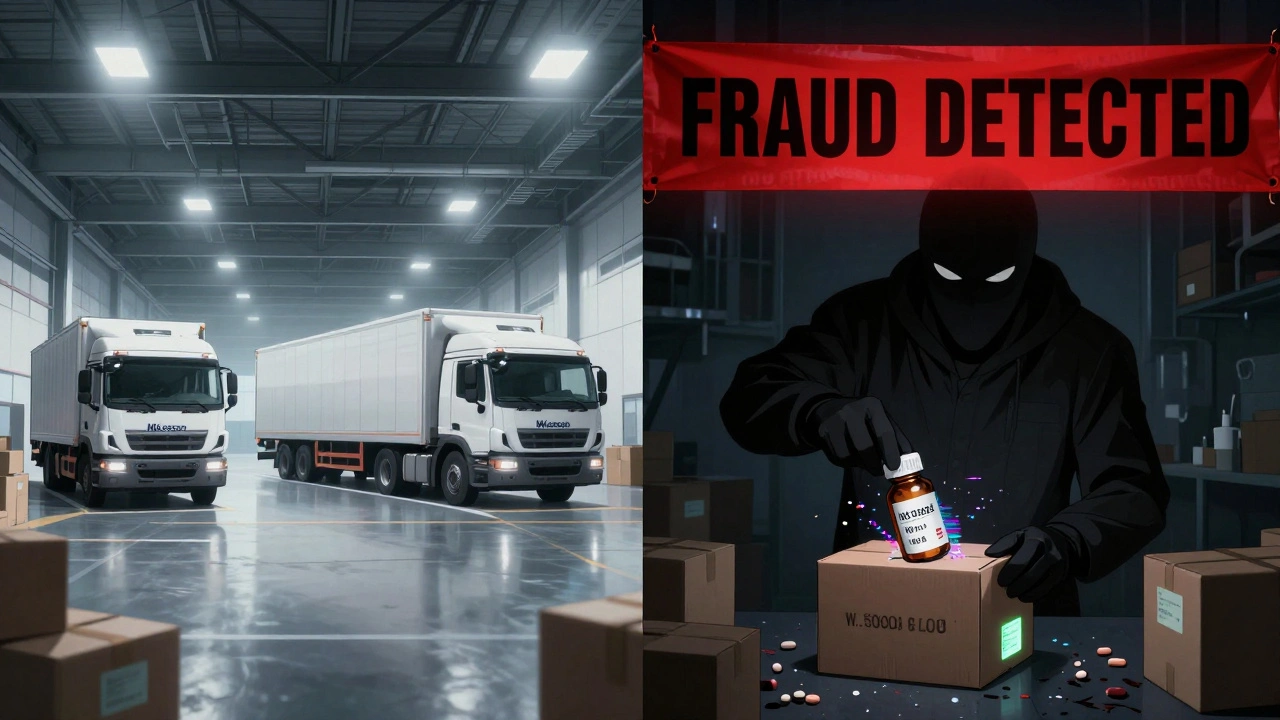
The Cost of Compliance - And What Happens When You Skip It
Compliance isn’t cheap. Hospital pharmacies spend 15 to 20 hours a week just verifying supplier documents. Independent pharmacies spend over 10% of their budget on compliance - compared to 6% for big chains. That’s because chains use group purchasing organizations (GPOs) that handle verification for them. Independent pharmacies? They’re on their own. One hospital pharmacy manager in Ohio posted on Reddit in June 2023: “We had to quarantine $87,000 worth of product because the distributor’s system glitched during the DSCSA data transfer.” That’s not a rare case. 58% of health systems report incomplete or missing transaction data from suppliers. When that happens, you can’t sell the product. You can’t return it. You just sit on it - and lose money. And if you’re caught selling non-compliant drugs? The FDA can shut you down. Fines start at $10,000 per violation. Repeat offenses? Criminal charges. In 2022, the Health Resources and Services Administration (HRSA) conducted 1,247 audits of 340B program participants and found $1.3 billion in non-compliant purchases. That’s not just a mistake - it’s systemic failure.Who Controls the Supply Chain - And Why It Matters
Three companies - McKesson, AmerisourceBergen, and Cardinal Health - control 85% of the U.S. pharmaceutical distribution market. They have the tech, the staff, and the budget to meet DSCSA requirements. Small suppliers? They struggle. That’s why more pharmacies are turning to GPOs or direct manufacturer contracts. The 340B Drug Pricing Program lets eligible hospitals and clinics buy drugs at deep discounts - but only if they can prove every single dose goes to an eligible patient. HRSA audits are brutal. If you can’t show a clear audit trail from purchase to administration, you’re on the hook for repayment - plus penalties. Even the biggest players aren’t perfect. In 2022, the FDA logged 2,147 reports of pharmaceutical diversion - a 28% jump from 2021. Counterfeiters are getting smarter. They’re using real packaging, fake serial numbers, and forged documentation. The only defense? Verification at every step.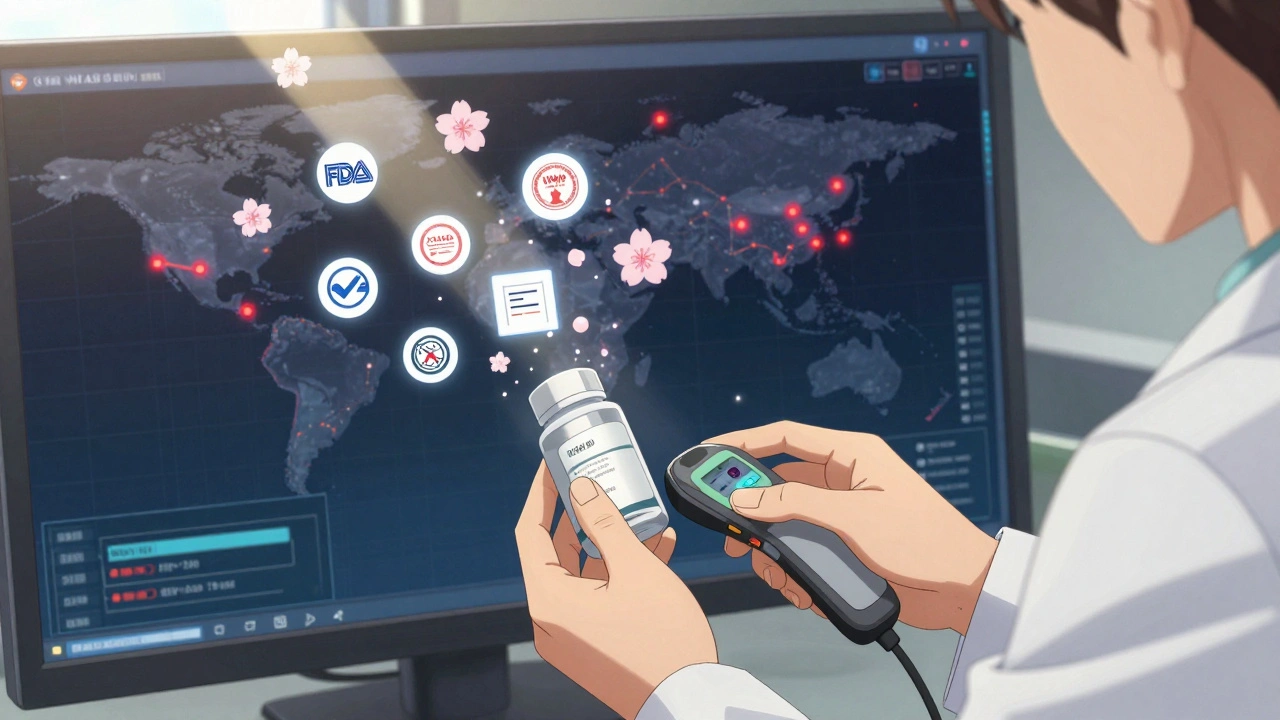
What’s Changing in 2024 and Beyond
The FDA just updated its DSCSA implementation plan in September 2023, requiring all trading partners to exchange traceability data in a standardized, interoperable format. That means no more proprietary systems that don’t talk to each other. If your software can’t integrate with your supplier’s, you’re falling behind. ASHP is finalizing new guidelines for 2024 that will tighten rules around 503B compounding pharmacies and specialty drug suppliers. The Biden administration has also proposed $150 million more in FDA funding for supply chain security - a 35% increase. Looking ahead, AI will play a bigger role. By 2026, Deloitte predicts 90% of pharmacies will use artificial intelligence to detect anomalies in supply chain data - like a sudden spike in orders from a new supplier, or a lot number that’s been reported as stolen. These systems can flag fraud before it reaches the shelf.What You Can Do Right Now
If you’re a pharmacist or pharmacy owner, here’s what to do today:- Check every supplier’s FDA registration on FDA’s website.
- Call your state board of pharmacy to confirm their license is active.
- Ask for their last cGMP audit report - not a letter, not a certificate. The real report.
- Verify they’re VAWD-accredited (if you’re in a state that requires it).
- Test their DSCSA system. Send a sample transaction request. If they can’t respond in 48 hours, they’re not ready.
- Train your staff. At least 120 hours of training is needed to understand the rules. Certify them through the Healthcare Supply Chain Association’s CHCSCP program.
- Start scanning every package with a barcode reader. No exceptions.
There’s no shortcut. No magic software that replaces human judgment. But if you do these seven things, you’ll be in the top 10% of pharmacies when it comes to safety and compliance.
What happens if a pharmacy buys drugs from an unverified supplier?
If a pharmacy purchases drugs from an unverified supplier, it risks receiving counterfeit, stolen, or contaminated products. The FDA can issue warning letters, impose fines of $10,000 per violation, or shut down operations. In severe cases, criminal charges may apply. Additionally, the pharmacy may be required to recall products, face lawsuits from patients harmed by the drugs, and lose its license. DSCSA violations also trigger mandatory reporting to the FDA, which can lead to public exposure and reputational damage.
Can a pharmacy buy generic drugs from overseas?
Technically, yes - but it’s extremely risky and often illegal. The FDA prohibits reimportation of drugs sold outside the U.S. unless they’re approved for sale here. Most overseas generics aren’t FDA-approved, even if they’re made by the same company. Even if the drug is legitimate, there’s no guarantee of cold chain integrity, packaging authenticity, or traceability under DSCSA. Pharmacies that import drugs from overseas without FDA authorization risk seizure of goods, fines, and loss of licensure.
Do I need to scan every single pill bottle?
Yes. ASHP and the FDA recommend 100% barcode scanning of all incoming pharmaceutical products. This verifies the National Drug Code (NDC), lot number, expiration date, and serial number against your purchase order. Skipping scans means you can’t prove compliance during an audit. In 2023, 78% of hospital pharmacy directors reported that scanning reduced counterfeit drug incidents by over 80%. It’s not optional - it’s your primary defense.
What’s the difference between a VAWD-accredited distributor and a regular one?
A VAWD-accredited distributor has been audited by the National Association of Boards of Pharmacy for compliance with state and federal laws, including proper storage, licensing, recordkeeping, and drug traceability. Regular distributors may be legally registered with the FDA but haven’t passed this independent audit. VAWD accreditation is the gold standard - 49 states require it. If a supplier isn’t VAWD-accredited and you’re not in Mississippi, you’re not meeting minimum legal standards.
How often should I audit my suppliers?
You should audit your suppliers at least quarterly. At a minimum, verify their FDA registration, state license, and DSCSA compliance status every three months. Conduct a full audit - including reviewing recall history, financial stability, and quality management systems - at least once a year. If a supplier has a recall or changes ownership, audit immediately. Waiting until your next inspection is too late.
Are electronic records enough for DSCSA compliance?
Yes - but only if they’re interoperable and complete. DSCSA requires electronic transaction information (TI), transaction history (TH), and transaction statements (TS) to be exchanged in a standardized format between trading partners. Paper records or PDFs don’t count. You must be able to electronically trace a drug from manufacturer to patient. If your system can’t export or import this data in real time, you’re not compliant. Most pharmacies use SaaS platforms like TraceLink or rfxcel to handle this.
 Medications
Ali Bradshaw
December 5, 2025 AT 00:37Man, I’ve seen so many small pharmacies burn out trying to keep up with this stuff. It’s not just paperwork-it’s a full-time job just to stay legal. But honestly? It’s worth it. One time I caught a batch of insulin that didn’t have the right serial number. Turned out it was diverted from a hospital in another state. Saved a kid from a bad reaction. That’s why we do this.
an mo
December 6, 2025 AT 17:21Let’s be clear: the FDA doesn’t regulate distributors, so every ‘FDA-approved’ claim is a marketing lie. The VAWD accreditation is the only real benchmark-and even that’s being watered down by lobbying. If you’re not scanning every vial with a handheld reader and cross-referencing against the FDA’s DSCSA portal in real time, you’re already violating federal law. Period.
Lynette Myles
December 7, 2025 AT 01:25They’re lying about the 1% counterfeit stat. It’s 12%. The WHO’s data is outdated and sanitized. The real numbers come from DEA seizures-those are buried, but they’re climbing every year. And don’t get me started on how the big three distributors are colluding with foreign manufacturers to bypass DSCSA. It’s a cartel.
Juliet Morgan
December 7, 2025 AT 14:19i know it sounds like a nightmare but honestly? scanning every bottle changed my life. i used to stress every time a new shipment came in. now i just scan, click, breathe. my team even made a little chant: ‘scan it, don’t panic.’ it’s not perfect but it’s peace of mind. you got this.
Harry Nguyen
December 9, 2025 AT 06:36So let me get this straight-you’re telling me a pharmacy in rural Nebraska has to spend $20k on software just to verify a supplier, while McKesson gets to use their proprietary system that no one else can integrate with? And you call this free market? This isn’t regulation-it’s corporate capture dressed up as safety.
Katie Allan
December 9, 2025 AT 10:19It’s easy to feel overwhelmed, but you’re not alone. I’ve walked dozens of independent pharmacists through the VAWD application process. It’s tedious, yes-but every step you take is a shield for someone’s child, their grandparent, their neighbor. You’re not just a pharmacist. You’re a guardian. And that matters more than any audit.
Deborah Jacobs
December 9, 2025 AT 19:03Remember that time a guy walked in with a brown-bagged cancer drug he got from a ‘friend’ in Mexico? Looked legit-same label, same bottle. But the cap was slightly off, and the serial number didn’t match the batch. We called it in. Turned out it was a knockoff with sugar and chalk. That’s the stuff they don’t show you in the brochures. Don’t let ‘convenience’ kill someone.
Jimmy Jude
December 11, 2025 AT 14:04They want you to believe this is about safety. But really, it’s about control. Who gets to decide what medicine you get? Who gets to profit from the fear? The system is designed to crush the small guy so the big ones can monopolize the flow. You think scanning barcodes is the answer? It’s just another chain. The real revolution? Reject the system entirely. Go off-grid. Find your own sources. Trust your gut, not the algorithm.
luke newton
December 13, 2025 AT 07:56You people are naive. You think compliance keeps people safe? No-it keeps the big players rich. The FDA’s own data shows that 87% of counterfeit drugs are caught *after* they’ve been dispensed. All this scanning? It’s theater. The real problem is that we’ve outsourced our healthcare to profit-driven conglomerates who don’t care if you live or die-as long as the invoice clears. You’re not protecting patients-you’re protecting the balance sheet.
And don’t even get me started on the 340B program. It’s a slush fund for hospitals. They buy drugs at 50% off, then bill Medicare for full price. Meanwhile, you’re out here stressing over a $200 software subscription. Wake up.
James Moore
December 14, 2025 AT 17:34Let’s not forget the philosophical underpinnings here: the pharmaceutical supply chain is a metaphysical metaphor for modern capitalism-fragmented, opaque, and ultimately dehumanizing. Each barcode represents not just a drug, but the erasure of trust between human beings. We have replaced relationship with regulation, care with compliance, and community with compliance software. The real crisis isn’t counterfeit pills-it’s the collapse of moral authority in medicine. When a pharmacist must verify a lot number before treating a patient, we’ve already lost.
And yet-still-we scan. Still, we call the state board. Still, we check the FDA registry. Why? Because even in a broken system, the act of verification becomes sacred. It is the last ritual of human dignity in an algorithmic age.
Kylee Gregory
December 15, 2025 AT 14:21I’ve been on both sides-worked for a big chain, now run a small one. The truth? The system’s flawed, but the checks work. I used to think the 7-point checklist was overkill. Then I got a call from a patient who got a bad batch from a ‘trusted’ supplier. Turned out they skipped the cGMP report. We’ve been scanning everything since. It’s not glamorous. But it’s quiet, steady, and it saves lives. I’m not a hero. I’m just doing the work.