
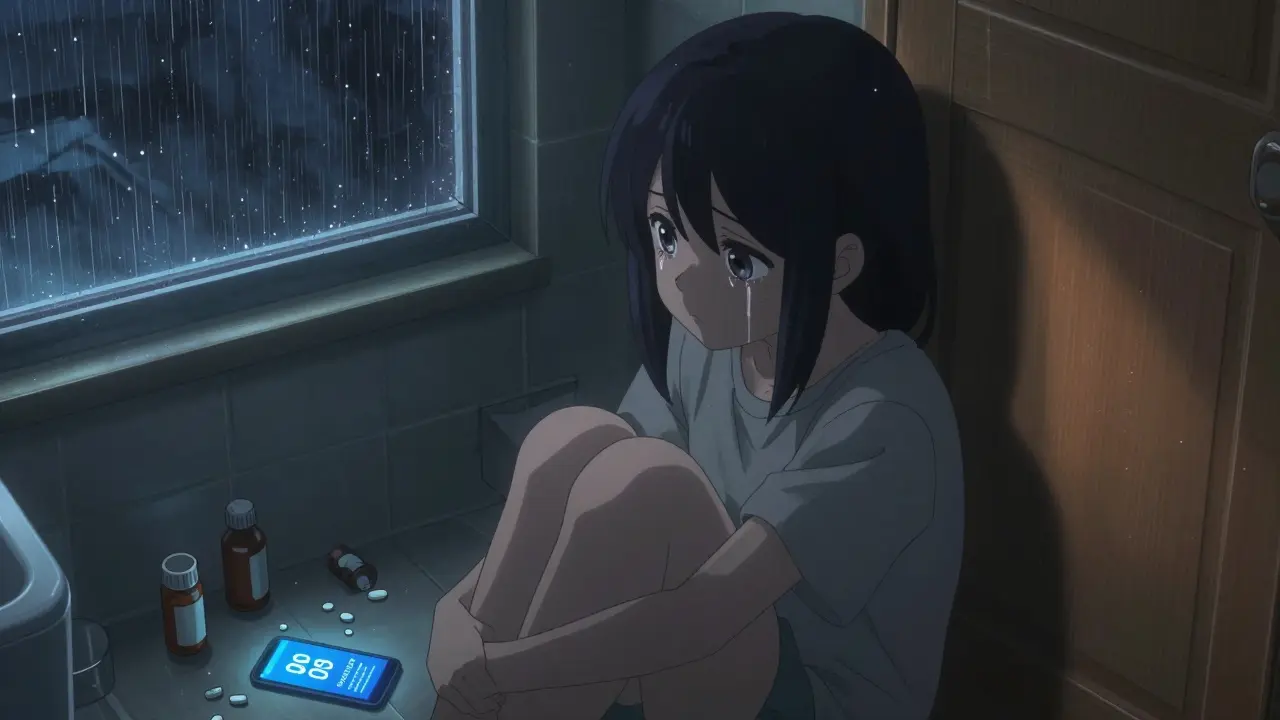
When someone takes too many pills on purpose, it’s not just a medical emergency-it’s a cry for help. Intentional overdose is one of the most common ways people attempt suicide, especially among teens and young adults. It’s not always about wanting to die. Often, it’s about ending unbearable pain-emotional, psychological, or both. The good news? Help is available. The bad news? Too many people don’t know where to find it, or they wait too long because they think no one will understand.
Why Intentional Overdose Happens
People don’t wake up one day and decide to overdose. It’s usually the result of months, sometimes years, of untreated mental health struggles. Depression, anxiety, trauma, isolation-these don’t show up on a blood test, but they can crush a person’s ability to see a future. According to the CDC, over 14 million U.S. adults had serious thoughts of suicide in the past year. That’s one in every 18 adults. And for many, overdose felt like the only way out. Prescription painkillers, sleeping pills, antidepressants, even common pain relievers like acetaminophen-these are the substances most often used. Why? Because they’re easy to get. A teenager might find a bottle in a parent’s medicine cabinet. An adult struggling with chronic pain might have leftover opioids. These aren’t street drugs. They’re household items. And that makes them dangerously accessible. The myth that overdose is a quick, painless way to die is exactly what makes it so tempting. But the reality is brutal. Acetaminophen overdose can cause liver failure over days. Opioids can shut down breathing slowly, leading to brain damage. Survivors often face permanent organ damage, long hospital stays, and intense guilt. Many say the physical pain of surviving is worse than the emotional pain they were trying to escape.The Real Numbers Behind the Crisis
In 2024, overdose deaths in the U.S. dropped by nearly 27%, from over 105,000 to around 76,650. That’s more than 27,000 lives saved. But here’s what most headlines don’t say: that number includes both accidental overdoses from substance use disorder and intentional suicide attempts. The CDC tracks them separately using medical codes, and the data shows something alarming-while accidental overdoses are declining thanks to harm reduction efforts like naloxone distribution and supervised injection sites, intentional overdoses aren’t falling as fast. For people aged 18 to 44, suicide is one of the top five causes of death. Among adolescents aged 12 to 17, 2.7% attempted suicide in 2024. That’s about 1 in 37 teens. And while the rate has dropped slightly since 2021, the number of kids reporting serious depression is still sky-high-2.8 million teens in the U.S. had depression severe enough to interfere with daily life. Black and American Indian/Alaska Native communities face the highest rates of fatal overdose deaths. But that doesn’t mean other groups are safe. Middle-aged adults (45-64) have the highest suicide rate per capita-20.2 deaths per 100,000 people. Rural areas are hit even harder. Suicide rates there are 25% higher than in cities, and access to mental health care is 40% lower.Crisis Resources That Actually Work
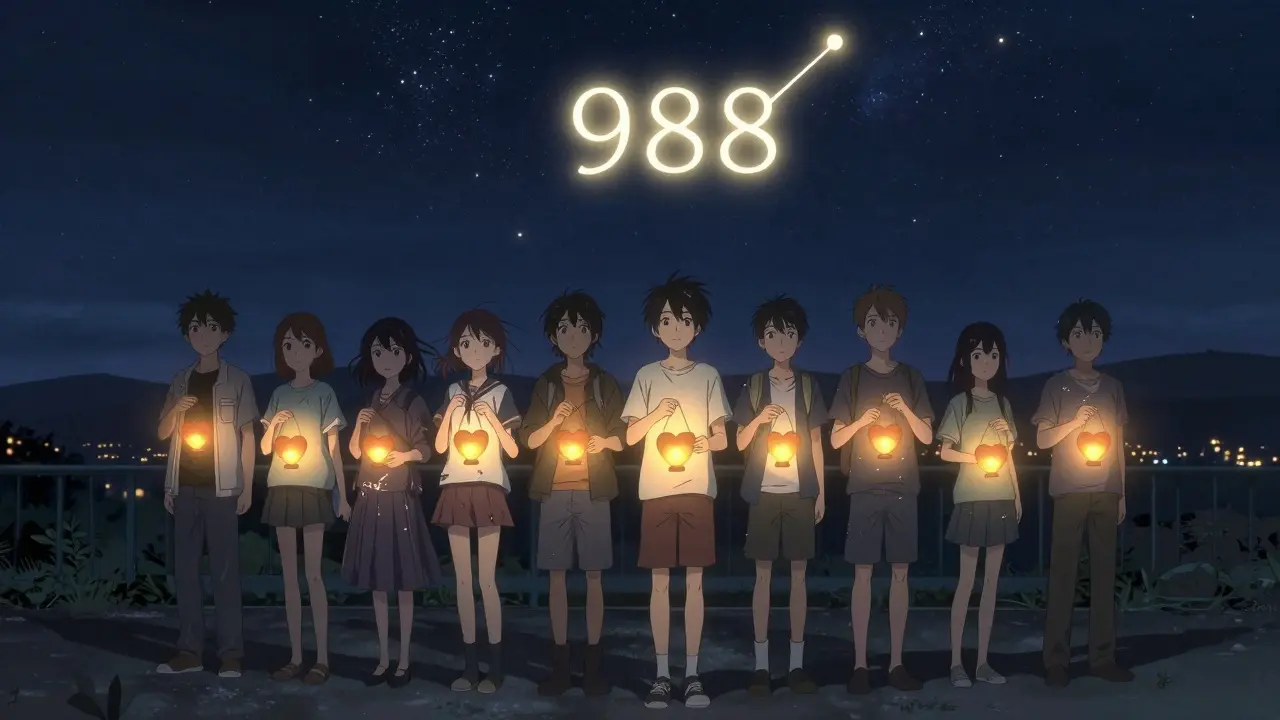
If you’re reading this because you or someone you love is in crisis, know this: you’re not alone, and help is closer than you think. The 988 Suicide & Crisis Lifeline launched in July 2022 and became the national standard for suicide prevention. Dial or text 988, and you’re connected to a trained counselor-no waiting in queues, no forms to fill out. In 2024, it handled 4.7 million contacts, up 32% from the year before. One user on Reddit shared: “I called 988 after taking too many pills. The counselor stayed on the line for 18 minutes until EMS arrived. That probably saved my life.” There’s also the Crisis Text Line. Text HOME to 741741. The average response time? 37 seconds. It’s anonymous, free, and available 24/7. In 2024, they handled 3.2 million conversations. For those who need language support or help with substance use, SAMHSA’s National Helpline (1-800-662-4357) offers free, confidential advice in English and Spanish. But here’s the catch: wait times have doubled since 2022-from 2.4 minutes to 5.7 minutes. That’s 3 extra minutes of panic for someone who’s already at their breaking point.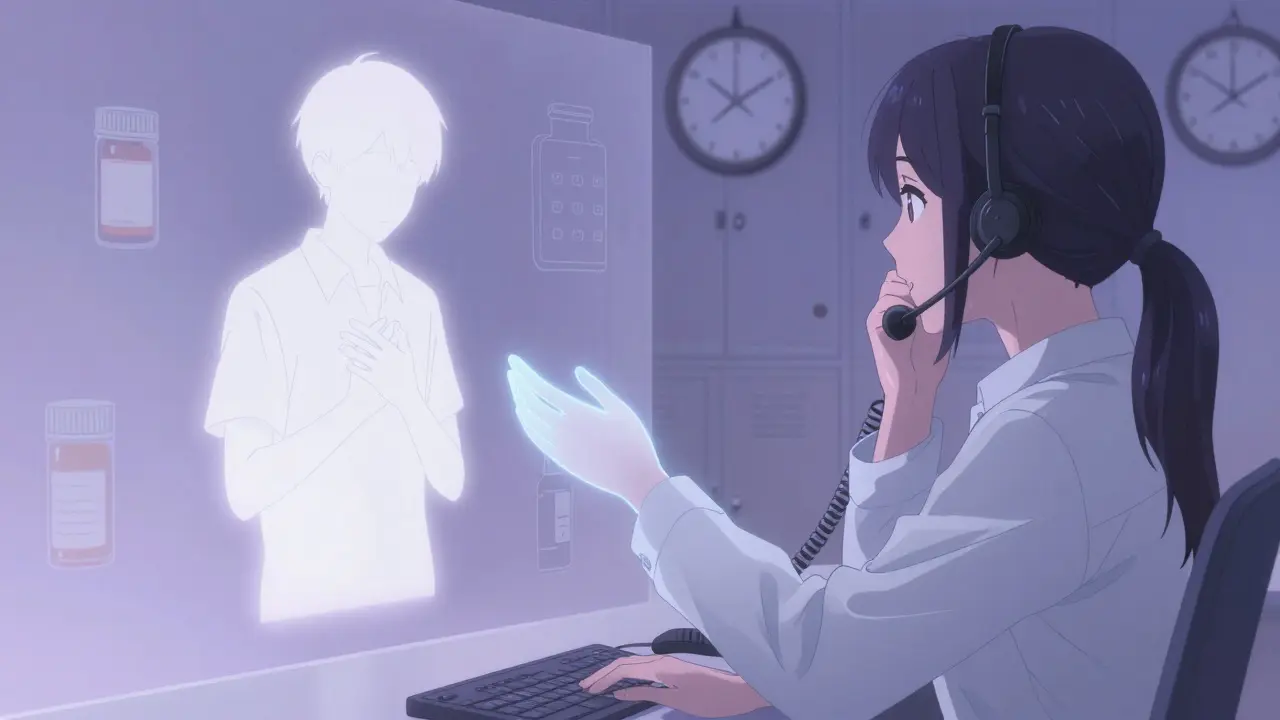
What’s Missing: The Gaps in the System
Even with these lifelines, the system is stretched thin. Mental Health America found that 42% of people seeking same-day crisis care couldn’t get it. Why? Because there aren’t enough staff. The ratio of mental health providers to people at risk is 320 to 1. Experts say it should be 250 to 1. We’re already behind. And funding? It’s collapsing. SAMHSA’s proposed budget cut for 2026 is $1.07 billion. That’s not just a number-it’s 200+ crisis centers losing staff, fewer counselors on the 988 line, fewer mobile crisis teams responding to homes, fewer school-based programs reaching teens. A 2025 survey by the American Foundation for Suicide Prevention found that 68% of people who attempted suicide via overdose had contacted a crisis line within the last 30 days. That means they reached out. But no one followed up. No therapy appointment was scheduled. No medication was adjusted. No one checked in the next day. Crisis lines are lifesavers-but they’re not long-term solutions. They’re the first step. The next step-therapy, medication, community support-is where the system fails most people.What You Can Do Right Now
If you’re struggling:- Dial 988. No judgment. No questions asked.
- Text HOME to 741741 if you’d rather type than talk.
- Call a friend-even if you think they won’t understand. Just say, “I’m not okay.”
- Keep a list of crisis numbers saved in your phone. Don’t wait until you’re in crisis to look them up.
- Ask directly: “Are you thinking about killing yourself?” It doesn’t plant the idea-it opens the door.
- Don’t leave them alone. Stay with them until help arrives.
- Remove access to pills, knives, guns. Even if you think they won’t use them, you can’t assume.
- Help them call 988 or go to the ER. Offer to drive them.
Why This Isn’t Just a Mental Health Issue
We treat suicide like it’s a personal failure. But it’s not. It’s a public health crisis-and one we have the tools to fix. Studies show that increasing the minimum wage reduces suicide attempts by 15%. Expanding access to affordable housing cuts rates too. School-based programs that teach coping skills reduce teen suicide attempts by 22%. These aren’t just nice ideas-they’re proven. The biggest barrier isn’t lack of will. It’s lack of money. The CDC’s National Injury Center funds state-level prevention programs. If those cuts go through, $480 million in state funding vanishes. That means fewer community outreach workers, fewer peer support groups, fewer programs in schools and churches. We’ve seen what works. We’ve seen overdose deaths drop by 27% in one year. That’s not luck. That’s coordinated action-better naloxone access, more treatment options, stronger social safety nets. But progress is fragile. Without sustained funding, experts warn suicide rates could rise 8-12% by 2027. That’s not a prediction. It’s a warning.You Are Not a Burden
If you’re reading this because you’re in pain, know this: your life matters. Not because you’re productive, or happy, or “fixed.” But because you exist. Because your presence in this world has meaning-even if you can’t see it right now. You don’t need to be brave. You don’t need to have it all together. You just need to reach out. Call 988. Text 741741. Call a friend. Go to the nearest ER. Do it now. Not tomorrow. Not when you’re “ready.” And if you’re reading this because you care about someone who is? Don’t wait for them to ask. Reach out. Say, “I’ve been thinking about you. Are you okay?” There’s no shame in needing help. There’s no strength in suffering in silence. And there’s always, always hope-even when it feels like there isn’t.What should I do if someone I know is threatening to overdose?
Don’t leave them alone. Call 988 or take them to the nearest emergency room. Remove access to pills, alcohol, or weapons if it’s safe to do so. Stay with them until help arrives. Even if they say they’re fine, don’t trust that. Their brain is in crisis mode. They need professional support, not just your presence.
Is 988 really free and confidential?
Yes. 988 is completely free, and your call is confidential. Counselors don’t share your information unless you’re in immediate danger and they need to send help. They won’t call your parents, employer, or police unless you’re at risk of harming yourself or others. It’s designed to be a safe space-not a report.
Can minors call 988 without parental permission?
Yes. Teens aged 12 and older can call or text 988 without parental consent. While counselors may encourage involving a trusted adult, they won’t force it. Your privacy is protected under federal law. If you’re under 18 and scared to talk to your parents, 988 is still your best first step.
What if I called 988 before and it didn’t help?
One bad experience doesn’t mean help doesn’t exist. Crisis lines are staffed by real people, and sometimes they’re overwhelmed. Try again. Or try the Crisis Text Line (text HOME to 741741). Or reach out to a local mental health clinic. You deserve support that works. Don’t give up because one call didn’t fix everything.
How can I help reduce stigma around suicide and overdose?
Talk openly. Say “suicide” instead of “committed suicide.” Say “died by suicide” instead. Share resources. If someone says, “I’m not okay,” don’t say “snap out of it.” Say, “I’m here.” Normalize asking for help. Your words can make someone feel seen when they feel invisible.
 Medications
James Hilton
December 28, 2025 AT 08:25People keep acting like 988 is some magic fix. It’s a hotline, not a therapist. You call, they talk, then you’re back to square one with no meds, no therapy, no rent paid. We’re bandaging a gunshot wound with a Band-Aid.
Celia McTighe
December 30, 2025 AT 02:59I called 988 last winter after a panic attack turned into a full collapse. The counselor didn’t rush me. She asked if I wanted to talk or just sit. I sat for 22 minutes. She didn’t hang up. I’m still alive because of that. Not because I ‘got better’-but because someone stayed.
Stop treating mental health like it’s a to-do list. It’s not ‘fix yourself.’ It’s ‘stay with me.’
Also 🫂 if you’re reading this and you’re hurting-you’re not a burden. I promise.
Ellen-Cathryn Nash
December 30, 2025 AT 21:50Let’s be real-this whole system is a performance. We throw money at crisis lines because it looks good on a press release, but we starve outpatient clinics, shut down community centers, and let schools cut counselors because ‘it’s not academic.’
And then we wonder why teens are dying. It’s not a mental health crisis-it’s a moral failure. We’ve decided that some lives are less worth saving than others.
And don’t get me started on how we treat Black and Indigenous communities. ‘Access’ means nothing when your local clinic closes and the nearest one is two counties away.
We don’t need more slogans. We need funding. We need policy. We need to stop pretending this is about ‘personal responsibility.’
Vu L
December 31, 2025 AT 05:40Wait so we’re supposed to believe that overdoses are down 27% because of ‘harm reduction’? Lol. That’s just fentanyl getting stronger and people dying faster. Less time to survive = fewer stats. Numbers don’t lie, but people sure do.
Ryan Touhill
December 31, 2025 AT 17:11Interesting how the article mentions funding cuts but ignores the root cause: the collapse of the nuclear family. When kids don’t have stable home environments, no hotline can replace a parent who shows up.
Also, why is it always ‘mental health’? What about spiritual emptiness? Moral decay? The fact that we’ve turned suffering into a clinical diagnosis instead of a human condition?
I’m not saying we shouldn’t help-but we’re treating symptoms while ignoring the soul.
Hakim Bachiri
January 1, 2026 AT 00:15988? More like 988-FAIL. I called last year after my brother OD’d-he lived, barely. The counselor asked if I wanted to ‘talk about my feelings.’ I said ‘NO I WANT AN ER BED’ and they put me on hold for 11 minutes. Meanwhile, my brother was turning blue. This isn’t crisis care-it’s customer service with a psychology degree.
And don’t even get me started on the ‘text to 741741’ nonsense. What’s next? A TikTok DM hotline? We’re outsourcing human suffering to algorithms and interns.
Real solution? Lock up the damn pills. Make pharmacies track every bottle. And stop pretending this is about ‘compassion’ when we’re too cheap to pay nurses $25/hour.
Samantha Hobbs
January 1, 2026 AT 07:39My sister tried to OD last month. Took 12 Advil. Thought she’d sleep it off. She didn’t even call 988. Just texted me ‘I’m tired.’ I drove 45 mins in the rain. She cried the whole way to the ER. We’re not broken. We’re just tired. And nobody’s listening.
Kelsey Youmans
January 1, 2026 AT 09:26While the statistics presented are compelling and reflect a dire public health imperative, one must also consider the sociological underpinnings of this phenomenon. The erosion of communal ties, the commodification of emotional labor, and the institutional neglect of affective support structures are not incidental-they are systemic. The proliferation of crisis lines, while commendable, functions as a palliative rather than a curative intervention. Until we address the structural alienation inherent in late-stage capitalism, these initiatives will remain bandages on arterial wounds.
Moreover, the emphasis on individual agency-‘call 988,’ ‘text HOME’-implicitly absolves policy-makers of accountability. We are asked to believe that salvation lies in personal initiative, rather than in the redistribution of resources, the expansion of social housing, or the decriminalization of mental distress. This is not merely a failure of infrastructure-it is a failure of moral imagination.
It is not enough to say ‘you are not a burden.’ We must ensure that society does not treat you as one.
Nicole Beasley
January 3, 2026 AT 02:34Wait so if 68% of people who tried to OD called a crisis line in the last 30 days… why didn’t anyone follow up? Like… did they just hang up and say ‘cool, see ya’? That’s wild. Who’s supposed to be doing the follow-up? Why isn’t there a system?
Also… why is SAMHSA’s budget being cut? Who’s voting for this? 😳
Payton Daily
January 4, 2026 AT 06:47People think suicide is about pain. Nah. It’s about loneliness. You can have a million friends, a perfect job, a fancy apartment-but if no one sees you, you’re already gone.
I used to think ‘just call 988’ was enough. Now I know it’s not. You need someone to show up. To sit in your silence. To make you tea. To not fix it. Just be there.
That’s the real crisis. Not the pills. Not the stats. The silence.
Sydney Lee
January 4, 2026 AT 11:44One cannot help but observe the disturbing normalization of self-destruction in contemporary discourse. The article’s tone-replete with platitudes and emotional appeals-mirrors the therapeutic culture’s dangerous tendency to equate suffering with virtue. To say ‘you are not a burden’ is to infantilize the individual. One is not a burden because one exists-rather, one becomes a burden when one refuses agency, when one surrenders to despair without resistance.
What is needed is not more crisis lines, but more moral fortitude. More stoicism. More personal responsibility. We have replaced character with counseling, discipline with distraction. The result? A generation of fragile souls, trained to cry out for help instead of enduring hardship with dignity.
And yet-there is hope. For those who choose to rise.
oluwarotimi w alaka
January 4, 2026 AT 12:32USA always make big noise about mental health but when you go to Africa or India we don't have 988 but we have family. We don't have text line but we have auntie who knock your door with soup. You think this is solution? No. This is real life. You people got phones but lost soul.
988? Ha. We have grandma who say 'eat first, then talk.' That's your crisis line.
Mimi Bos
January 5, 2026 AT 17:43i called 988 once bc i was crying in my car and i just needed someone to say ‘hey’… they did. it was a guy named mike. he asked if i liked dogs. i said yes. he told me about his golden retriever who died last year. we talked about dogs for 17 mins. then he asked if i wanted to talk about why i was crying. i said no. he said ‘ok, i’m still here.’
that’s all i needed.
thank you mike. i’m still here too.
James Hilton
January 6, 2026 AT 15:11^ this. That’s the whole point. No one needs a therapist. They need someone who doesn’t flinch when they say ‘I can’t do this anymore.’