
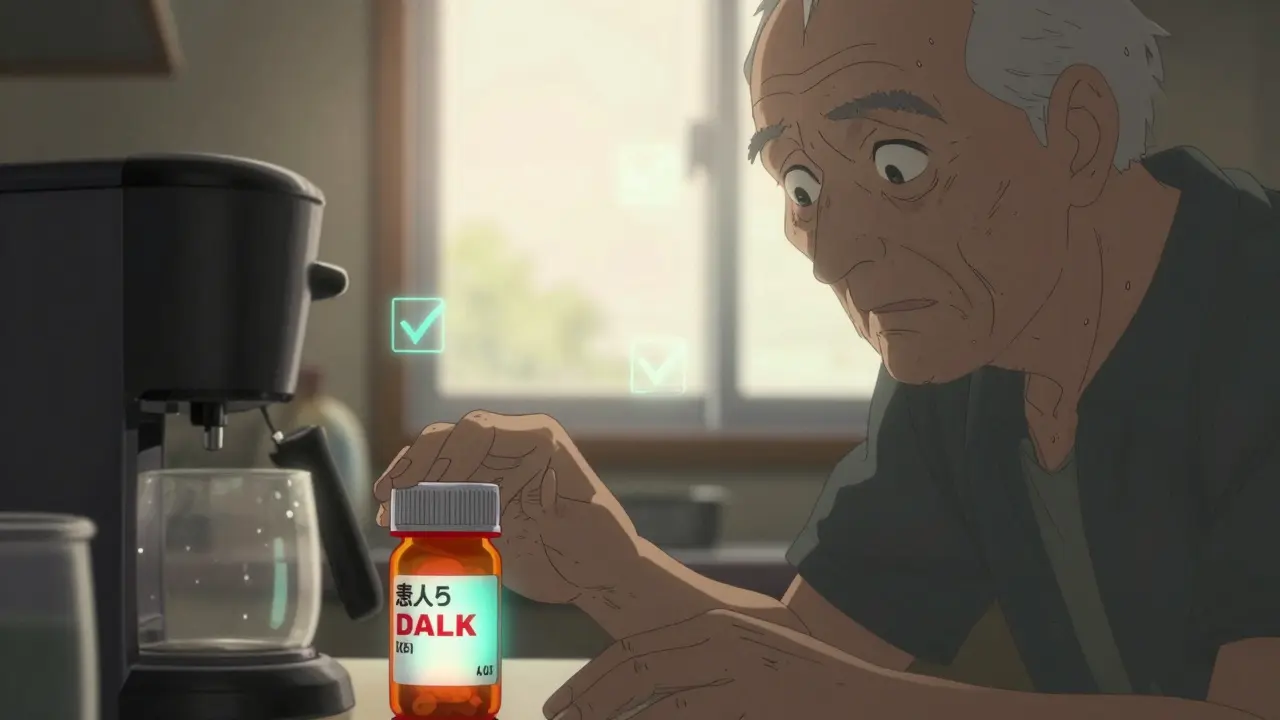
Every year, thousands of people in the U.S. are hospitalized or worse because they took the wrong pill. Not because they didn’t mean to. Not because they were careless. But because they didn’t stop to look at the label. It’s easy to forget. You’re rushing in the morning. Your hands are shaking. The bottle looks familiar. You’ve taken this pill before-so you assume it’s the same. But it’s not. And that’s where the danger starts.
Why Checking Labels Before Every Dose Isn’t Optional
Medication errors cause between 7,000 and 9,000 deaths in the U.S. every year. That’s more than car accidents. And a third of those errors happen because someone didn’t check the label. Not once. Not twice. But every single time they reached for the bottle.
The FDA updated labeling rules in January 2025 to make it easier. New labels use bigger fonts, clearer warnings, and high-contrast colors. But none of that matters if you don’t look. The system is designed to help you-but it can’t do the work for you.
Here’s the hard truth: if you’re taking more than three medications, your brain can’t keep track. Memory fails. Labels change. New prescriptions arrive. A pill that looked like a blue oval last week might be a white circle this week. If you don’t check, you’re gambling with your health.
The 10 Things You Must Verify Every Time
You don’t need to memorize everything. Just train yourself to scan for these ten things every time you open a bottle:
- Patient name - Does it say YOUR name? Not your spouse’s, not your child’s. Yours.
- Drug name - Both brand and generic. If it says “Metformin” but you thought it was “Glucophage,” they’re the same. But if it says “Insulin” and you expected “Lisinopril,” stop.
- Dosage - Is it 5 mg? 10 mg? 50 mg? A single digit mistake can be deadly.
- Frequency - “Take once daily” or “Take every 6 hours”? Confusing these leads to overdose or underdose.
- Quantity and refills - Did you get the right number of pills? Missing refills mean you’re running out. Extra pills might mean a mix-up.
- Warnings - “Avoid alcohol.” “May cause dizziness.” “Take with food.” These aren’t suggestions. They’re safety rules.
- Date filled - Is it within the last 30 days? Older meds can lose potency or become unsafe.
- Expiration date - Never take expired medication. Even if it looks fine.
- Pharmacy info - Know who filled it. If something feels off, call them. They’re your backup.
- Administration instructions - Swallow whole? Dissolve under tongue? Apply to skin? Wrong method = no effect or harm.
That’s it. Ten items. Takes 3 to 5 seconds. But it’s the difference between safety and disaster.
How to Make It a Habit (Without Forgetting)
Dr. Angela Smith from Carolinas HealthCare System says 83% of people who try to remember to check labels fail within two weeks. Why? Because memory isn’t reliable. You need a system.
Here’s how to build a habit that sticks:
- Use the Three-Touch Method - Before you take any pill, touch the label with your finger. Say out loud: “This is [Your Name], for [Condition], [Dose] [Times Per Day].” Saying it aloud forces your brain to engage. Clinical studies show this boosts adherence to 92% after 30 days.
- Place bottles where you can’t miss them - Put your morning meds next to your coffee maker. Put your nighttime pills by your toothbrush. If it’s in your path, you’ll see it. If it’s buried in a drawer, you’ll skip it.
- Use a checklist - Print out the 10-item list above. Tape it to your medicine cabinet. Check each one off with a pen. You don’t need an app. Just a pen and paper.
- Teach it back - If you live with someone, ask them to listen while you say the label details out loud. Teaching it to someone else locks it in your memory. Studies show this improves retention by 57%.
- Start slow - Pick one pill a day to check. Do it right. Make it automatic. Then add another. Don’t try to check all ten pills on day one. Build the habit piece by piece.
Most people need 18 to 22 repetitions before the action becomes automatic. That’s about three weeks. Three weeks of five-second checks. That’s all it takes to avoid a lifetime of risk.
What If You Can’t See the Label?
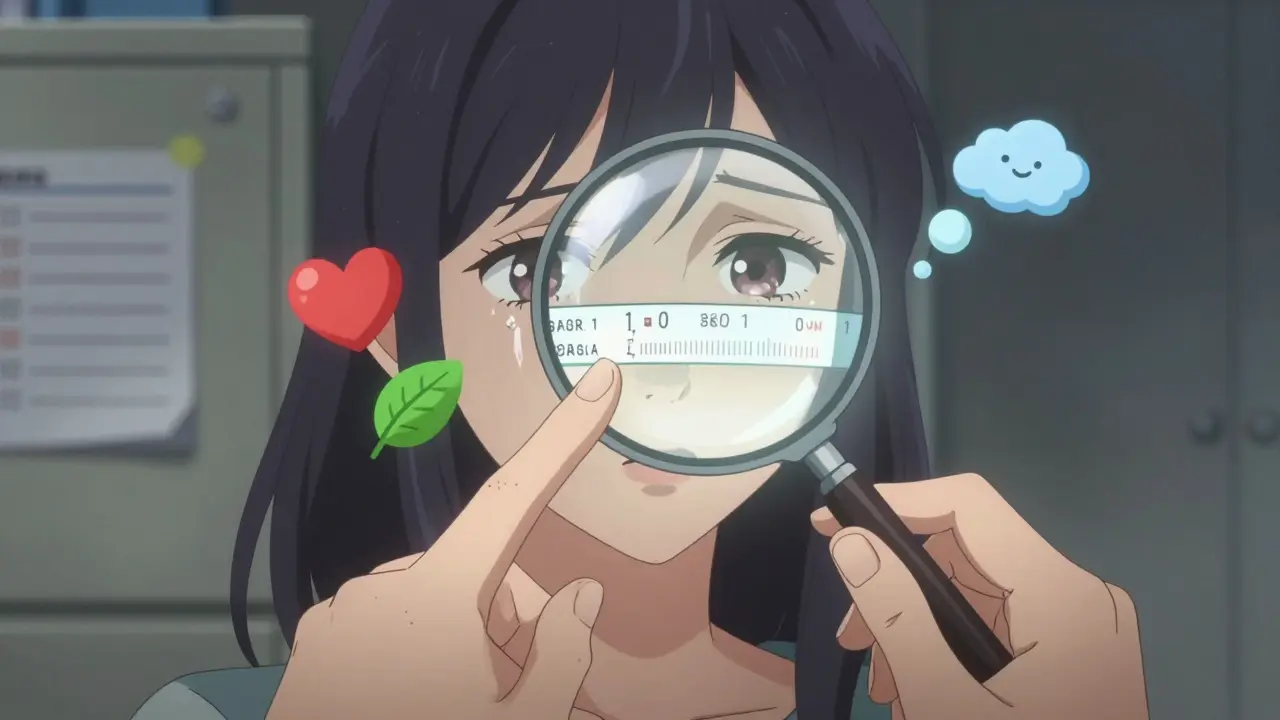
One in five adults over 65 has trouble seeing small print. That’s not rare. That’s common. And it’s dangerous.
Don’t guess. Don’t squint. Don’t hope it’s right.
Use a magnifying lens. Buy a cheap one at any drugstore. Or use your phone’s flashlight and camera-zoom in on the label. Many pharmacies now offer large-print labels. Ask for them. If they say no, ask to speak to the pharmacist. You have a right to read your own medication information.
Color-coding helps too. Put a red sticker on insulin. A green one on blood pressure pills. A blue one for anxiety meds. Just make sure the colors mean the same thing every time. And tell your caregiver what they mean.
Why Other Tools Aren’t Enough
Pill organizers? Helpful-but only if you fill them right. If you dump the wrong pills in, you’re creating a new risk.
Medication apps? Great, unless you skip the label scan. Apps that require you to photograph the label before logging a dose have 63% higher long-term use. Why? Because they force you to look.
Memory? It fails. Even if you’ve taken the same pill for years. The bottle changes. The label changes. The dose changes. Your body changes. You can’t trust your brain alone.
Checking the label every time is the only method proven to reduce medication errors by 76%. Pill organizers cut it by 42%. Apps without verification? Just 29%. The label is your last line of defense. Don’t skip it.
Real Stories, Real Consequences
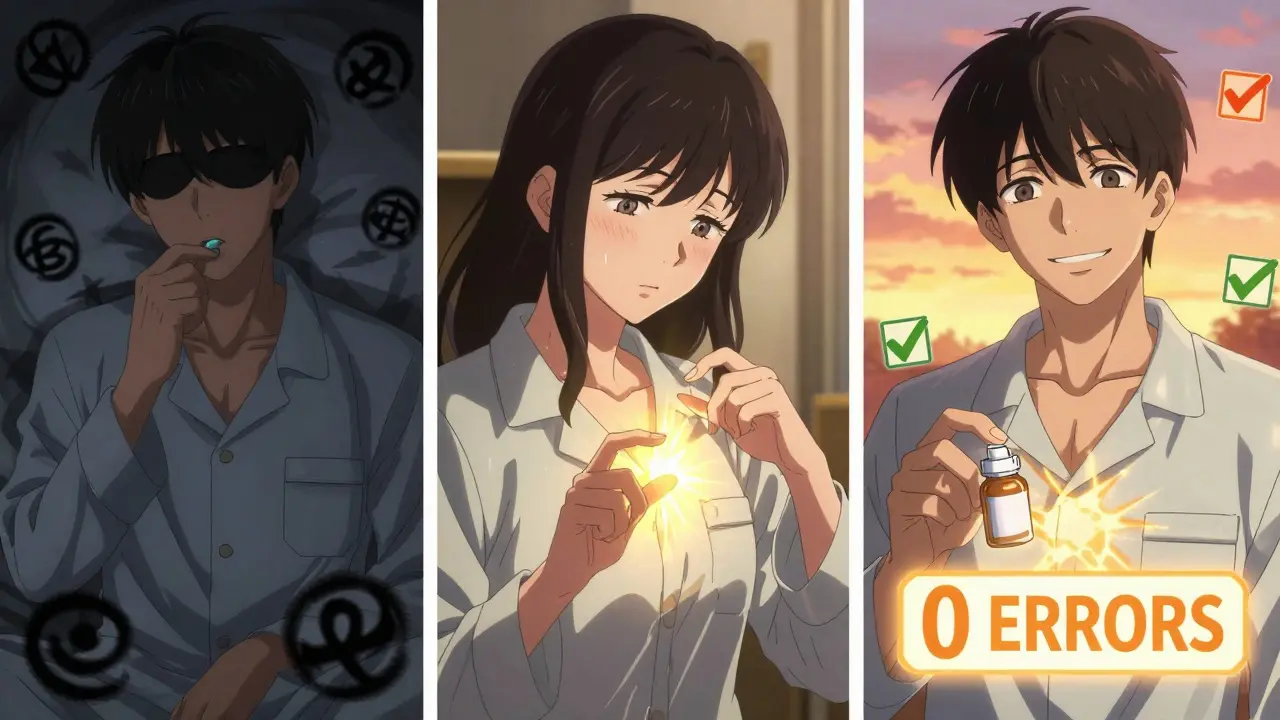
One woman on Reddit said her family used to have three medication errors a month. After starting the Three-Touch Method with her kids, they hit zero. For 18 months. No mistakes. No panic.
Another man, 78, took insulin thinking it was saline solution. He didn’t check the label. He ended up in the ER with dangerously low blood sugar. His wife said he’d “always known what he was taking.” But he didn’t. Not that day.
These aren’t rare. They happen every day. And they’re preventable.
The Bigger Picture: Why This Matters
Medication errors cost the U.S. healthcare system $42 billion a year. That’s billions in hospital stays, ER visits, and lost work. But behind every number is a person. A parent. A grandparent. Someone who just didn’t check.
The FDA, the American Society of Health-System Pharmacists, and the Institute for Safe Medication Practices all agree: checking the label before every dose is the single most effective thing you can do to protect yourself.
It’s not about being perfect. It’s about being consistent. One second. One check. One habit.
That’s how you take control. That’s how you stay safe.
What If You’re Caring for Someone Else?
If you’re helping a parent, spouse, or friend manage meds, don’t just do it for them. Teach them to do it for themselves.
Use the Three-Touch Method with them. Sit down with the bottles. Say the details out loud. Let them repeat it. Don’t assume they understand. Ask them to explain it back to you.
Set up visual cues. Put a sticky note on the cabinet: “Stop. Look. Say It.”
And if they refuse? Don’t argue. Just check for them-every time. Until they’re ready. Until they see how it changes things.
You’re not being overprotective. You’re being smart.
Final Thought: This Is Your Life
You wouldn’t drive a car without checking the brakes. You wouldn’t eat food without reading the expiration date. So why take a pill without checking the label?
This isn’t about being careful. It’s about being alive.
Start today. Pick one pill. Touch it. Say it out loud. Do it again tomorrow. And the next day. In three weeks, you won’t have to think about it. You’ll just do it.
That’s how safety becomes second nature.
 Medications
Becky M.
February 2, 2026 AT 00:30i just started doing the three-touch thing with my mom’s meds and holy crap it’s changed everything. i used to just hand her the bottle and say ‘here, this one’s for your heart’ and she’d nod and swallow. now we both say it out loud. she even corrects me when i mess up. it’s weirdly bonding. also i printed the list and taped it to the fridge. now my cat stares at it like it’s a religious text. 🐱
Ansley Mayson
February 3, 2026 AT 13:27another american overreacting to a problem that doesn’t exist. if you can’t read a label you shouldn’t be managing your own meds. the system works fine. stop making everything a crisis.
Eli Kiseop
February 3, 2026 AT 13:34so like… what if you’re blind or have severe vision loss? the whole thing feels kinda ableist tbh. i get the intent but the solution feels like it assumes everyone has 20/20 vision and a phone with zoom. what about people who can’t use tech or afford magnifiers? just saying.
Ellie Norris
February 4, 2026 AT 00:05oh my gosh yes!! i’m a pharmacist in london and i see this every single day. people grab the wrong bottle because it’s ‘the same shape’ or ‘i’ve always taken it at night’. the three-touch method? it’s gold. we’ve started handing out laminated checklists at the counter. patients love it. even the grumpy ones come back and say ‘it saved my life’
also - color coding is genius. my mum uses pink for blood pressure, blue for thyroid, yellow for pain. simple. visual. works. no app needed.
Marc Durocher
February 5, 2026 AT 18:07the fact that we have to write a 2000-word essay just to remind people not to swallow random pills is kinda tragic. i used to work in a nursing home. one guy took his wife’s insulin thinking it was his sugar pill. he was 82. didn’t know the difference between a blue pill and a white one. we had to do CPR. he lived. but his wife? she hasn’t spoken since. this isn’t ‘habit building’. it’s basic human survival.
also - sarcasm aside - the three-touch thing? it’s the only thing that actually works. tried apps. tried alarms. tried sticky notes. nothing beats saying it out loud. your brain doesn’t lie when your mouth does.
larry keenan
February 7, 2026 AT 15:00the epidemiological data on medication non-adherence and iatrogenic harm is well-documented in the Journal of Patient Safety (2024). the primary modifiable risk factor remains lack of label verification, with an odds ratio of 4.7 (CI 3.9–5.6). while behavioral interventions such as the three-touch method demonstrate moderate efficacy (RR 1.82), their sustainability is contingent upon cognitive load management and environmental cueing. institutional implementation remains inconsistent across outpatient settings.
Nick Flake
February 9, 2026 AT 05:21we are literally gambling with our lives every single day and we call it ‘routine’ 😭
you wouldn’t drive without checking your mirrors.
you wouldn’t jump off a cliff and say ‘eh, i’ve done it before’.
but you’ll swallow a pill you’ve never seen before and think ‘it’s fine’?
we are so disconnected from our own bodies.
it’s not about being careful.
it’s about remembering you’re alive.
and that’s worth 5 seconds.
every time.
every single time.
❤️
Akhona Myeki
February 9, 2026 AT 17:02in south africa we don’t have this problem because we don’t have 17 different pills for one condition. we use one medicine, one dose, one label. if you can’t read it, you don’t take it. you go to the clinic. the system works. this american obsession with overmedicating and overcomplicating is why your healthcare costs are insane. just stop. simplify.
Chinmoy Kumar
February 11, 2026 AT 11:16i live in india and we don’t have fancy labels or apps but we have something better - family. my grandma takes 6 pills a day. my sister and i take turns sitting with her. we say each name out loud. we point. we smile. we laugh when she mixes up ‘blood’ and ‘brain’ pills. it’s not perfect. but it’s human. maybe the real solution isn’t the label… it’s the person next to you.
also - i typoed ‘metformin’ as ‘metformin’ three times while typing this. so i get it. we’re all human.
clarissa sulio
February 12, 2026 AT 09:43my dad died because he took the wrong pill. he thought it was his blood pressure med. it was his diabetes med. he didn’t check. he was 74. he was smart. he was careful. he just forgot. this post saved my life. i check every single pill now. even the ones i’ve taken for 20 years. because i won’t lose anyone else.