
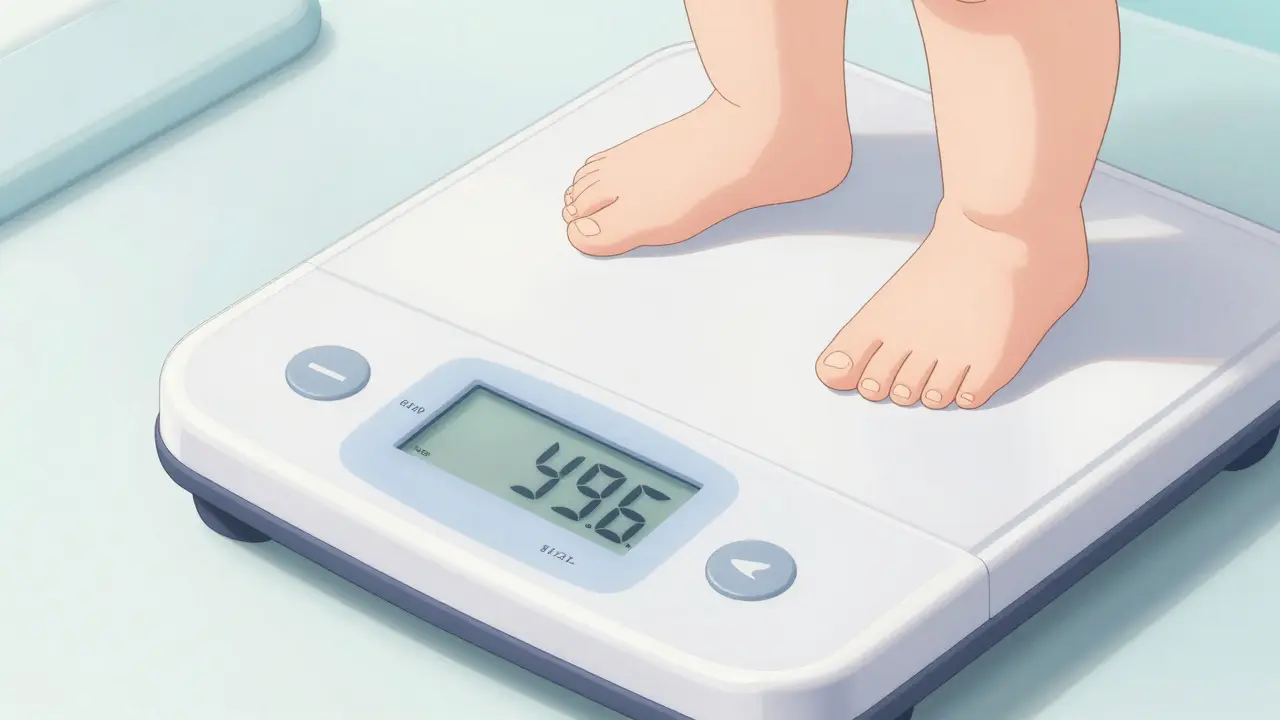
Children aren't just small adults. This simple fact is where many medical mistakes begin. According to the World Health Organization, children are three times more likely to suffer from medication errors than adults. Why? Because while an adult might get a standard 500mg tablet, a child's dose is a moving target, shifting daily based on their weight. A single misplaced decimal point or a mix-up between pounds and kilograms can turn a life-saving treatment into a dangerous overdose.
The core problem is that pediatric dosing relies on precise calculations-usually milligrams per kilogram (mg/kg) or milligrams per square meter (mg/m²). When these calculations are done by hand or based on outdated charts, the risk of a pediatric dispensing errors spike. To stop this, healthcare facilities are moving toward mandatory weight-based verification systems. These aren't just a "good idea"; they are critical safety barriers that ensure the dose matches the actual patient standing in front of the provider.
The High Cost of Calculation Errors
When we look at the data, the danger becomes clear. A systematic review in Frontiers in Pediatrics found that nearly 33% of dispensing errors in pediatric settings were caused by incorrect weight-based calculations. Even more concerning, about 8.4% of those errors caused actual harm to the child. The most common culprit? The conversion between pounds and kilograms. The CDC's PROTECT Initiative found that 40% of liquid medication errors in toddlers resulted from these conversion blunders.
To fight this, the American Society of Health-System Pharmacists is a professional organization that sets standards for pharmacy practice in health systems has mandated that facilities implement formal weight-based verification. Their guidelines highlight that up to 20% of errors stem from simple miscalculations or using a weight from three visits ago that no longer applies to a growing child.
Building a Fail-Safe Verification System
A truly effective system doesn't rely on a pharmacist "remembering" to check the weight. It builds the check into the workflow. The goal is to create a mandatory path where the medication cannot be dispensed unless a current, verified weight is present.
The most successful approach involves Clinical Decision Support Systems, or CDSS, which are software tools integrated into health records that provide clinicians with evidence-based suggestions and alerts during decision-making . When a doctor enters a dose, the CDSS compares it against the patient's weight and flags anything outside the safe range. A study in the Journal of the American Medical Informatics Association showed that these alerts can slash dosing errors by over 87%.
For the hardware side, the American Academy of Pediatrics recommends using digital scales that only display kilograms. By removing the "pounds" option entirely, you eliminate the possibility of a provider mistaking one unit for the other. For infants, these scales need a precision of 0.1 kg, while older children can be measured to 0.5 kg.
| Method | Error Reduction | Key Trade-off |
|---|---|---|
| CPOE with Integrated CDSS | ~87% | High setup cost, risk of alert fatigue |
| Preprinted Order Sheets | 47% - 82% | Less effective in complex academic centers |
| Standalone Protocols (Manual) | ~36.5% | Highly dependent on human memory |
| Automated Dispensing Cabinets | ~68.9% | Increases workflow time per prescription |

The Three-Point Check Strategy
Technology is great, but it isn't a magic wand. Experts like Dr. Matthew Grissinger from the Institute for Safe Medication Practices (ISMP), which is a nonprofit organization dedicated to preventing medication errors and promoting patient safety , argue that a single check isn't enough. The gold standard is a three-point verification process:
- Prescription Entry: The weight is verified and entered into the Electronic Health Record (EHR), and the dose is calculated based on that weight.
- Pharmacy Verification: A pharmacist double-checks the calculation and ensures the liquid concentration is correct.
- Bedside Administration: The nurse or provider verifies the dose against the patient's current weight one last time before the medicine is given.
This multi-layered approach is vital because errors can happen at any stage. A doctor might prescribe the right dose, but a pharmacist might misread the label, or a nurse might use the wrong syringe. Using Barcode Medication Administration (BCMA) systems to link the patient's weight data directly to the medication label can further reduce these administration errors by over 74%.
Overcoming the "Alert Fatigue" Hurdle
One of the biggest threats to safety is actually the safety systems themselves. Have you ever seen a driver ignore a "fasten seatbelt" beep because it goes off too often? That's alert fatigue. In pediatric care, if a system flags every single dose for a teenager who is nearly adult-sized, clinicians start clicking "ignore" without looking. A 2021 study found that nearly 42% of weight-based alerts were overridden, and roughly 18% of those overrides were actually dangerous errors.
To fix this, new software updates, like the Pediatric Safety Module from Epic Systems, are using adaptive dosing limits. Instead of a hard number, the system looks at growth percentiles. If a child is in the 95th percentile for weight, the system adjusts the "normal" range so the clinician doesn't get an unnecessary alert, keeping the high-priority warnings meaningful.

Practical Implementation for Pharmacy Staff
If you're bringing these systems into a clinic or hospital, don't expect it to happen overnight. The ASHP suggests a rollout period of 6 to 9 months. It takes time to train staff and calibrate software. One of the most effective practical tips is to standardize concentrations. For example, if every ward uses a standard 5 mg/mL concentration for vancomycin, the math becomes much simpler, and the risk of a calculation error drops by over 70%.
Another critical rule: weight must be fresh. An infant's weight can change significantly in a week. The ISMP recommends weight measurements be taken within 24 hours for acute care patients and every 30 days for outpatients. If the weight is old, the verification system should lock the prescription until a new weight is entered.
Why are pediatric errors more common than adult errors?
Children require weight-based dosing (mg/kg) rather than standard doses. This adds a layer of mathematical complexity and requires frequent weight updates as the child grows, creating more opportunities for calculation and transcription errors.
What is the most dangerous weight-related error?
The most common and dangerous errors involve the conversion between pounds (lbs) and kilograms (kg). Because many caregivers use pounds while clinicians use kilograms, a failure to convert correctly can lead to a tenfold overdose or underdose.
How does a Clinical Decision Support System (CDSS) help?
A CDSS is integrated into the electronic health record and automatically calculates the safe dose range based on the patient's recorded weight. It triggers an alert if the prescribed dose is too high or too low, acting as a digital safety net.
What is "alert fatigue" in a pharmacy setting?
Alert fatigue occurs when clinicians are overwhelmed by frequent, non-critical warnings from their software. This leads them to subconsciously ignore or override alerts, which may include genuine warnings about a dangerous medication error.
How often should a child's weight be re-verified?
For patients in acute care (hospitalized), weight should be verified every 24 hours. For outpatients, a weight measurement every 30 days is generally required to ensure dosing remains accurate as the child grows.
Next Steps for Safety
If you are managing a pediatric unit, start by auditing your weight documentation. Are you still using pounds in some charts and kilograms in others? If so, move to a kilogram-only system immediately. Then, look at your software-can you implement a hard stop that prevents a prescription from being sent without a weight entry? Finally, foster a culture where nurses and pharmacists feel comfortable questioning a dose, even if it comes from a senior physician. Technology helps, but a team that communicates is the ultimate safety net.
 Medications