
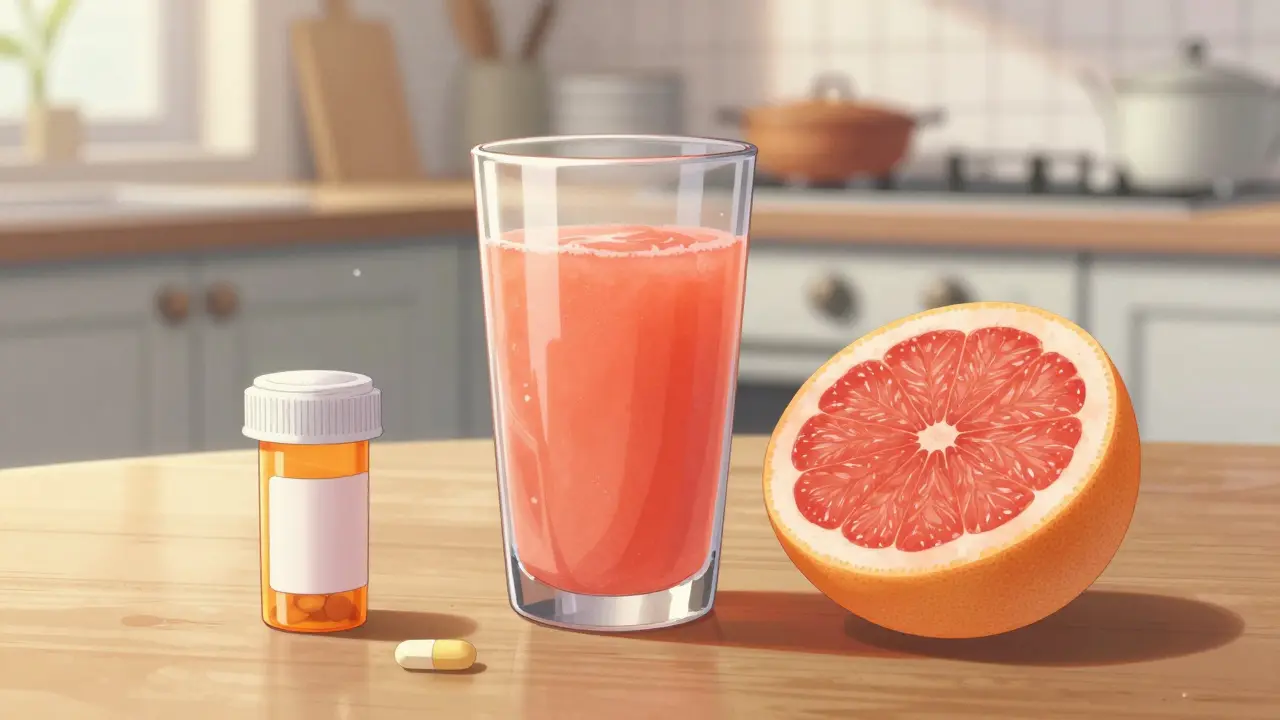
Why Grapefruit Causes Trouble
It all comes down to a specific protein in your gut called CYP3A4. Think of this enzyme as a security guard at the entrance to your bloodstream. Its job is to break down a portion of your medication before it ever reaches your heart, ensuring only the right amount of the drug gets absorbed. CYP3A4 is a member of the cytochrome P450 enzyme system found primarily in the intestinal epithelium and liver. Grapefruit contains compounds called furanocoumarins-specifically bergamottin and 6',7'-dihydroxybergamottin-that essentially "knock out" this security guard. When the CYP3A4 enzyme is inhibited, the medication isn't broken down. Instead, it floods into your system. This isn't a fleeting effect. Research shows that a single 200ml glass of grapefruit juice can maximize this inhibition, and the effects can last up to 72 hours. Because the enzyme is irreversibly inactivated, your body has to create new enzymes from scratch before the "guard" is back on duty. This means eating grapefruit in the morning and taking your pill at night won't save you; the interaction is already locked in.Which Medications Are at Highest Risk?
Not all blood pressure meds react the same way. The risk depends heavily on whether the drug is a dihydropyridine (DHP) or a non-dihydropyridine. DHP medications are far more dependent on the CYP3A4 enzyme for metabolism, making them the primary targets for citrus interference. Felodipine is the most sensitive of the bunch. In some cases, grapefruit juice can increase the bioavailability of felodipine by up to 500%. To put that in perspective, plasma concentrations can jump from 2.5 ng/mL to a staggering 11.5 ng/mL. Other high-risk options include Nicardipine, Nimodipine, and Pranidipine. If you are taking Amlodipine (often sold as Norvasc), the interaction exists but is generally less severe than with felodipine. Non-dihydropyridines like verapamil are also impacted, though usually to a degree that is less clinically dangerous for the average patient. If you are unsure which version you are on, check your medication's "black box warning"-high-risk CCBs are required to list these dietary restrictions prominently.| Medication Entity | Interaction Risk Level | Typical Effect |
|---|---|---|
| Felodipine | Very High | 3-5x increase in bioavailability |
| Nicardipine / Nimodipine | High | Significant increase in plasma levels |
| Amlodipine | Moderate | Mild to moderate increase |
| Verapamil | Low to Moderate | Variable clinical significance |

The Real-World Danger: What Happens to Your Body?
When your blood pressure medication levels spike unexpectedly, your body reacts. The most common symptom is severe hypotension-blood pressure that drops too low. You might feel a sudden wave of dizziness, extreme flushing of the skin, or a heavy feeling in your legs caused by peripheral edema (swelling). For younger patients, this might just feel like a "bad spell." For an elderly patient, however, the stakes are much higher. A massive increase in the drug's effect can lead to syncope (fainting) or reflex tachycardia, where the heart beats dangerously fast to compensate for the plummeting blood pressure. Imagine an intended 60 mg dose effectively becoming a 140 mg dose over four days of grapefruit consumption. At that level, a person may simply be unable to stand up without collapsing.Beyond the Grapefruit: Other Citrus Traps
Many people assume that if they just swap grapefruit for an orange, they are safe. While sweet oranges are generally fine because they lack significant furanocoumarins, not all citrus is created equal. Avoid Seville oranges (the bitter kind often used in marmalades) and tangelos. These fruits contain the same enzyme-blocking compounds as grapefruit. If you are looking for a safe citrus alternative, stick to standard sweet oranges or lemons, which have negligible effects on the CYP3A4 system.
Safer Alternatives and Practical Strategies
If you can't imagine a life without citrus, you have options. First, talk to your doctor about switching to a different class of antihypertensives that don't rely on the CYP3A4 pathway. Consider these alternatives:- ACE Inhibitors such as Lisinopril.
- Angiotensin-Receptor Blockers (ARBs) like Valsartan.
- Thiazide Diuretics such as Hydrochlorothiazide.
- Certain Beta Blockers like Metoprolol.
How to Manage Your Diet and Meds
Consistency is key. If you are on a high-risk CCB, the safest path is total avoidance. But if you've already consumed grapefruit, don't panic-just be vigilant.- Audit your pantry: Look for "bitter orange" or Seville orange in your jams and juices.
- The 72-Hour Rule: If you've had grapefruit, remember the enzyme inhibition lasts for three days. Monitor your blood pressure more closely during this window.
- Track your symptoms: Keep a log of any dizziness or swelling and report them to your physician immediately.
- Ask your pharmacist: Not every doctor screens for diet, but pharmacists are often the best line of defense for spotting these interactions.
Can I eat grapefruit if I take my medication at a different time of day?
No. Because grapefruit irreversibly inactivates the CYP3A4 enzyme in your gut, the effect lasts for up to 72 hours. Timing the dose several hours apart from the fruit does not prevent the interaction.
Are all oranges dangerous for people on CCBs?
No. Standard sweet oranges are generally safe. However, you must avoid Seville (bitter) oranges and tangelos, as these contain furanocoumarins that block drug metabolism.
What are the first warning signs of a grapefruit-drug interaction?
Watch for sudden dizziness, extreme flushing of the face and neck, swollen ankles (peripheral edema), or a feeling of fainting when standing up.
Is Amlodipine safer than Felodipine regarding citrus?
Yes, Amlodipine generally has a less pronounced interaction than Felodipine, which can see a 500% increase in bioavailability. However, a risk still exists, and you should consult your doctor.
Why does this only happen in the gut and not the liver?
While CYP3A4 exists in both, grapefruit juice primarily attacks the enzymes in the intestinal epithelium (the gut wall). This allows the drug to enter the bloodstream in much higher concentrations than intended.
 Medications