

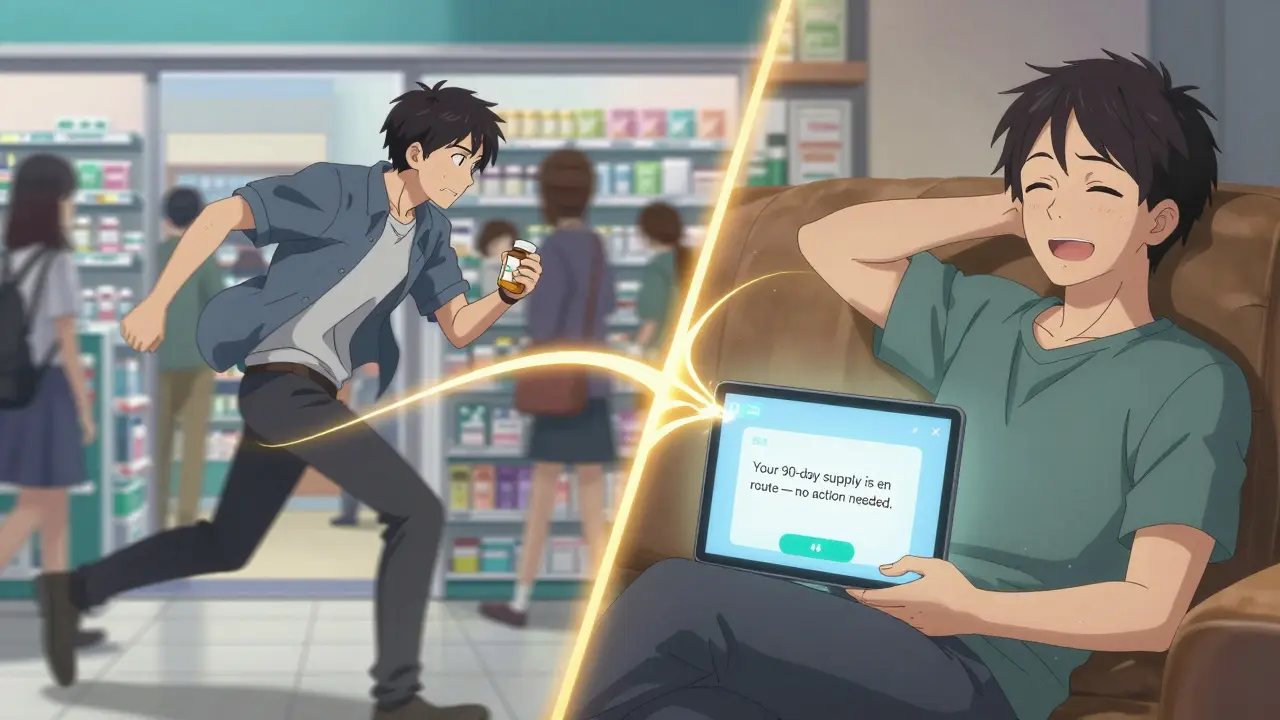
Managing daily medication for chronic conditions is hard enough. Now imagine forgetting to refill your blood pressure pills, diabetes meds, or cholesterol drugs - again. For millions of people, this isn’t a hypothetical problem. It’s a daily reality. That’s where automated refills come in. No more calls to the pharmacy, no more last-minute dashes to the drugstore, no more guessing if you have enough left. Automated refill systems for generic medicines are quietly changing how people stay on track with their prescriptions - and the data shows it works.
How Automated Refills Actually Work
Automated refill systems don’t magic up your meds. They’re smart reminders built into pharmacy software. Here’s how it breaks down: when you sign up, the pharmacy tracks your prescription start date and daily dosage. Let’s say you take one pill a day of a 30-day supply. Around day 23, the system automatically sends a refill request to the pharmacy. You don’t have to do a thing. Within a day or two, your refill is processed, packaged, and ready for pickup or delivery. Some systems even send you a text or email saying, “Your refill is ready.”
This isn’t just a convenience feature. It’s a tool built to fight medication nonadherence - a problem that affects nearly half of all patients with chronic illnesses, according to the World Health Organization. Generic medicines, which are cheaper and just as effective as brand-name drugs, are often taken long-term. That makes them perfect candidates for automation. Studies show patients on automatic refills are 7.2% more likely to take their statins, 6.8% more likely to stick with diabetes meds, and 3.9% more consistent with blood pressure drugs compared to those who refill manually.
Why Generic Medicines Are the Perfect Fit
Generic drugs are the backbone of long-term treatment. They’re not second-rate. They’re exact copies of brand-name drugs, approved by the FDA, with the same active ingredients, dosage, and effectiveness. But because they’re cheaper, patients are more likely to take them daily - and more likely to run out. That’s where automated refills shine.
Think about it: if you’re on a $5 monthly generic for high blood pressure, you’re not going to skip doses because of cost. But you might forget to refill. Automated systems remove that mental burden. You don’t have to remember. You don’t have to call. You don’t have to wait for a doctor’s appointment just to get a new script. The pharmacy does it for you. And because generics are often prescribed in 90-day supplies, the system can predict your refill schedule with high accuracy.
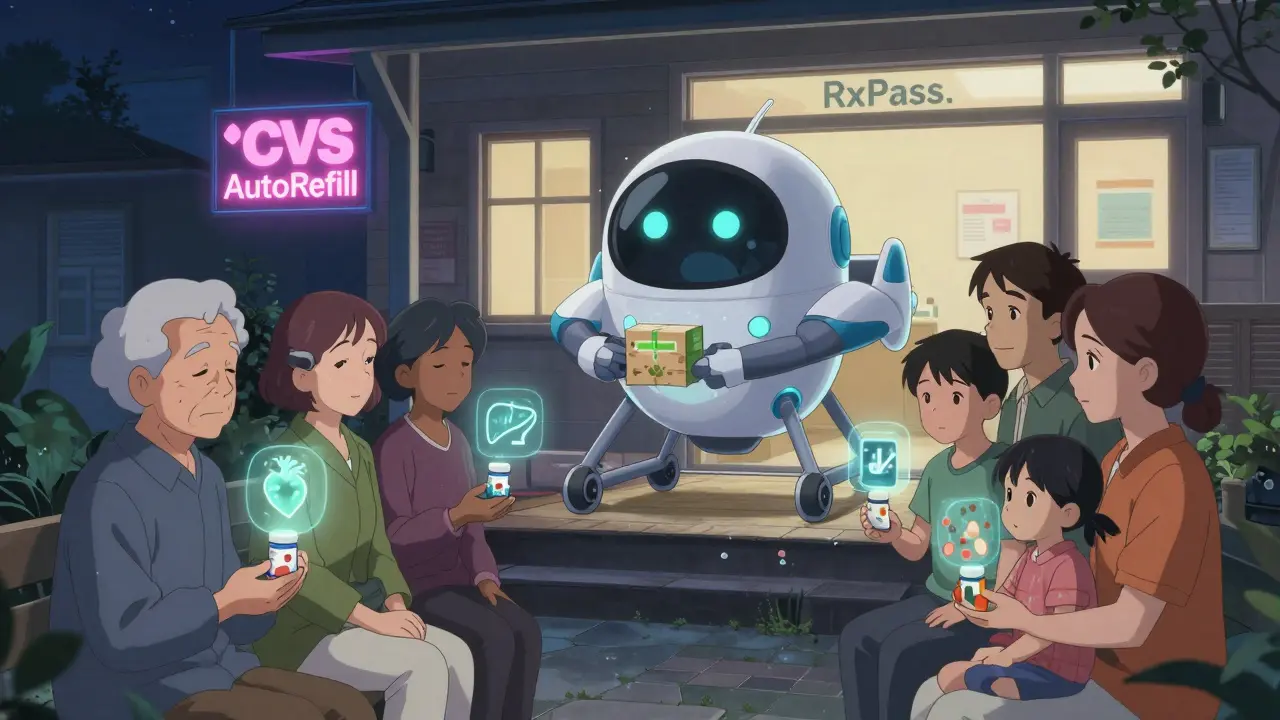
Platforms like Amazon Pharmacy’s RxPass - launched in January 2023 - take this further. For $5 a month, Prime members in 45 states get access to 60 common generic medications, automatically refilled and shipped. A 2025 study in JAMA Network Open found users of RxPass refilled their meds 18% more often than non-subscribers. Why? Because the system removes cost and friction at the same time.
Real Benefits You Can Feel
The biggest win? Peace of mind. One user on Reddit, who’s been on automatic refills for hypertension meds for three years, said: “I don’t think about it anymore. I just know I’ll have my pills.” That’s the point.
- No more missed doses - especially helpful for older adults or people with memory issues.
- Less pharmacy stress - no more waiting in line or calling during business hours.
- Fewer gaps in treatment - consistent medication = fewer hospital visits.
- Lower out-of-pocket costs - automatic refills often align with 90-day fills, which usually cost less than three 30-day fills.
Pharmacies benefit too. CVS and Walgreens report a 37% drop in manual refill calls since launching automated systems. That means pharmacists spend less time answering “I need my pills” calls and more time helping patients with complex questions - like drug interactions or side effects.
Where It Goes Wrong
It’s not perfect. The biggest risk? Dosage changes.
Imagine your doctor increases your diltiazem from 240 mg to 360 mg. You’re excited. You tell your pharmacist. But if the automated system hasn’t been updated - because the change wasn’t synced between your doctor’s EHR and the pharmacy’s system - you’ll still get the old dose. That’s not hypothetical. Consumer Medication Safety documented a case like this in December 2024. The patient didn’t know the refill was wrong until they ran out early and called.
Another issue: some mail-order pharmacies and pharmacy benefit managers (PBMs) trigger refills early to boost revenue. Instead of waiting until you’ve used 80% of your 90-day supply, they might push a refill at day 60. That creates unnecessary waste - and extra charges if you’re not on a subscription plan. A 2024 report from Judi Health found some PBMs do this intentionally, generating up to 50% more revenue from early refills.
And then there’s the silent side effect: fewer human interactions. KevinMD, a physician blog, argues that automatic refills remove the 30-day check-in that used to happen when you picked up your meds. That’s when pharmacists noticed if you were struggling, had side effects, or needed counseling. Automation can’t replace that.
How to Use It Safely
If you’re considering automated refills, here’s how to make sure they work for you - not against you.
- Enroll on purpose - Don’t just click “yes” during online checkout. Read what you’re signing up for. Some systems auto-enroll you unless you opt out.
- Confirm dosage changes - Every time your doctor changes your dose, call the pharmacy and say, “I need to update my refill settings.” Don’t assume it’s done.
- Check your delivery schedule - Review your refill dates every few months. If you’re getting pills more often than you should, ask why.
- Use multi-channel alerts - Enable text, email, and app notifications. That way, if one system fails, you’ll still know.
- Know your pharmacy’s policy - Big chains like CVS and Walgreens have better systems than small independents. Ask about their automation features before signing up.
Also, don’t be afraid to ask for help. 83% of elderly patients need assistance enrolling. Most pharmacies offer in-person help during off-hours. You’re not alone.
What’s Next
The technology is getting smarter. By 2026, two out of three automated refill systems will use AI to adjust refill timing based on your personal habits. If you usually refill two days early, the system will learn that. If you skip a week, it might send a gentle nudge. Some systems, like CVS’s integration with Apple Health, now track your refill history directly in your health app.
And the trend is clear: automation is here to stay. The market for pharmacy automation is projected to hit $12.3 billion by 2027. Why? Because it works. For patients, it reduces stress. For pharmacies, it cuts costs. For insurers, it lowers hospitalization rates. And for Medicare, it improves star ratings - which means more money.
But the real winner? The person who takes their medicine - every day - without having to think about it.
Are automated refills safe for seniors?
Yes - if used correctly. Seniors benefit the most from automated refills because they often take multiple medications and may forget refill dates. However, they’re also at higher risk for dosage errors if changes aren’t communicated. Always confirm updates with the pharmacy, and consider having a family member help manage the account. Most pharmacies offer in-person enrollment help for seniors.
Can I opt out of an automated refill system?
Absolutely. You can opt out at any time by calling your pharmacy, logging into your account online, or visiting in person. Some pharmacies auto-enroll you unless you say no - so always check your settings. Even if you’re enrolled, you can pause refills temporarily if you’re going on vacation or switching meds.
Do automated refills cost extra?
No, there’s no fee just for using automated refills. The cost of your medication stays the same - whether you refill manually or automatically. Some subscription services like Amazon’s RxPass charge a monthly fee, but that’s for unlimited access to 60 generics, not for automation itself. Traditional automated refills are a free service offered by pharmacies to improve adherence.
Why do I keep getting my meds even after I stopped taking them?
This happens when the pharmacy’s system isn’t updated after you stop a medication. If your doctor cancels the prescription but doesn’t notify the pharmacy, the system will keep sending refills. Always inform your pharmacy directly when you stop a drug - don’t assume your doctor’s note is enough. Review your medication list quarterly to catch these errors.
Which pharmacies offer the best automated refill systems?
National chains like CVS, Walgreens, and Walmart Pharmacy lead in automation. They have better integration with electronic health records, multi-channel alerts (text, email, app), and dedicated support teams. Independent pharmacies are catching up, but only 47% have full automation compared to 89% of national chains. Amazon Pharmacy adds value with its RxPass subscription, especially for patients on common generics.
 Medications