
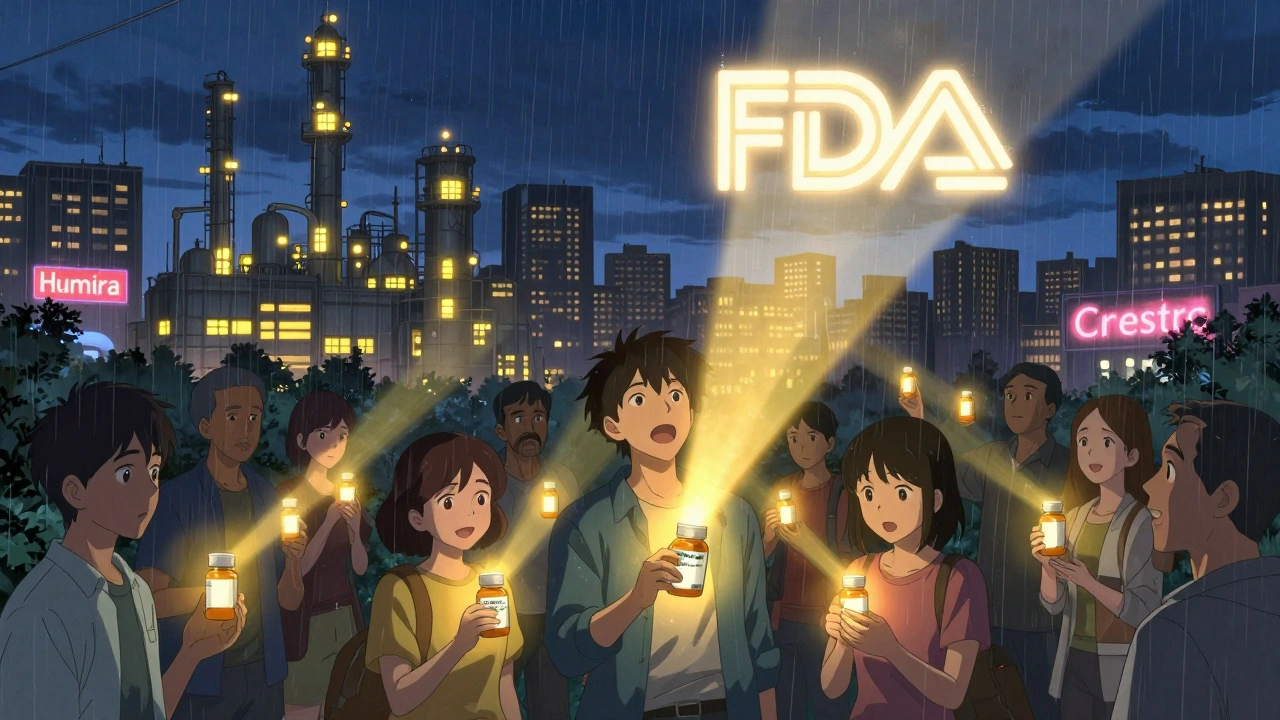
Every year, the FDA approves hundreds of generic drugs - and each one saves Americans billions. But the numbers aren’t steady. Some years, savings spike. Others, they drop. Why? It’s not random. It’s about which brand-name drugs lose their patents. And when they do, prices collapse - often by more than 70%. That’s not just a small discount. That’s a financial earthquake for patients, insurers, and the whole healthcare system.
How the FDA Measures Savings
The FDA doesn’t just count how many generics get approved. It tracks what happens after approval. For each new generic drug, they watch sales and prices for the first 12 months. They compare what patients paid before the generic hit the market to what they paid after. The difference? That’s the savings.
For example, in 2019, the FDA approved 28 first-time generic versions of brand-name drugs. One of them was a heart medication that had been selling for $300 a month. Within months, the generic version cost $12. That one switch saved the system $1.8 billion in just a year. That’s why 2019 was the highest-saving year on record: $7.1 billion from first-time generics alone.
But not every year is like that. In 2020, savings dropped to $1.1 billion. Why? Because no blockbuster drugs lost their patents that year. The big money comes from drugs that sold for billions - like Humira, Crestor, or Eliquis. When one of those goes generic, it doesn’t just save money. It reshapes the market.
Year-by-Year Breakdown: First Generic Approvals
Here’s what the FDA reported for first-time generic approvals - the ones that truly disrupt the market:
- 2018: $2.7 billion in savings
- 2019: $7.1 billion - the highest ever
- 2020: $1.1 billion
- 2021: $1.37 billion
- 2022: $5.2 billion
2022’s jump wasn’t luck. The FDA approved several generics for drugs with massive sales volumes - like a diabetes medication used by millions. Even though only a handful of drugs led the charge, they drove most of the savings. In 2021, just five first generics accounted for half of the $1.7 billion total from first-time approvals. That’s the pattern: few drugs, huge impact.
Total Savings: What the Whole Market Adds Up To
But the FDA’s number only tells part of the story. The Association for Accessible Medicines (AAM) looks at all generics in use - not just the new ones. Their numbers are much bigger because they include every generic pill, shot, or inhaler already on the shelf.
In 2023, the total savings from all generic drugs in the U.S. hit $445 billion. That’s not a typo. That’s more than the entire annual budget of the Department of Education. And it’s not just one year. Since 2014, generics have saved the system over $3.1 trillion.
Here’s how that money breaks down by payer:
- Medicare: $137 billion saved in 2023 - about $2,672 per beneficiary
- Commercial insurers: $206 billion saved
- Medicaid: $102 billion saved
And by condition? Heart disease drugs saved $118 billion. Mental health drugs saved $76 billion. Cancer treatments saved $25 billion. These aren’t theoretical numbers. They’re real dollars taken out of patients’ pockets.

Why the Gap Between FDA and AAM Numbers?
The FDA’s $5.2 billion in 2022 and the AAM’s $445 billion in the same year aren’t contradictory. They’re measuring different things.
The FDA tracks the new savings from drugs that entered the market that year. The AAM tracks the total savings from every generic drug already being used. Think of it like this: the FDA measures the new rain falling in a month. The AAM measures the total water in the reservoir.
That’s why the AAM’s numbers are so much larger. Most of the savings come from generics that have been on the market for years. A drug like metformin, approved in the 1950s, still saves $1 billion a year today. The FDA doesn’t count that. The AAM does.
Who Really Benefits?
Patients pay less. Pharmacists report 92% of generic prescriptions cost $20 or less. The average copay? Just $6.97. That’s life-changing for someone with diabetes, asthma, or high blood pressure who needs medication every day.
But here’s the catch: not all savings reach the patient. Pharmacy benefit managers (PBMs) - middlemen between insurers and pharmacies - often keep a big chunk of the discount. A 2023 Senate investigation found only 50-70% of generic savings actually lower out-of-pocket costs. The rest goes into rebates and hidden fees.
State Medicaid programs see the biggest direct benefits. California’s Medi-Cal program saved $23.4 billion in one year. Alaska, with a tiny population, still saved $354 million. The scale matches the population - but the impact is always huge.
The Bigger Picture: Generics Are the Backbone of U.S. Healthcare
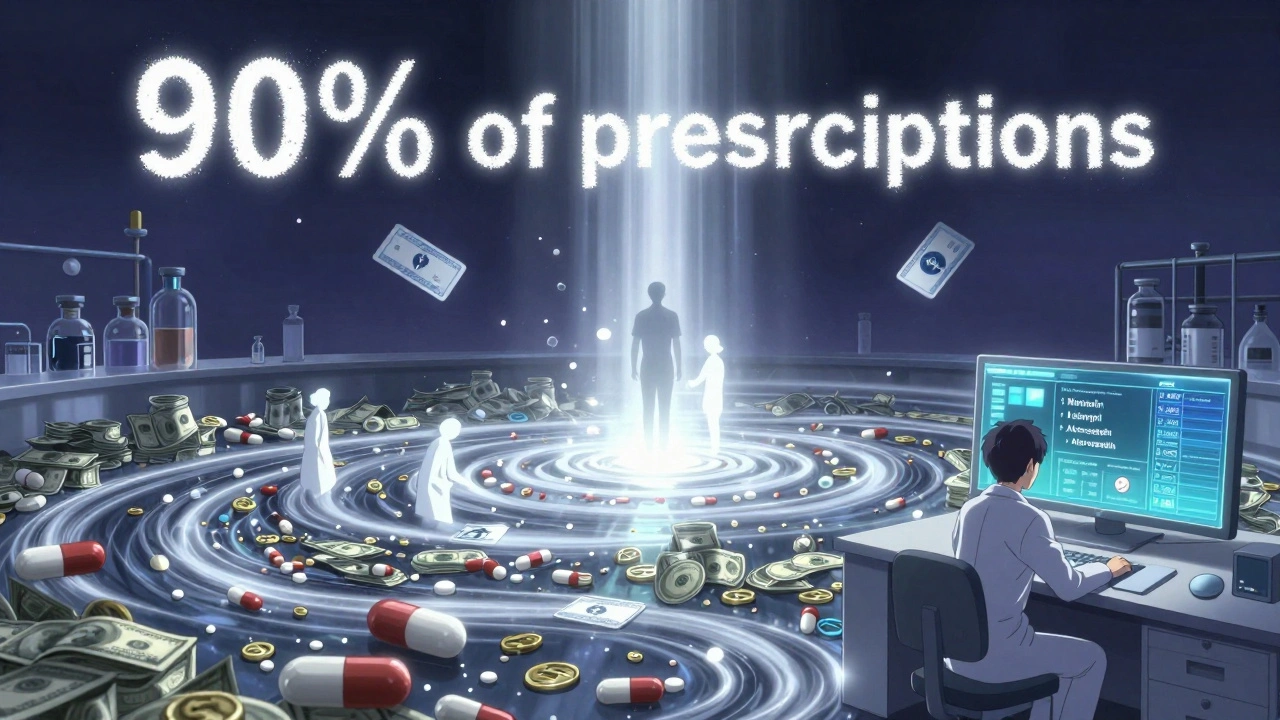
Generics make up 90% of all prescriptions filled in the U.S. But they cost only 13.1% of total drug spending. That’s the power of competition. When a brand-name drug loses its patent, multiple companies jump in. Prices drop fast. And they stay low.
Today, the FDA approves over 700 generic applications a year. Their review time has dropped to under 10 months for most applications - thanks to funding from the Generic Drug User Fee Amendments (GDUFA). That means faster access, more competition, and more savings.
Still, challenges remain. Some brand companies delay generics by filing lawsuits or using complex patent tricks. Others lock patients into risky programs called REMS that make it harder for generics to enter. And newer drugs - especially biologics - are harder to copy. Biosimilars, the generic version of biologics, have only 59 approvals as of 2024. Their savings are still small compared to traditional generics.
What’s Next?
The pipeline is full. Dozens of top-selling drugs - including Humira, Keytruda, and Stelara - will lose patent protection by 2030. That could unlock hundreds of billions more in savings.
The AAM projects total generic and biosimilar savings will hit $3.9 trillion by 2028. That’s $450-500 billion per year. But that future depends on policy. If regulators keep pushing for faster approvals, and if lawmakers crack down on patent abuse, the savings will keep growing.
Right now, every generic approval isn’t just a regulatory win. It’s a lifeline. For a parent choosing between insulin and groceries. For a veteran paying for heart meds on a fixed income. For a teenager managing asthma without insurance.
Generics don’t just lower prices. They make healthcare possible for millions.
How much do generic drugs save the average American each year?
The average American saves about $1,300 per year on prescription drugs thanks to generics. For Medicare beneficiaries, that number rises to $2,672 annually. These savings come from lower prices on common medications like metformin, lisinopril, and atorvastatin - drugs millions take every day.
Why do generic drug savings vary so much from year to year?
Savings spike when a blockbuster drug - one that sells for billions - loses its patent. In 2019, multiple high-revenue drugs went generic at once, pushing savings to $7.1 billion. In 2020, no major drugs lost patent protection, so savings dropped to $1.1 billion. It’s not about how many generics are approved - it’s about how big the drugs are.
Do generic drugs work the same as brand-name drugs?
Yes. The FDA requires generics to have the same active ingredient, strength, dosage form, and route of administration as the brand-name version. They must also meet the same strict standards for quality, safety, and effectiveness. The only differences are in inactive ingredients like fillers or color - which don’t affect how the drug works.
Why don’t I always see lower prices at the pharmacy?
Even though generics cost far less, your out-of-pocket price might not reflect that. Pharmacy benefit managers (PBMs) negotiate rebates with drugmakers and keep part of the discount. A 2023 Senate report found only 50-70% of generic savings reach patients. Insurance formularies and copay structures also play a role - sometimes a brand drug costs less than the generic because of how rebates are applied.
Are biosimilars as cost-effective as traditional generics?
Not yet. Biosimilars are the generic version of complex biologic drugs - like those used for cancer or autoimmune diseases. They’re harder and more expensive to make, so they don’t drop in price as sharply. While traditional generics cost 80-95% less than brands, biosimilars typically save 15-35%. With 59 approved as of 2024, their savings are growing, but they’re still a small fraction of overall generic savings.
How can I make sure I’m getting the generic version of my medication?
Ask your pharmacist. By law, they must offer the generic if it’s available - unless your doctor specifically says "dispense as written" or your insurance doesn’t cover it. Always check your prescription label and your receipt. If you’re paying more than $20 for a common generic, ask if a different version is available. Many pharmacies offer $4 or $10 generic lists for routine medications.
 Medications
Paul Dixon
December 11, 2025 AT 12:07Generics are the unsung heroes of healthcare. I paid $4 for my blood pressure med last month. Brand? $400. No contest. This isn't politics, it's math.
Aman deep
December 12, 2025 AT 08:31Love how this breaks it down. In India, we see this too - generics make life possible for people who’d otherwise skip meds. That $1.3k avg savings? For a lot of folks, it’s the difference between eating and taking pills. Real talk.
Jean Claude de La Ronde
December 12, 2025 AT 20:58So the FDA’s $7B year was just because some rich people stopped overpaying for pills? Wow. What a tragedy. Next you’ll tell me breathing air is cheaper than buying oxygen tanks. The system’s a joke and we’re all just laughing while we pay for it.
Courtney Blake
December 14, 2025 AT 10:27Let’s be real - the only reason generics exist is because Big Pharma got lazy and stopped innovating. They’d rather sit on patents and charge $1000 for a pill that costs 2 cents to make. This isn’t savings - it’s justice. And it’s about time.
And don’t even get me started on PBMs. Those middlemen are the real vampires. They take half the discount, then act like they’re doing us a favor. I’ve seen my copay go UP after a generic launched. That’s not a bug, that’s the business model.
Meanwhile, the FDA approves 700 generics a year but still takes 10 months? That’s like saying you’ll fix the leaky roof… after the hurricane’s over. We need faster approvals, not more reports.
And biosimilars? Still stuck in the Stone Age. If you can’t copy a drug in 2 years, you’re not trying. Biologics aren’t magic - they’re just expensive because no one’s forced the price down yet.
Humira’s going generic in 2025? Good. Let’s see if the price drops 90% like it should. If it doesn’t, we need to break the patents. Not negotiate. Break them.
And don’t tell me about ‘patent thickets’ like it’s some complicated legal puzzle. It’s fraud. It’s greed. It’s the same shit they did with opioids and now they’re doing it with insulin. Wake up.
My mom took metformin for 20 years. She never paid more than $5 a month. That’s not luck. That’s the system working - when it’s not being sabotaged.
So yeah, $445 billion saved? That’s just the tip of the iceberg. The real savings? The lives saved because people didn’t have to choose between insulin and rent.
Stop calling it ‘savings.’ Call it what it is: stolen money returned.
Lisa Stringfellow
December 14, 2025 AT 16:55Ugh. I read this whole thing and now I feel worse. Like, I get it, generics are good. But why does it have to be this complicated? Why can’t medicine just be affordable without all these reports and charts? I just want my pills to cost less. That’s it. Not a PhD thesis.
Monica Evan
December 15, 2025 AT 10:44Biggest myth? That generics are ‘lesser.’ My cousin had a stroke and was on a brand-name clot med. Switched to generic - same exact result. Zero side effects. Zero difference. The FDA doesn’t lie. They test these things harder than your phone’s battery life.
And that $1300 avg savings? For people on fixed incomes, that’s not a number - it’s a vacation. A new pair of shoes. A dentist visit. I’ve seen people cry when they find out their med’s now $5. Not because they’re weak - because they’ve been drowning.
Also - metformin. Still saving billions. Approved in the 1950s. Still saving lives. That’s not a drug. That’s a miracle wrapped in a pill.
And PBMs? Yeah, they’re the villains. But here’s the twist: some states are forcing them to pass savings to patients. Maine did it. Colorado did it. We need more of that. Not more reports. More laws.
And biosimilars? They’re slow because they’re complex. But they’re coming. And when they do, autoimmune patients will finally breathe again. No more $10k/month drugs. No more charity programs. Just medicine.
Generics aren’t perfect. But they’re the closest thing we have to healthcare justice. And if you’re still skeptical? Ask someone who takes 5 meds a day. They’ll tell you the truth.
Katherine Liu-Bevan
December 15, 2025 AT 15:44The FDA’s $7.1B in 2019 came from 28 first-time generics. That’s an average of $253 million per drug. The top 5 in 2021 accounted for half the savings - so it’s not volume, it’s value. This isn’t random. It’s predictable. And we should be planning for it.
Patent cliffs aren’t accidents. They’re scheduled. We know Humira’s going generic in 2025. We know Keytruda’s in 2028. We should be preparing now - not waiting for the crisis to hit.
And the $445B total savings? That’s not just a number. That’s 445 billion reasons why we shouldn’t let PBMs or insurers control access. If 90% of prescriptions are generics, then 90% of our drug spending should reflect that. It doesn’t. That’s the real problem.
Also - the $6.97 average copay? That’s great. But only if you have insurance. For the 28 million uninsured? Generics are still too expensive. We need price caps. Not just competition.
And yes, biosimilars are slow. But the FDA is working on a fast-track. We need to fund it. Not just talk about it.
Generics aren’t the endgame. They’re the foundation. And we’re still building.
Mia Kingsley
December 16, 2025 AT 20:58Wait so you’re telling me the government didn’t invent the idea of saving money? Shocking. Next you’ll say water is wet. I’ve been saying this for years - generics are just a scam to make people think they’re getting a deal. Meanwhile, the real drug companies are just waiting for the next patent. This is all theater.
Jim Irish
December 18, 2025 AT 00:01Generics work. They are safe. They are effective. The data supports this. The savings are real. The system is flawed but the solution is clear. More competition. Faster approvals. Less interference from middlemen. That’s it.
Vivian Amadi
December 19, 2025 AT 19:55OMG I just found out my insulin is a generic and I’ve been paying $500 a month?? I thought that was normal. This is a horror story. Someone needs to tell everyone. Like, NOW. I’m calling my senator.
Kristi Pope
December 21, 2025 AT 19:42Just wanted to say thank you for posting this. I’m a nurse and I see this every day - people skipping doses because they can’t afford the brand. Generics save lives. Not just money. I’ve had patients cry when they find out their med’s now $5. That’s not a statistic. That’s a human being breathing again.
And the PBMs? Yeah, they’re the bad guys. But I’ve also seen pharmacies that just give out $4 generics without even asking. Those are the heroes. Let’s support them.
Eddie Bennett
December 22, 2025 AT 09:02So the FDA approves 700 generics a year but takes 10 months? That’s wild. My phone updates faster than that. We need to cut the red tape. No one’s asking for miracles - just don’t make people wait a year to get cheaper medicine.
Also - I didn’t know biosimilars only save 15-35%. That’s crazy. Why aren’t we pushing harder on those? They’re the future for cancer and arthritis meds. We can’t just ignore them.
Aidan Stacey
December 22, 2025 AT 22:17Let’s not forget - generics are why a kid in rural Kansas can get asthma inhalers. Why a veteran in Ohio can afford his heart meds. Why a single mom in Texas can keep her diabetes under control. This isn’t about politics. It’s about people. And we’re lucky to have them.
matthew dendle
December 24, 2025 AT 05:20Generics? Yeah right. I bet half of them are just sugar pills with a different label. You think the FDA actually tests these? Nah. They’re just rubber stamping because Big Pharma pays them. I read a blog once - it said generics are 70% less effective. So yeah. I’m sticking with my $400 brand pill. At least I know I’m getting the real thing.