

The Heavy Burden on Hospital Pharmacies
Retail pharmacies certainly have their struggles, but hospital pharmacies are in a much tougher spot. If a community pharmacy runs out of a pill, the pharmacist can often suggest a generic swap or ask the doctor for a different dose. In a hospital, that's rarely an option. Sterile injectables make up about 60% of all drugs currently in shortage, and they are the lifeblood of acute care. Data shows a stark contrast in impact. While retail pharmacies might see disruptions in 15-20% of their inventory, hospital pharmacies report that 35-40% of their essential meds are affected. Because these drugs go directly into the bloodstream, they can't be easily substituted. You can't just give a patient an oral tablet when they are unconscious in the ICU. This creates a massive pressure cooker for pharmacy staff, who must manage complex therapeutic interchange protocols-basically, a high-stakes game of "what else will work" that must be approved by a committee before it can be used on a patient.| Metric | Hospital Pharmacy | Retail/Community Pharmacy |
|---|---|---|
| Inventory Affected | 35-40% | 15-20% |
| Primary Concern | Sterile Injectables (60-65% of shortages) | Oral Medications/Maintenance Drugs |
| Patient Impact | Immediate (Surgery delays, ICU risks) | Delayed (Delayed refills, switched brands) |
| Substitution Ease | Low (Requires strict clinical protocols) | Moderate (Generic swaps common) |
Why Sterile Injectables are So Fragile
Why are these specific drugs always the ones missing? It comes down to how they are made and how they are priced. Sterile injectables are incredibly difficult to manufacture. They require aseptic processing, which means the environment must be completely free of contaminants. If a single piece of dust or a tiny bacteria colony gets into a batch, the whole lot is trashed. Adding to this is a brutal economic reality: profit margins for these drugs are razor-thin, often between 3% and 5%. Manufacturers have very little incentive to invest in newer, more resilient equipment because there's no money in it. When you combine low profits with high complexity, you get a system that breaks at the first sign of trouble. For example, a single tornado hitting a Pfizer plant in North Carolina in 2023 wiped out the production of 15 critical medications. Similarly, quality control failures at a facility in India led to a nationwide shortage of cisplatin, a vital chemotherapy drug. Moreover, the supply chain is dangerously concentrated. About 80% of the active pharmaceutical ingredients for generics come from just two countries: China and India. This geographic bottleneck means that a regional lockdown or a local regulatory crackdown can trigger a global crisis overnight.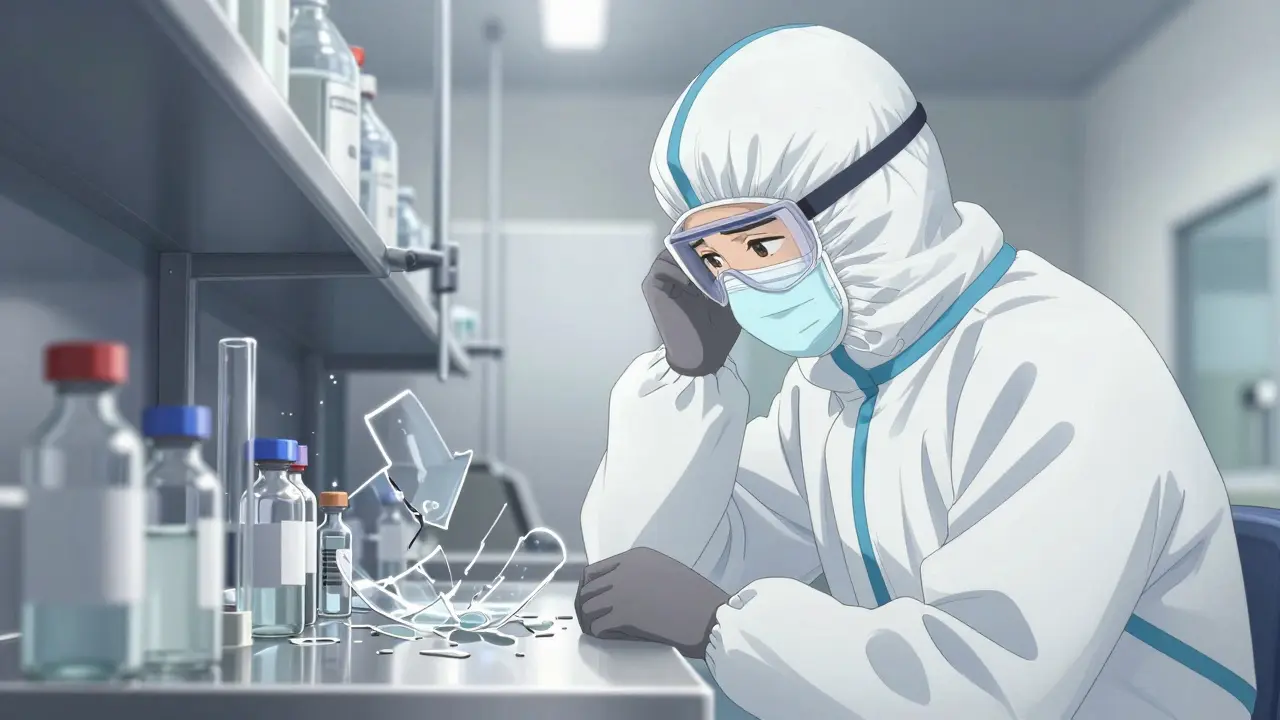
The Real-World Cost to Patients and Staff
These aren't just numbers on a spreadsheet; they are hours of lost sleep and ethical nightmares. Many hospital pharmacists find themselves in the impossible position of rationing care. According to the American Society of Health-System Pharmacists (ASHP), nearly 70% of hospital pharmacists have faced ethical dilemmas regarding how to allocate limited medication supplies. Even worse, about 42% admit to using less effective alternatives that could potentially compromise patient outcomes. Staff burnout is reaching a breaking point. Pharmacy directors are spending nearly 12 hours a week just hunting for alternatives or managing substitutions. It's a chaotic environment. At Massachusetts General Hospital, nurses reported postponing dozens of surgical procedures in a single quarter simply because the anesthetics weren't available. When basic fluids like normal saline ran dry in late 2024, some hospitals had to revert to oral rehydration for post-op patients-a move that feels like stepping back decades in medical progress.Survival Tactics: How Hospitals are Coping
Since the government and manufacturers aren't fixing the problem quickly, hospitals have had to invent their own survival strategies. Many have created formal shortage management committees, though only about a third of these feel they have the resources they actually need to work. To keep patients safe, pharmacies are adopting several key tactics:- Tiered Allocation: Prioritizing the most critically ill patients for the remaining stock.
- Standing Order Revisions: Updating the default medication lists to include pre-approved alternatives so doctors don't have to wait for a committee's approval during an emergency.
- Consolidated Stocking: Moving all remaining units of a scarce drug to one central location to prevent "hoarding" in different wards.
- Direct Supplier Relationships: Bypassing some middle-men to get a clearer picture of when shipments will actually arrive.
The Big Picture and the Road Ahead
Is there any light at the end of the tunnel? It's a mixed bag. The U.S. government has put $1.2 billion toward boosting domestic manufacturing through Executive Order 14080. This is a step in the right direction, but experts warn it will take three to five years before we see those factories actually producing drugs. Meanwhile, the FDA (Food and Drug Administration) is struggling with limited authority. They can notify hospitals about a shortage, but they can't force a company to increase production or improve quality. Current projections from analysts at IQVIA suggest that sterile injectable shortages will persist at these alarming levels through 2027. Until there is a fundamental shift in how generic drugs are priced and manufactured, hospital pharmacies will continue to be the front line of this crisis. The current model-relying on the lowest possible cost from a few global hubs-is simply too fragile for a modern healthcare system. We are essentially gambling with patient safety in exchange for lower procurement costs.Why are injectable drugs more prone to shortages than pills?
Injectable drugs require sterile manufacturing (aseptic processing), which is far more complex and expensive than making tablets. Because they must be completely free of contaminants, any minor equipment failure or quality issue can lead to the loss of an entire batch. Additionally, these drugs often have lower profit margins, meaning manufacturers don't invest in the backup capacity needed to prevent shortages.
How do shortages affect the average patient in a hospital?
Patients may experience delays in their treatment, such as postponed surgeries due to lack of anesthetics or delayed chemotherapy. In some cases, they may receive an alternative medication that is slightly less effective or has a different side-effect profile, which requires close monitoring by the medical team.
What is a "therapeutic interchange"?
A therapeutic interchange is the practice of substituting a drug that is unavailable with a different drug in the same class (or a similar one) that is expected to have the same clinical effect. Because this can be risky, hospital pharmacies usually require these switches to be approved by a Pharmacy and Therapeutics (P&T) committee before they are implemented.
Who is responsible for the current drug shortage crisis?
It is a systemic issue. Key factors include a global supply chain heavily dependent on China and India, low pricing for generic drugs that discourages manufacturer investment, and strict FDA quality standards that, while necessary for safety, can lead to plant shutdowns that halt supply.
Will the $1.2 billion investment in domestic manufacturing fix this?
It is a helpful start, but not an immediate fix. Building sterile manufacturing plants takes years of construction and regulatory validation. Most industry analysts believe it will take until 2029 or 2030 before the full impact of these investments is felt in hospital pharmacies.
 Medications