
Swallowing Difficulties: Causes, Risks, and Medication Solutions
When you can’t swallow safely, even simple tasks like taking a pill become risky. This is called dysphagia, a condition where swallowing becomes painful, difficult, or impossible. Also known as swallowing difficulties, it’s not just an older person’s problem—it can affect anyone, especially those on multiple medications or dealing with neurological conditions. Many people don’t realize that some drugs themselves can make swallowing harder. Thick syrups, large pills, or those that dry out the mouth can turn a routine dose into a choking hazard.
Swallowing difficulties often link to other health issues. For example, beta-blockers, used for high blood pressure and heart conditions can cause dry mouth, making pills stick. first-generation antihistamines, like Benadryl, which are sometimes used for allergies or sleep, have strong anticholinergic effects that reduce saliva and tighten throat muscles. Even corticosteroids, such as prednisolone, used for inflammation can lead to oral thrush, which makes swallowing painful. These aren’t side effects you’ll always see listed—yet they’re real, common, and dangerous if ignored.
It’s not just about the drug—it’s about how you take it. People with Parkinson’s, stroke history, or dementia often struggle with timing and coordination. But even healthy adults might have trouble if they rush pills with too little water or take them lying down. Some medications, like potassium chloride or certain antibiotics, can burn the esophagus if they get stuck. That’s why knowing how to swallow pills safely matters as much as knowing what’s inside them.
There are ways to manage this. Crushing pills isn’t always safe—some are designed to release slowly. Alternatives like liquid forms, dissolvable tablets, or switching to smaller capsules can help. Tools like pill organizers and blister packs can reduce confusion, but they don’t fix the core issue. If swallowing gets harder over time, it’s not normal aging—it’s a signal to talk to your doctor or pharmacist. They can check for drug interactions, adjust dosing forms, or refer you to a speech therapist who specializes in swallowing.
Below, you’ll find real-world advice from people who’ve dealt with this. From how generic drugs can complicate swallowing due to fillers and coatings, to how digital tools help track when meds are missed because of discomfort, these posts give you practical steps—not just theory. You’ll learn which drugs are most likely to cause trouble, how to spot early warning signs, and what alternatives exist that won’t leave you gasping for air after a pill.
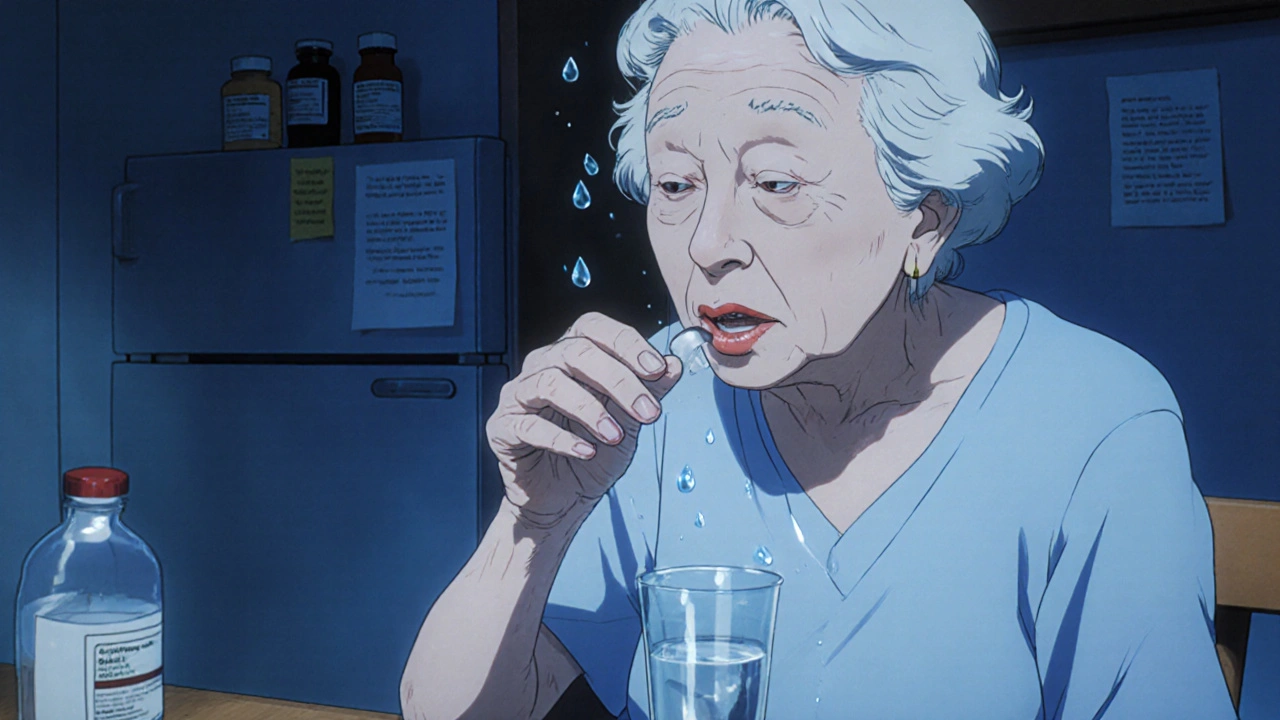
Struggling to swallow pills? You're not alone. Learn safe, proven ways to take your medicine without crushing pills or risking your health - from techniques to alternatives your pharmacist can help you find.
 Medications