
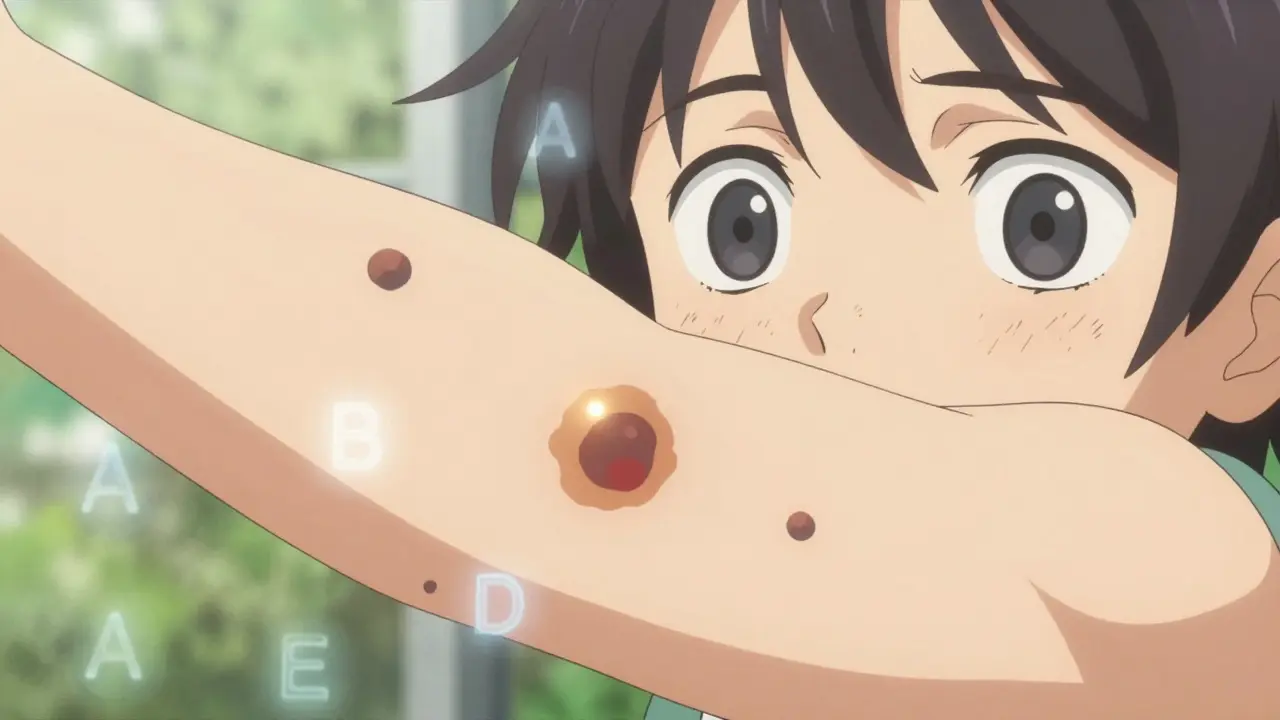
Most people have moles. Some have a few. Others have dozens. But not all moles are harmless. A small change in one can mean the difference between catching skin cancer early-or missing it until it’s too late. That’s where the ABCDE rule comes in. It’s not a perfect system, but it’s the best tool most of us have to spot melanoma before it spreads. And if you’re reading this, you probably want to know: what should you actually look for? When should you worry? And what happens next if something looks off?
What the ABCDE Rule Really Means
The ABCDE rule is a simple checklist doctors and patients use to spot suspicious moles. It stands for five warning signs:- A for Asymmetry: One half of the mole doesn’t match the other.
- B for Border: The edges are ragged, blurred, or uneven-not smooth like a circle.
- C for Color: More than one color in the same mole. Think brown, black, red, white, or blue.
- D for Diameter: Usually bigger than 6 millimeters, about the size of a pencil eraser. But some melanomas are smaller.
- E for Evolving: The mole is changing in size, shape, color, or texture-or it starts itching, bleeding, or crusting.
This system was developed in the 1980s to help non-experts recognize danger signs. It works well for many cases. A 2022 study found that when a mole shows all five signs, the chance it’s melanoma jumps to 32%. But here’s the catch: it doesn’t catch them all.
Why the ABCDE Rule Can Miss Melanoma
Not every melanoma fits the ABCDE pattern. In fact, about 30% of melanomas are found when they’re smaller than 6mm. Some are perfectly round. Some are one uniform color. Some don’t change at all-until they suddenly do.A 2022 study in PubMed looked at 144 melanoma cases. Of those, 36% were in situ-meaning they hadn’t spread yet. But only 33% of those early cancers showed the classic “E” sign: evolution. That means if you’re waiting for a mole to change before acting, you might wait too long.
And then there are the rare types. Desmoplastic melanoma, for example, often looks like a scar. It’s flat, flesh-colored, and doesn’t have dark pigmentation. Childhood melanomas often look nothing like adult ones. These cases don’t fit ABCDE at all.
One Reddit user, u/SkinCancerSurvivor, shared their story: their melanoma was symmetrical, evenly colored, and only 3mm wide. None of the ABCDE criteria applied. Yet it was stage IIB-deep and dangerous. They only found it because they noticed it felt different under their fingers.
The Ugly Duckling Sign: What Your Skin Already Knows
Your skin has a memory. It remembers what your moles normally look like. That’s why dermatologists rely on something called the “ugly duckling” sign. It’s simple: if one mole looks completely different from all the others, it’s suspicious-even if it doesn’t tick any ABCDE boxes.A 2019 study in the British Journal of Dermatology found that the ugly duckling sign caught 73% of melanomas that ABCDE missed. That’s huge. Imagine having 20 moles. Fifteen look like typical brown spots. One is darker, raised, and has a weird shape. That’s the one to check.
It’s not about perfection. It’s about difference. If you’ve had the same moles for years and one suddenly stands out, don’t wait for it to grow or bleed. Get it looked at.
When Does a Mole Need a Biopsy?
Not every weird-looking mole needs surgery. But dermatologists have clear guidelines for when to remove a sample:- The mole meets three or more ABCDE criteria.
- It’s changed noticeably over 3-6 months.
- It’s an ugly duckling.
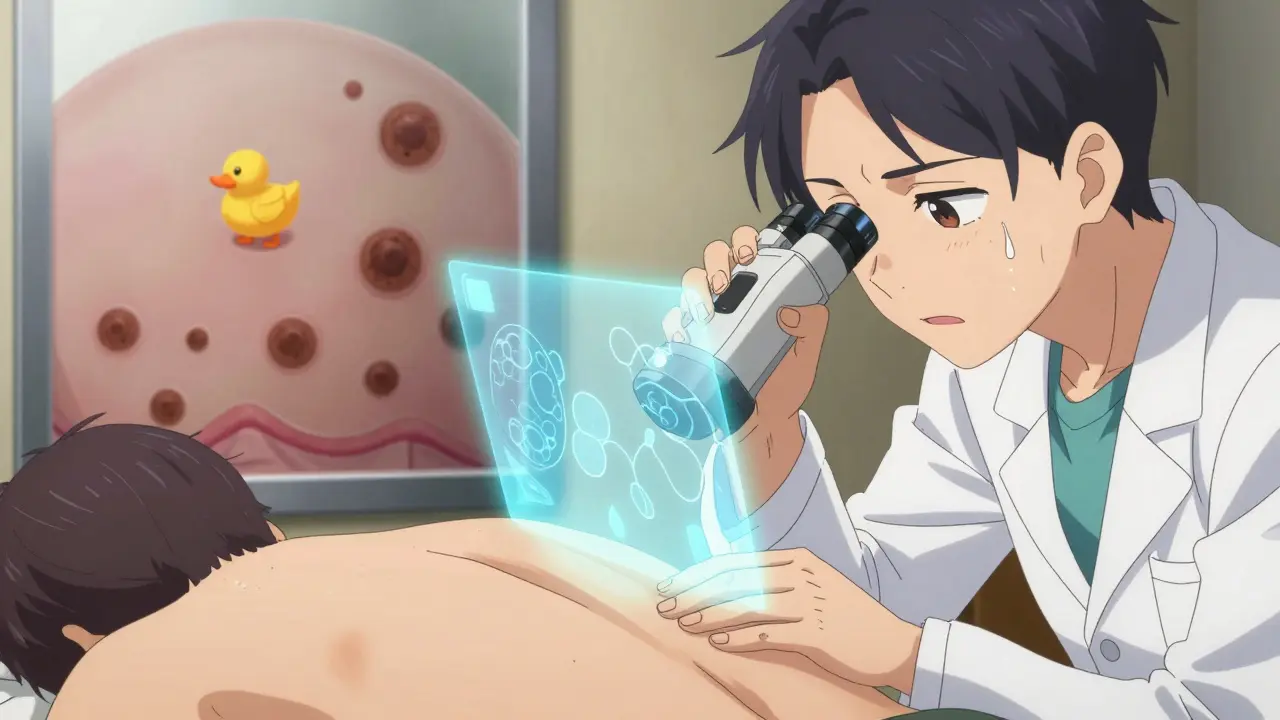
Biopsy isn’t a diagnosis-it’s a way to get a definitive answer. A small sample is taken under local anesthesia and sent to a lab. Results usually come back in 7-10 days. If it’s melanoma, the depth of the tumor determines the next steps. Early-stage melanoma (in situ) is almost always cured with simple removal. Later stages need more aggressive treatment.
But here’s the problem: too many people get biopsied for harmless moles. For every one melanoma caught using ABCDE, nearly five benign moles are removed. That adds up to $417 million a year in unnecessary procedures in the U.S. alone.
That’s why dermatologists don’t just rely on sight anymore. Digital dermoscopy-a handheld magnifier with polarized light-lets them see beneath the skin’s surface. Studies show it boosts accuracy from 75% to 92%. Most clinics in the U.S. now use it. But if you’re doing a self-check at home, you won’t have access to that tool.
What You Can Do Right Now
You don’t need a doctor to spot warning signs. You just need to look.- Check your skin once a month. Use a mirror or ask a partner to help with hard-to-see spots.
- Take photos of any mole you’re unsure about. Compare them every 3 months.
- Don’t ignore a mole just because it’s small or symmetrical.
- If it’s changing, bleeding, or just feels “off,” make an appointment.
- Use the ABCDE rule as a starting point-not the final word.
Many people delay seeing a doctor because their mole doesn’t meet all five ABCDE criteria. A 2022 survey by the American Academy of Dermatology found that 42% of people waited an average of 7.3 months because they thought their mole “didn’t look bad enough.” That delay can be deadly.
What’s Changing in Skin Cancer Detection
The ABCDE rule isn’t going away. But it’s evolving. In 2023, the International Dermoscopy Society launched “ABCDE 2.0,” which combines the old rule with AI-powered image analysis. Apps like SkinVision, approved by the FDA in 2022, can now analyze moles using 12 million reference images. They’re not perfect-but they’re better than guessing.Some clinics are even using gene tests like DecisionDx-Melanoma to help decide if a biopsy is needed. These tests analyze the mole’s genetic profile and can predict whether it’s likely to spread. They’re expensive, but they’re cutting down on unnecessary surgeries by 31%.
By 2027, experts predict the ABCDE rule will be just the first step in a bigger process: a mix of visual checks, digital tools, and lab tests. But for now, your eyes and your awareness are still the most powerful tools you have.
What to Do If You’re Worried
If you see something unusual:- Don’t panic. Most moles are harmless.
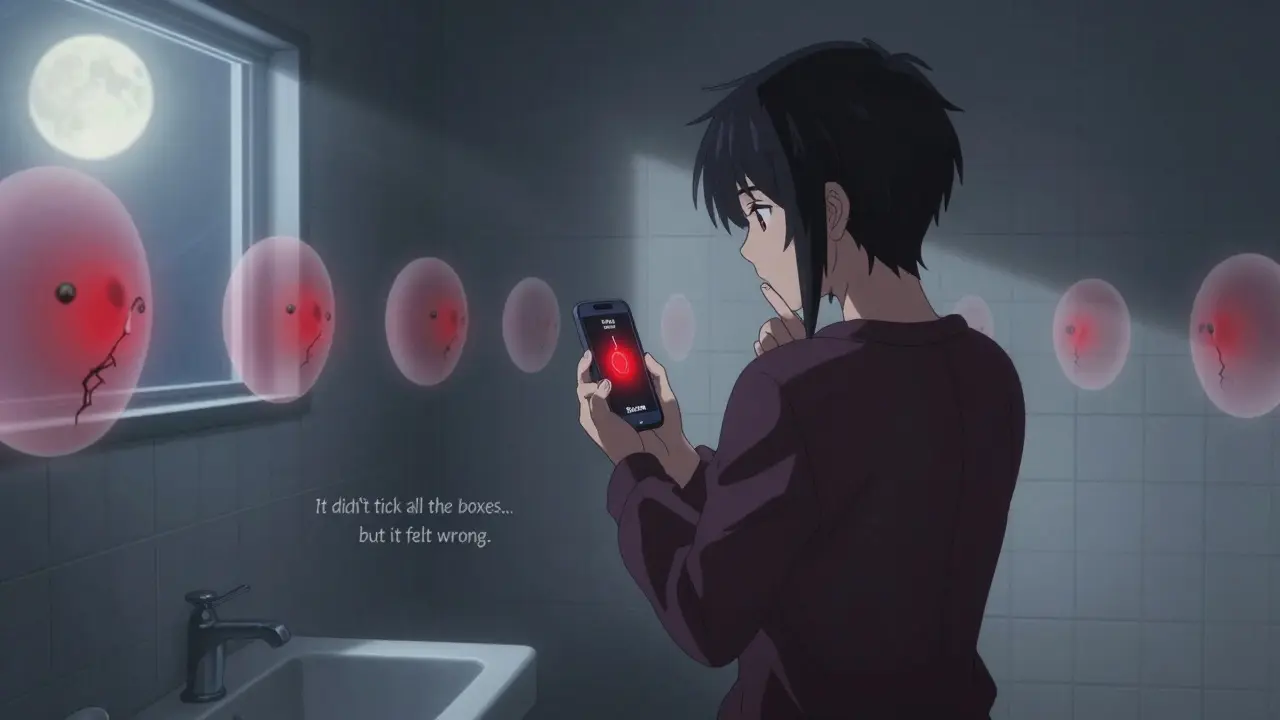
- Don’t wait. Even if it doesn’t tick all the boxes, if it’s different or changing, get it checked.
- Don’t rely on apps or online tools as a diagnosis. They’re guides, not replacements.
- See a dermatologist. They’re trained to spot the subtle signs that aren’t in any checklist.
Early detection saves lives. Melanoma caught at stage 0 has a 99% five-year survival rate. Once it spreads to other organs, that number drops to 32%. That’s not a gamble you want to take.
Can a mole be cancerous even if it’s small?
Yes. While melanomas are often larger than 6mm, about 30% are diagnosed when they’re smaller. Size alone isn’t a reliable indicator. A tiny mole that’s changing color, bleeding, or looks different from others should still be checked.
Do I need to check moles on my scalp or between my toes?
Absolutely. Melanoma can develop anywhere on the skin, including places you don’t see often-scalp, soles of feet, between toes, under nails. These areas are common sites for missed diagnoses. Make sure to include them in your monthly checks.
Is it safe to remove a mole at home?
Never. Removing a mole yourself can spread cancer cells if it’s malignant. It also makes it harder for a doctor to diagnose later. Always see a dermatologist for proper evaluation and removal.
How often should I get a professional skin check?
If you have no history of skin cancer and low risk, once a year is enough. If you’ve had melanoma before, have many moles, or have a family history, your dermatologist may recommend checks every 3-6 months. High-risk individuals should also use monthly self-checks.
Can sunscreen prevent melanoma?
Sunscreen reduces your risk, but it doesn’t eliminate it. UV exposure is the biggest cause of melanoma, so daily use of SPF 30+ helps. But melanoma can also develop in areas with little sun exposure. Regular skin checks are still essential-even if you always wear sunscreen.
 Medications
Shane McGriff
January 18, 2026 AT 19:22I’ve been checking my moles every month since my cousin got diagnosed with stage III melanoma. I had one on my shoulder that looked totally normal-symmetrical, even color, under 6mm-but it felt weird when I rubbed it. Turned out it was invasive. ABCDE didn’t catch it. The ugly duckling sign did. Don’t ignore how something feels. Your skin knows before your eyes do.
clifford hoang
January 18, 2026 AT 20:00ABCDE is just a distraction. The real truth? Big Pharma and dermatologists profit off fear. They want you to freak out over every freckle so you keep coming back for biopsies and $800 skin scans. I’ve got 37 moles. I’ve never had one checked. I eat turmeric, avoid sunscreen (it’s full of endocrine disruptors), and my skin’s better than yours. 😈🩸 #SkinCancerIsABusiness
Jacob Cathro
January 20, 2026 AT 18:34lol so basically the rule is: if it looks sus, get it checked. but also sometimes it’s not sus but still cancer?? also why do docs need a 6mm rule if some are smaller?? this feels like a checklist made by someone who’s never seen a real mole in person. also why are there so many acronyms?? ABCDE 2.0?? what’s next? ABCDE-FGHIJ?? 🤡
Paul Barnes
January 21, 2026 AT 11:21The ABCDE rule is a heuristic, not a diagnostic standard. Its utility lies in its simplicity for laypersons, not its accuracy. The 32% positive predictive value cited is misleading without context: the base rate of melanoma in the general population is less than 0.1%. Therefore, even with a positive ABCDE match, the probability remains low. Overdiagnosis is a documented phenomenon in dermatology, and the $417 million figure reflects systemic inefficiency, not negligence.
pragya mishra
January 22, 2026 AT 21:14I live in India and we don’t have access to dermatologists like you do. My sister had a mole on her back that didn’t fit any rule. She waited 8 months because she thought it was just a birthmark. Now she’s in chemo. Why don’t you people talk about how hard it is for people like us? You have tools. We have Google and fear.
Andy Thompson
January 24, 2026 AT 15:51They’re hiding the truth. The government doesn’t want you to know that UV light isn’t the real cause-it’s the fluoride in your water! That’s why melanoma spikes in cities. And those apps? They’re spying on your skin to sell ads. I took a pic of my mole, uploaded it, and now my phone keeps showing me sunscreen ads. Coincidence? Nah. It’s a trap. 🇺🇸🇺🇸🇺🇸
kumar kc
January 24, 2026 AT 22:10If you don’t check your skin, you deserve what happens. Simple.
Thomas Varner
January 25, 2026 AT 09:47Okay, so… I’ve been taking monthly photos of my moles since last year. One on my left thigh? Totally different from the others. Darker, raised, slightly irregular edge-but only 4mm. I didn’t panic. I just… went. Got it biopsied. Turned out benign. But I’m glad I did it. I’m not a doctor. I’m just someone who doesn’t want to be that guy who says, ‘I thought it was fine.’ It’s not about being paranoid. It’s about being responsible. 😅🩺
Emily Leigh
January 26, 2026 AT 21:09Wait-so we’re supposed to trust a system from the 80s? That’s like using a rotary phone to call 911. And now they’re adding AI? Cool. So now my phone is diagnosing my skin, and the dermatologist is just… nodding? What if the AI is wrong? What if it’s trained on mostly white skin? What if my mole looks normal to the algorithm but not to me? This feels like outsourcing intuition to a corporate algorithm. And don’t get me started on ‘ugly duckling’-sounds like a Disney villain origin story. 🙄
Renee Stringer
January 27, 2026 AT 03:06I’m a nurse. I’ve seen too many people delay because they thought, ‘It’s probably nothing.’ It’s never nothing. I don’t say it loud, but I think it every day: if you’re asking whether to get it checked-you already know. Go. Don’t wait for permission.