
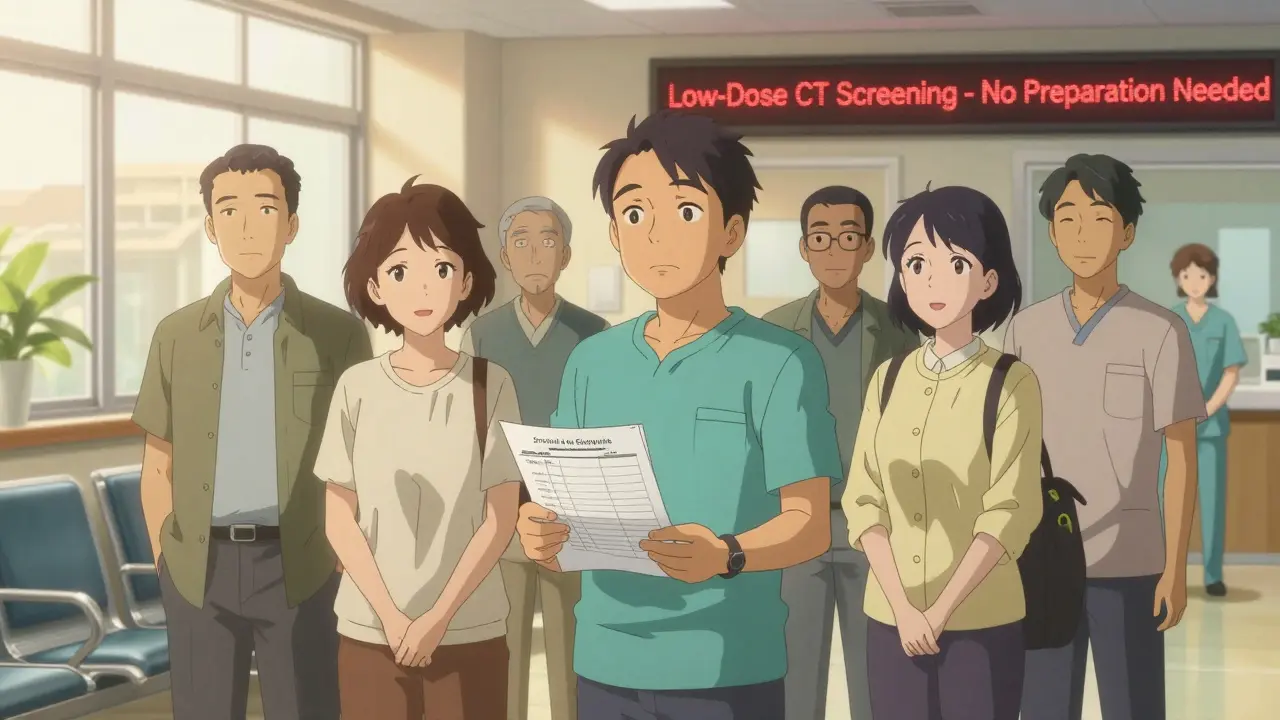
Every year, over 120,000 Americans die from lung cancer. Most of them weren’t screened. But for people at high risk, a simple, low-radiation scan called low-dose CT can find cancer early-when it’s still curable. The problem? Too few eligible people get tested. If you’re a current or former smoker, or have other risk factors, knowing who qualifies and what the results mean could save your life.
Who Should Get a Low-Dose CT Scan for Lung Cancer?
The guidelines have changed. In 2013, only people aged 55 to 80 with at least 30 pack-years of smoking were recommended for screening. Today, the bar is lower-and more people qualify.
As of 2025, the U.S. Preventive Services Task Force (USPSTF) says annual low-dose CT screening is right for adults aged 50 to 80 who:
- Have smoked at least 20 pack-years (that’s one pack a day for 20 years, or two packs a day for 10 years)
- Currently smoke, or quit smoking within the last 15 years
This change expanded eligibility from 6.8 million to over 14 million Americans. The American Cancer Society and the CDC agree with this range. But some groups go further. The National Comprehensive Cancer Network (NCCN) includes people up to age 85 and removes the 15-year quit limit entirely-if you have other risk factors like family history of lung cancer, exposure to asbestos or radon, or a history of pulmonary fibrosis, you might still benefit.
Here’s what that looks like in real life:
- A 52-year-old who smoked a pack a day for 25 years and quit 10 years ago? Eligible.
- A 68-year-old who smoked a pack a day for 30 years and quit 18 years ago? Not eligible under USPSTF-but may qualify under NCCN if they have a parent who had lung cancer.
- A 49-year-old who smoked two packs a day for 12 years? Not eligible yet-under 50 and under 20 pack-years.
Medicare covers this screening for people aged 50 to 77 who meet the criteria. Medicaid coverage varies by state. States that expanded Medicaid under the Affordable Care Act have screening rates nearly 40% higher than non-expansion states.
What Happens During the Scan?
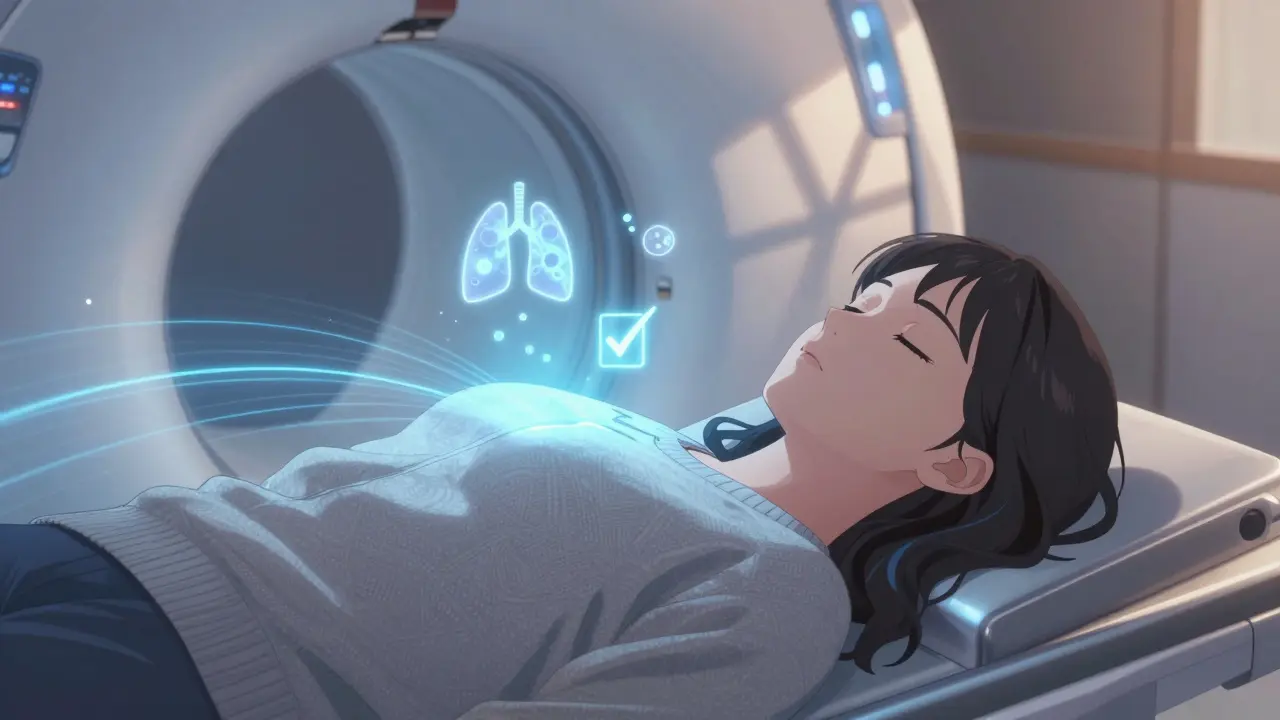
There’s no preparation needed. No fasting. No injections. You don’t even have to change clothes-just remove metal objects like belts or necklaces.
You lie on a table that slides into a CT machine. The scan takes less than 10 seconds. You’ll be asked to hold your breath once. The machine uses a fraction of the radiation of a regular chest CT-about 1.2 millisieverts (mSv). That’s roughly the same as a round-trip flight from New York to Los Angeles.
Unlike a standard CT, low-dose CT uses special settings: lower radiation, thinner slices (under 1.5 mm), and advanced image reconstruction. Accredited centers must meet strict standards set by the American College of Radiology (ACR). These protocols ensure the scan finds small nodules without exposing you to unnecessary radiation.
It’s not a diagnostic test. It’s a screening tool. That means it’s designed to catch early signs-not confirm cancer.
What Do the Results Mean?
Most results are normal. About 75% of people get a clean bill of health. But the rest? They get a finding that needs follow-up.
Here’s how results break down:
- Normal: No nodules or only tiny, harmless calcified nodules. You’ll be asked to return in one year.
- Small nodule (4-6 mm): This is the most common abnormal result-about 85% of positive screens fall here. These are almost always benign. But you’ll need a repeat scan in 6 months to see if it grows.
- Medium nodule (6-8 mm): Higher chance of being cancerous. You’ll likely get another scan in 3 to 6 months, or possibly a PET scan.
- Larger nodule (>8 mm): More concerning. You’ll be referred to a lung specialist. Biopsy or surgery may be recommended.
Only about 1 in 100 people with a positive screen actually have lung cancer. The rest are false positives. But that’s okay-because catching cancer early saves lives.
The NLST study showed that LDCT finds 3 times more early-stage lung cancers than chest X-rays. Of the cancers found through screening, 71% are Stage I-meaning they’re still localized and can often be removed with surgery alone.
False Positives and Anxiety: What to Expect
It’s normal to feel anxious after a positive result. A 2023 survey found 42% of patients reported high anxiety while waiting for follow-up scans.
Here’s what you need to know: 96% of positive screens turn out to be nothing. That’s not a failure-it’s how screening works. The system is designed to cast a wide net. A 6mm nodule might be scar tissue from an old infection, a benign tumor, or a small cancer. You can’t tell without watching it over time.
At Massachusetts General Hospital, patients with positive screens spent an average of 47 days waiting for follow-up tests. Out-of-pocket costs for those extra scans averaged $187. That’s not trivial-but it’s far less than the cost of treating advanced lung cancer.
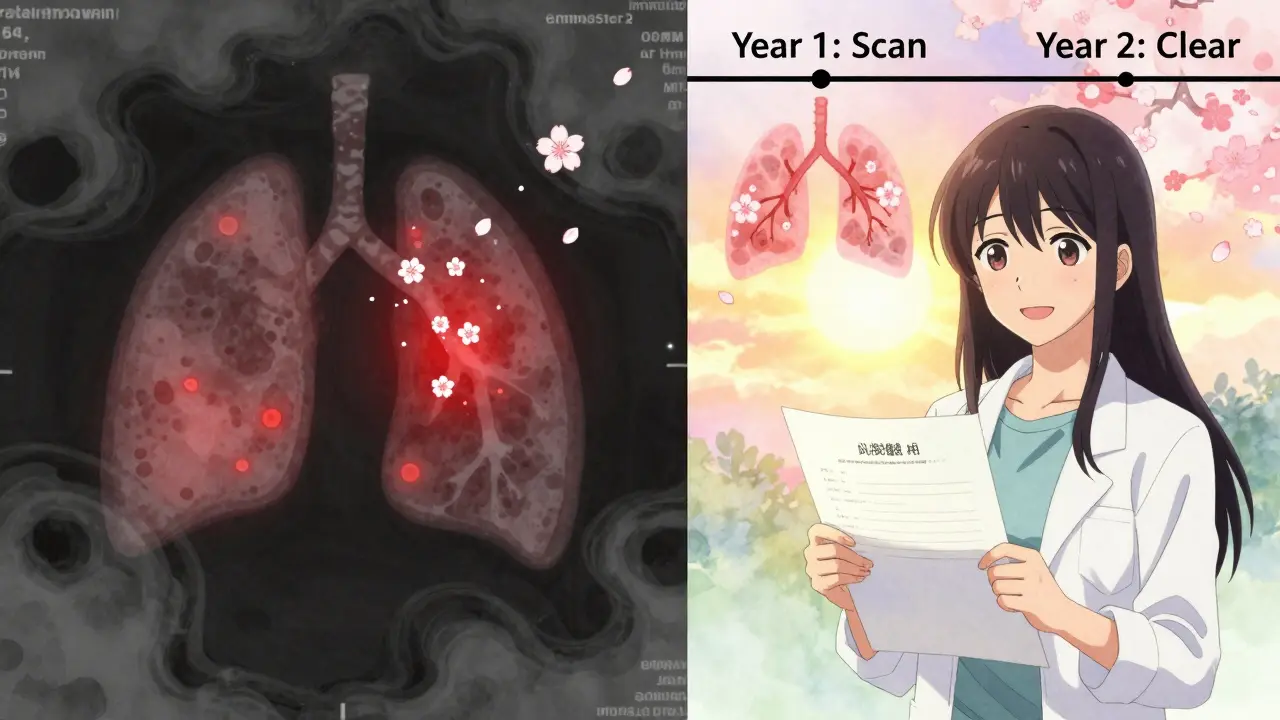
Some patients, like Mary Johnson from Ohio, say the scan saved her life. She had a 6mm nodule found on her LDCT. Surgery confirmed Stage I adenocarcinoma. She’s now cancer-free.
Others, like James Wilson from Texas, spent three months in anxiety and paid $450 for tests that ultimately ruled out cancer. He says the fear was worse than the cancer itself.
That’s why shared decision-making is required before your first scan. Your doctor must talk with you about the risks and benefits-not just hand you a referral. This isn’t a checklist item. It’s a conversation.
Benefits Outweigh the Risks
The biggest fear? Radiation. But the numbers tell a different story.
The NLST found that for every 1,000 people screened annually for 3 years, one might develop a radiation-induced cancer. But during that same period, 15 lung cancer deaths were prevented. That’s a 15-to-1 benefit ratio.
The bigger risk isn’t radiation-it’s doing nothing. Lung cancer kills more people than breast, colon, and prostate cancer combined. And it’s often found too late.
Screening reduces lung cancer deaths by 20%. That’s not a small number. It’s 20,000 to 22,000 lives saved every year in the U.S. alone.
And the benefits keep growing. New AI tools can now analyze scans faster and more accurately. One FDA-approved system, LungPoint®, reduces radiologist reading time by 30% while keeping sensitivity above 97% for nodules larger than 6mm.
Why So Few People Are Getting Screened
Despite the clear benefits, only about 23% of eligible Americans got screened in 2023. That’s up from 4.4% in 2016-but still far too low.
Why? Barriers are real:
- Access: 41% of U.S. counties have no accredited screening center. In rural areas, the average distance to a facility is 32 miles.
- Awareness: Many doctors still don’t offer it. Many patients don’t know they qualify.
- Stigma: Some smokers feel they “deserve” cancer. That’s not true. Quitting reduces risk-but doesn’t erase it.
- Fear: 63% of non-participants say they’re afraid of false positives.
Racial disparities are stark. Black Americans have a 15% higher risk of lung cancer than White Americans-but are screened at 28% lower rates.
Medicare paid for over 1 million screenings in 2022. But private insurers vary. Always check your coverage.
What Comes Next?
Guidelines are evolving. In early 2024, Medicare announced it’s reviewing whether to remove the 15-year quit limit and extend eligibility beyond age 80. Evidence from the NELSON trial in Europe shows biennial screening with volumetric nodule tracking reduces mortality by 24%-even better than annual scans.
New tools are on the horizon. Blood tests like EarlyCDT-Lung have shown 94% negative predictive value in recent trials. Dual-energy CT can reduce false positives by 18%. Risk models like LYFS-CT, validated on over a million VA patients, could one day identify people who benefit most-even if they don’t fit the current criteria.
But right now, the best thing you can do is ask: Do I qualify?
If you’re between 50 and 80, have smoked at least 20 pack-years, and either still smoke or quit within the last 15 years-you’re eligible. Talk to your doctor. Get screened. One scan could mean the difference between catching cancer early-or never knowing it was there until it was too late.
Key Takeaways
- Low-dose CT screening reduces lung cancer deaths by 20% in high-risk adults.
- Eligibility: Ages 50-80, 20+ pack-years, current smoker or quit within 15 years.
- Most results are normal. False positives are common but rarely cancer.
- Screening is quick, low-radiation, and covered by Medicare and most insurers.
- Only 23% of eligible people get screened-don’t be one of the ones who miss out.
Who qualifies for low-dose CT lung screening?
You qualify if you’re between 50 and 80 years old, have smoked at least 20 pack-years (like one pack a day for 20 years), and either still smoke or quit within the past 15 years. Some guidelines, like NCCN, also include people over 80 or those who quit longer ago if they have other risk factors like family history or asbestos exposure.
Is low-dose CT safe? What about radiation?
Yes, it’s very safe. A low-dose CT uses about 1.2 millisieverts of radiation-roughly 1/10th of a regular chest CT and less than a cross-country flight. The risk of radiation causing cancer is extremely low: about 1 in 1,000 over 3 years of screening. The benefit? Preventing 15 lung cancer deaths for every one potential radiation-induced cancer. The scan is designed to minimize radiation while maximizing detection.
What if the scan shows a nodule?
Most nodules are not cancer. Small ones (4-6 mm) are the most common finding and are usually benign. You’ll likely need a repeat scan in 6 months to check if it’s growing. Larger nodules may require a PET scan or biopsy. Only about 1 in 100 positive scans turns out to be cancer. The goal is to catch it early-not to panic over every spot.
Does insurance cover low-dose CT screening?
Yes. Medicare covers annual low-dose CT screening for eligible patients aged 50-77. Most private insurers follow Medicare guidelines. You may need a referral and a shared decision-making visit documented by your doctor. Check with your plan, but coverage is standard for those who meet USPSTF criteria.
Can I get screened if I never smoked?
Standard guidelines focus on smokers because they make up 80-90% of lung cancer cases. But if you’ve never smoked but have other risk factors-like a family history of lung cancer, exposure to radon, asbestos, or a history of lung disease like pulmonary fibrosis-you may still benefit. Talk to your doctor. Some clinics offer risk assessment tools to determine if screening is right for you, even without a smoking history.
How often should I get screened?
Annual screening is recommended as long as you remain eligible. Most guidelines say continue until age 80, or if you’ve been smoke-free for 15 years and have no other risk factors. Studies show that skipping a year reduces the benefit. Consistency matters-93% of patients in the NLST stuck to annual scans, and that’s what led to the biggest drop in deaths.
What if I’m over 80?
USPSTF and Medicare cap eligibility at 80. But the NCCN recommends screening up to age 85 for people with a strong history of smoking and no major health problems that would make treatment risky. If you’re healthy and still within 15 years of quitting, ask your doctor. The benefit of early detection still applies-even in your 80s-if you’re a good candidate for surgery or treatment.
Is there a blood test for lung cancer screening?
Not yet as a replacement. Blood tests like EarlyCDT-Lung can help rule out cancer with 94% accuracy when negative, but they’re not sensitive enough to be used alone. They’re being studied as add-ons to LDCT-for example, to reduce false positives or screen people who don’t meet current criteria. But right now, low-dose CT remains the only proven screening tool.
Next Steps
If you think you qualify, start here:
- Calculate your pack-years: Multiply the number of packs per day by the number of years you smoked.
- Check if you’re between 50 and 80 and have smoked at least 20 pack-years.
- Ask your doctor: “Do I qualify for low-dose CT lung screening?”
- If yes, schedule a shared decision-making visit-this is required for Medicare.
- Find an ACR-accredited facility. Use the American College of Radiology’s online directory.
- Get screened annually. Don’t wait for symptoms.
Screening isn’t about fear. It’s about control. You can’t change your past smoking history. But you can change what happens next. One scan. One decision. One chance to catch it early.
 Medications
Harsh Khandelwal
December 24, 2025 AT 23:44So let me get this straight - we’re giving free scans to people who smoked, but if you got cancer from radon in your basement or secondhand smoke from your neighbor’s vape pen? Tough luck. The system’s rigged. They want you to feel guilty for breathing while they profit off the fear. I’ve seen this movie before - they did the same thing with asbestos. First they deny it, then they make you pay for the test to prove you’re dying. 😏
Abby Polhill
December 26, 2025 AT 16:56Just had my first LDCT last month - 52, 22 pack-years, quit 8 years ago. Got a 5mm nodule. Felt like I’d been handed a death sentence until the radiologist said, ‘It’s probably a scar from that pneumonia you had in ‘19.’ Still, the wait for the 6-month follow-up was the longest 18 days of my life. The tech was chill, no prep, just lied there like a potato. Radiation? Less than a flight to Denver. Honestly? Worth it. If you’re eligible, just do it. Your future self will high-five you.
Bret Freeman
December 27, 2025 AT 09:41They’re pushing this like it’s a miracle cure, but let’s be real - this is Big Radiology’s new goldmine. You think they care about saving lives? They care about billing codes. Every follow-up scan, every PET, every biopsy - it’s all revenue. And don’t get me started on the ‘shared decision-making’ requirement. That’s just a legal loophole so they don’t get sued when you panic over a speck. I’ve seen patients cry because they were told ‘it’s probably nothing’ - and then it wasn’t. The system is broken. They profit from fear, not health.
Lindsey Kidd
December 28, 2025 AT 22:10Just wanted to say - if you’re reading this and thinking ‘I don’t qualify’ or ‘I’m too scared’ - you’re not alone. 💛 I’m a nurse who worked oncology for 12 years. I’ve held hands through chemo, watched people lose their hair, their energy, their joy. But I’ve also seen the ones who caught it early - the ones who walked out of surgery with a clean scan and a second chance. One scan doesn’t define you. It just gives you a shot. If you’re even *close* to qualifying? Go. Talk to your doc. Don’t wait. You’ve got this. 🌱
Christine Détraz
December 30, 2025 AT 18:38It’s interesting how the guidelines keep shifting. First it was 55+, then 50+, now they’re talking about removing the 15-year quit limit. It makes you wonder - are we expanding screening because we’re smarter, or because we’re running out of options for late-stage treatment? The real question isn’t who qualifies - it’s why we wait until people are at risk before we act. Prevention should start before the first cigarette, not after the 20 pack-years.
Ajay Sangani
December 31, 2025 AT 16:43the scan is good but why dont we talk about why people smoke in the first place? stress, poverty, lack of access to mental health, advertising… we treat the symptom not the cause. i mean, sure, scan me if i smoked 20 years but fix the system so fewer people start. also, typo: ‘pack-years’ not ‘pack years’ - just saying 😅
Pankaj Chaudhary IPS
January 1, 2026 AT 13:53As a public health officer in India, I see this as a blueprint for developing nations. We have rising lung cancer rates due to bidi smoking, pollution, and no screening infrastructure. The US model proves that accessibility and awareness are the real barriers - not technology. If we can bring LDCT to rural clinics with mobile units and community health workers, we can save tens of thousands. This isn’t just American policy - it’s global justice. Let’s not wait for 120,000 deaths to act. Start now.
Aurora Daisy
January 3, 2026 AT 00:14Oh, wonderful. Now we’re giving free scans to Americans who made poor life choices while the NHS is rationing chemo. Brilliant. If you can’t afford to quit smoking, maybe you shouldn’t get a taxpayer-funded scan. Save the resources for people who didn’t choose to poison themselves. Honestly, it’s like subsidizing a bad habit with a side of false hope.