

Commercial Driver Medication Checker
Check Medication Compliance
Enter a medication name to see if it's allowed for commercial drivers according to FMCSA regulations.
What Medications Can Keep You Off the Road?
If you hold a commercial driver’s license (CDL), the pills you take every day could cost you your job-even if they’re prescribed by a doctor. The Federal Motor Carrier Safety Administration (FMCSA) doesn’t care if your medication helps you sleep, manage pain, or stay focused. If it can dull your reaction time, make you drowsy, or alter your judgment, it’s a violation. And it’s not just illegal drugs. Common prescriptions, over-the-counter cold medicines, and even herbal supplements can trigger a positive drug test or disqualify you during your DOT physical.
The rules are strict: under 49 CFR §391.41(b)(3), you must be free from any condition that impairs your ability to safely operate a commercial vehicle. That includes medications. The FMCSA bans Schedule I drugs like marijuana (even in states where it’s legal), PCP, and any substance that affects your alertness or coordination. But the list goes further. Amphetamines-even when prescribed for ADHD-are prohibited. Narcotics like codeine, oxycodone, and hydrocodone? Also banned. And it doesn’t matter if you’re taking them exactly as directed. The law doesn’t make exceptions for medical need.
Why the Rules Are So Harsh
It’s not about punishment. It’s about survival. In 2020, 4.2% of large truck crashes involved drivers who tested positive for disqualifying substances, leading to 1,247 deaths. That’s not a small number. Commercial trucks weigh up to 80,000 pounds. A driver who’s even slightly impaired can’t stop quickly enough, react in time, or stay in their lane. One moment of drowsiness, one delayed response, and a chain reaction of accidents can follow.
The FMCSA conducts about 3.8 million roadside inspections every year. Each one includes a check for drug and alcohol use. And if you’re caught with a banned substance-even if it was prescribed-you’ll be taken out of service immediately. Your employer will be fined. Your record will be flagged in the Drug and Alcohol Clearinghouse. And getting reinstated isn’t easy. You’ll need a Medical Review Officer (MRO) to verify your case, possibly undergo additional testing, and sometimes get a special exemption.
What Medications Are Actually Banned?
Here’s the reality: if it’s on the FMCSA’s prohibited list, you can’t take it. That includes:
- Amphetamines (Adderall, Vyvanse, Dexedrine) - even for ADHD
- Opioids (OxyContin, Percocet, Codeine, Hydrocodone) - no exceptions
- Benzodiazepines (Xanax, Valium, Klonopin) - new rule effective 2024
- Marijuana - federally illegal, no medical exemption
- Barbiturates - used for seizures or sleep, but banned
- Antihistamines - like diphenhydramine (Benadryl) - cause drowsiness
- Cough syrups with dextromethorphan - common in cold meds
- Nasal decongestants with pseudoephedrine - can cause jitteriness and high blood pressure
Even if your doctor says it’s safe, the FMCSA doesn’t agree. A 2022 survey by the Owner-Operator Independent Drivers Association found that 63% of CDL drivers had to stop taking effective medications for chronic pain, anxiety, or depression because they violated DOT rules. Many reported worsening health, increased fatigue, or even depression after quitting their meds.
What Medications Are Allowed?
Not all medications are off-limits. Many drivers safely manage their health with drugs that don’t impair driving. Here’s what’s generally okay-if you’re cleared by your Medical Examiner:
- Antidepressants like SSRIs (Zoloft, Prozac, Lexapro) - as long as they don’t cause drowsiness or dizziness
- Thyroid meds (Synthroid) - no effect on alertness
- Blood pressure medications (Lisinopril, Amlodipine) - if your pressure is stable
- Diabetes meds (Metformin, GLP-1 agonists) - as long as you avoid hypoglycemia
- Non-stimulant ADHD meds (Strattera, Intuniv) - approved alternatives to Adderall
- CPAP machines - for sleep apnea, which is actually one of the most successfully managed conditions at 92% compliance
The key? Your doctor must confirm that your medication doesn’t affect your ability to drive. That’s why it’s critical to bring your complete medication list to your DOT physical. Don’t assume your doctor knows what the FMCSA allows. Many don’t.
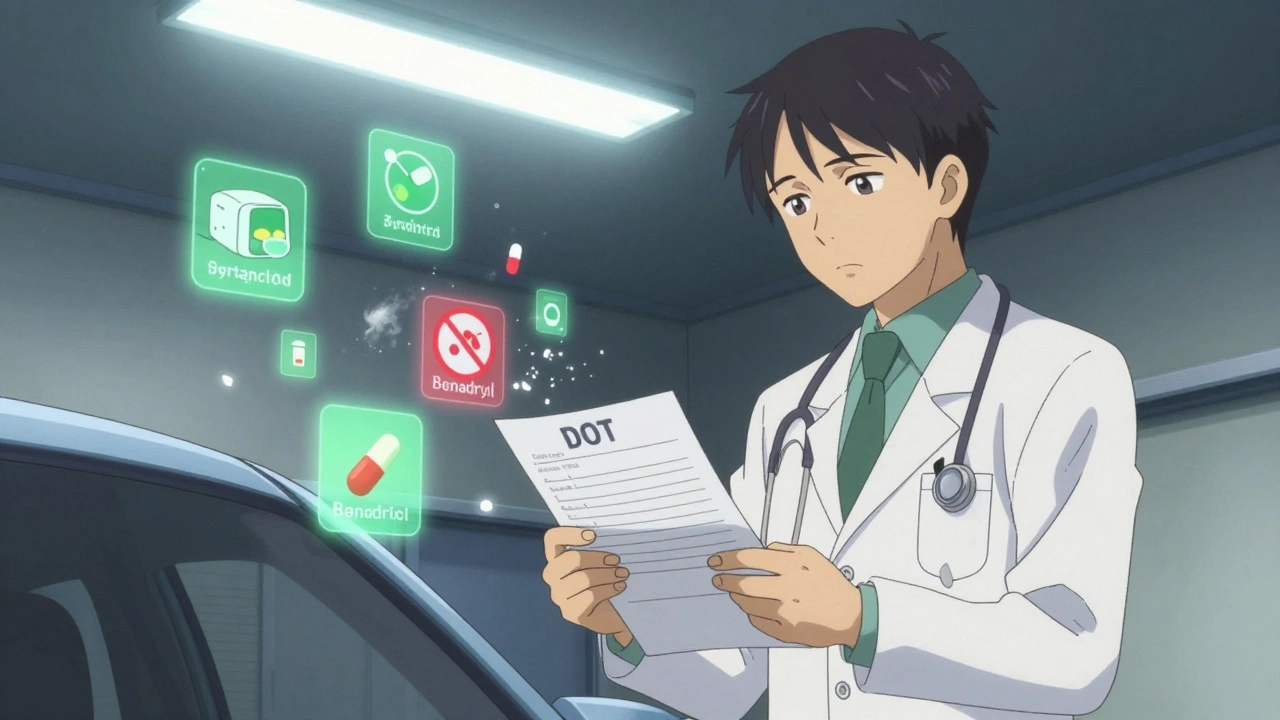
The Doctor’s Role: It’s Not Just About the Prescription
Your doctor can’t just write a script and call it done. Under the American Medical Association’s 2022 guidelines, they need to know what your job actually involves. A CDL driver isn’t just someone who sits behind a wheel. You’re responsible for a multi-ton vehicle, long hours, shift changes, and high-stress conditions. A medication that’s fine for an office worker might be dangerous for you.
Ask your doctor to review the FMCSA’s medication guidelines. Give them your job description. Ask: “Is this safe for someone who drives a commercial truck?” If they say yes, get it in writing. You’ll need it during your DOT exam.
Dr. Gary Solomon, a certified Medical Examiner with over 20 years of experience, says 35% of drivers he examines are on medications that need special review. He’s seen too many cases where a driver thought their antidepressant was fine-until it made them too sleepy to stay awake on I-80 at 3 a.m.
What If You’re Already on a Banned Med?
If you’re currently taking a prohibited medication, you have options-but you need to act now.
- Don’t quit cold turkey. Stopping antidepressants, anti-anxiety meds, or painkillers suddenly can be dangerous. Talk to your doctor about a taper plan.
- Find alternatives. For ADHD, Strattera or Intuniv are non-stimulant options approved by the FMCSA. For pain, non-opioid options like gabapentin or physical therapy may work. For anxiety, cognitive behavioral therapy (CBT) can replace benzodiazepines.
- Apply for a Skill Performance Evaluation (SPE) certificate. If you have a physical impairment (like a missing limb) and need an adaptive device, you can apply for an exemption. This doesn’t apply to medications-but if you’re switching to a non-disqualifying drug, you may qualify for a temporary medical certificate while you transition.
- Use the Drug and Alcohol Clearinghouse. If you’ve been disqualified, you can request a Medical Review Officer review. About 68% of drivers who appeal medication-related issues get conditional clearance after providing documentation.
Reddit and TruckersReport.com are full of stories from drivers who switched from Adderall to Strattera and kept their license. Others switched from oxycodone to non-opioid pain management and passed their physical. It’s not easy-but it’s possible.
What You Need to Bring to Your DOT Physical
Your DOT physical isn’t a quick checkup. It’s a legal requirement. Bring:
- A complete list of all medications-prescription, over-the-counter, and supplements
- The name of your prescribing doctor and their contact info
- Any recent lab results or specialist notes (e.g., sleep study for apnea)
- Your current medical history form (FMCSA-2015-0180-0017)
- A signed statement from your doctor confirming your meds are safe for driving
Don’t leave anything out. Even Benadryl or NyQuil can cause a false positive. And if you lie, you’re risking your license, your job, and your freedom. The FMCSA’s Drug and Alcohol Clearinghouse now requires all medication-related restrictions to be reported within 24 hours. Failing to report? That’s a $1,250 fine per incident.
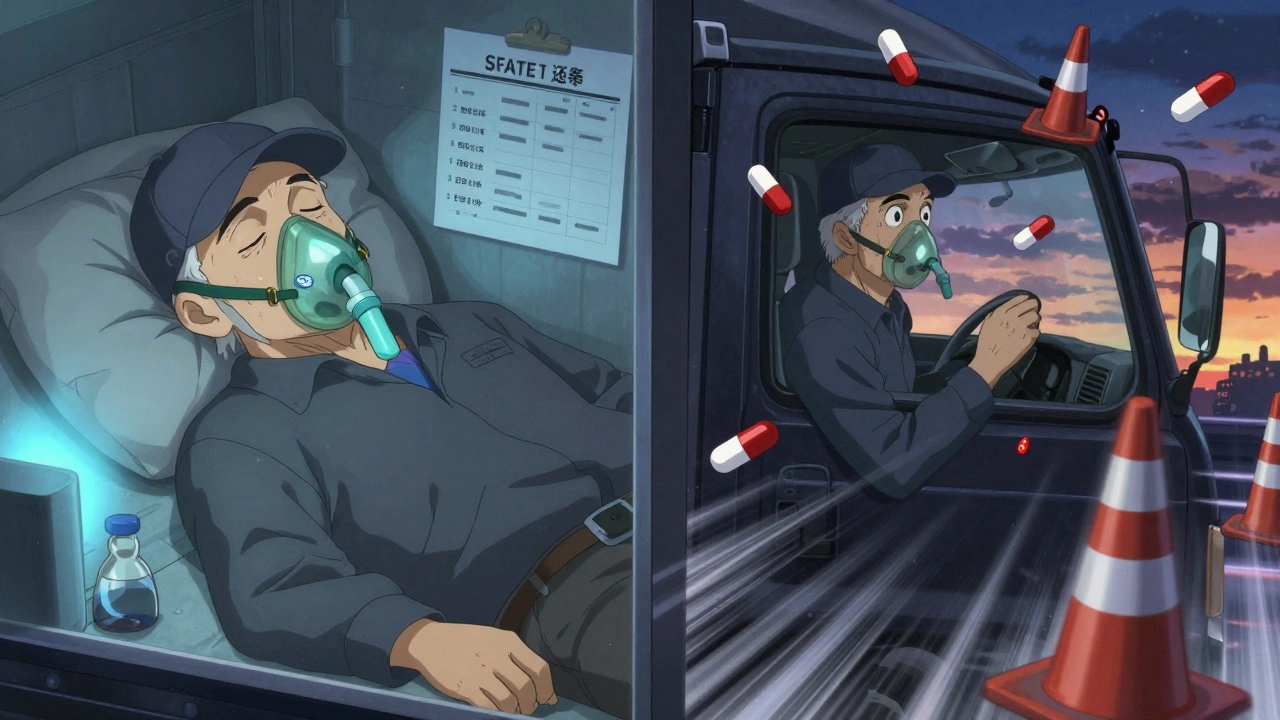
What Carriers Are Doing About It
Companies are waking up to the problem. In 2019, only 18% of trucking fleets used electronic systems to track driver medications. By 2024, that number jumped to 67%. Why? Because the FMCSA fined 28% of carriers for failing medication management protocols in 2023. The average fine? $14,200.
Now, many carriers require drivers to submit medication logs monthly. Some use wearable tech to monitor alertness. The FMCSA is funding a $4.7 million pilot with Samsara and KeepTruckin to test real-time impairment detection. In the future, your steering wheel might know if you’re drowsy-even before you do.
The Bigger Problem: An Aging Workforce
Here’s the quiet crisis: 43% of commercial drivers over 50 take at least one medication that conflicts with DOT rules. Many have arthritis, high blood pressure, sleep apnea, or depression. They can’t afford to stop working. But they can’t legally take their meds.
The Commercial Vehicle Medical Research Foundation warns that if nothing changes, the U.S. could face a shortage of 54,000 drivers by 2027. That’s not just a staffing issue-it’s a safety issue. Older drivers are more experienced, but they’re also more likely to need medication. If the rules don’t adapt, we’ll lose good drivers-and replace them with younger, less experienced ones.
What You Can Do Now
If you’re a CDL driver:
- Review your medications with your doctor before your next DOT physical.
- Don’t wait until you’re flagged to act. Proactive is better than reactive.
- Keep a personal Medication Action Plan: note how each drug affects your energy, focus, and reaction time.
- Use the Driving Impairment Checklist from the FMCSA to self-assess.
- Know your rights: you can appeal a disqualification, but you need documentation.
If you’re a carrier or dispatcher:
- Train your drivers on medication compliance.
- Use electronic tracking systems to monitor compliance.
- Work with your Medical Examiners to create clear guidelines.
- Don’t pressure drivers to hide meds. It’s not worth the risk.
The road doesn’t care if you’re in pain. It doesn’t care if you’re anxious. It only cares if you’re alert. And right now, the rules are designed to make sure you are.
Can I drive a commercial truck if I take antidepressants?
Yes, if the antidepressant doesn’t cause drowsiness, dizziness, or slowed reaction time. SSRIs like Zoloft, Prozac, and Lexapro are generally allowed. But you must disclose them during your DOT physical, and your Medical Examiner will assess whether they affect your ability to drive safely. Always get written confirmation from your doctor that your medication is safe for commercial driving.
Is Adderall banned for CDL drivers?
Yes. Adderall and other amphetamine-based stimulants are strictly prohibited for commercial drivers, even if prescribed for ADHD. The FMCSA considers them disqualifying because they can cause jitteriness, insomnia, and cardiovascular stress. Some drivers switch to non-stimulant alternatives like Strattera or Intuniv, which are allowed under DOT rules.
Can I use medical marijuana if it’s legal in my state?
No. Even if marijuana is legal for medical or recreational use in your state, it remains a Schedule I controlled substance under federal law. The FMCSA prohibits its use for all commercial drivers, regardless of state laws. Testing positive for THC will result in immediate disqualification and entry into the Drug and Alcohol Clearinghouse.
What happens if I fail a drug test for a prescribed medication?
You’ll be removed from duty immediately. Your employer must report the result to the Drug and Alcohol Clearinghouse. You’ll need to see a Medical Review Officer (MRO) to determine if the positive result was due to a legitimate prescription. If your doctor confirms the medication is safe and you’re using it correctly, you may be cleared after a review. But if the drug is on the FMCSA’s prohibited list, you’ll need to switch medications before returning to work.
Do I need to tell my employer about my medications?
You don’t have to tell your employer directly, but you must disclose all medications to your DOT Medical Examiner during your physical exam. The Medical Examiner may share restrictions with your employer if they affect your ability to drive safely. Employers are required to ensure drivers are medically qualified, so they’ll know if you have a restriction-either through the Clearinghouse or your Medical Certificate.
Can I get a medical exemption for a banned medication?
The FMCSA doesn’t grant exemptions for medications that are outright banned, like opioids or amphetamines. However, if you have a physical impairment (e.g., amputation) and need an adaptive device, you can apply for a Skill Performance Evaluation (SPE) certificate. For medications, your only option is to switch to an approved alternative and demonstrate safe driving performance. Some drivers successfully appeal after switching to non-disqualifying drugs and providing medical documentation.
Next Steps for Drivers
Don’t wait for a positive drug test or a failed DOT physical to act. If you’re on any medication, review it now. Talk to your doctor. Ask: “Is this safe for someone who drives a commercial truck?” If you’re unsure, contact a certified Medical Examiner listed in the National Registry of Certified Medical Examiners. They can give you a free, no-obligation review of your meds.
And if you’re thinking about quitting your meds because you’re scared-don’t. Quitting cold turkey can be dangerous. Work with your doctor to find a safe, legal alternative. Your health matters. Your license matters. But safety matters most.
 Medications
James Kerr
December 2, 2025 AT 14:42Rashmin Patel
December 3, 2025 AT 04:31sagar bhute
December 3, 2025 AT 05:22Joykrishna Banerjee
December 4, 2025 AT 00:57Cindy Lopez
December 4, 2025 AT 22:23Katherine Gianelli
December 4, 2025 AT 23:35parth pandya
December 6, 2025 AT 20:36Francine Phillips
December 6, 2025 AT 20:44Myson Jones
December 8, 2025 AT 11:08shalini vaishnav
December 10, 2025 AT 06:15