
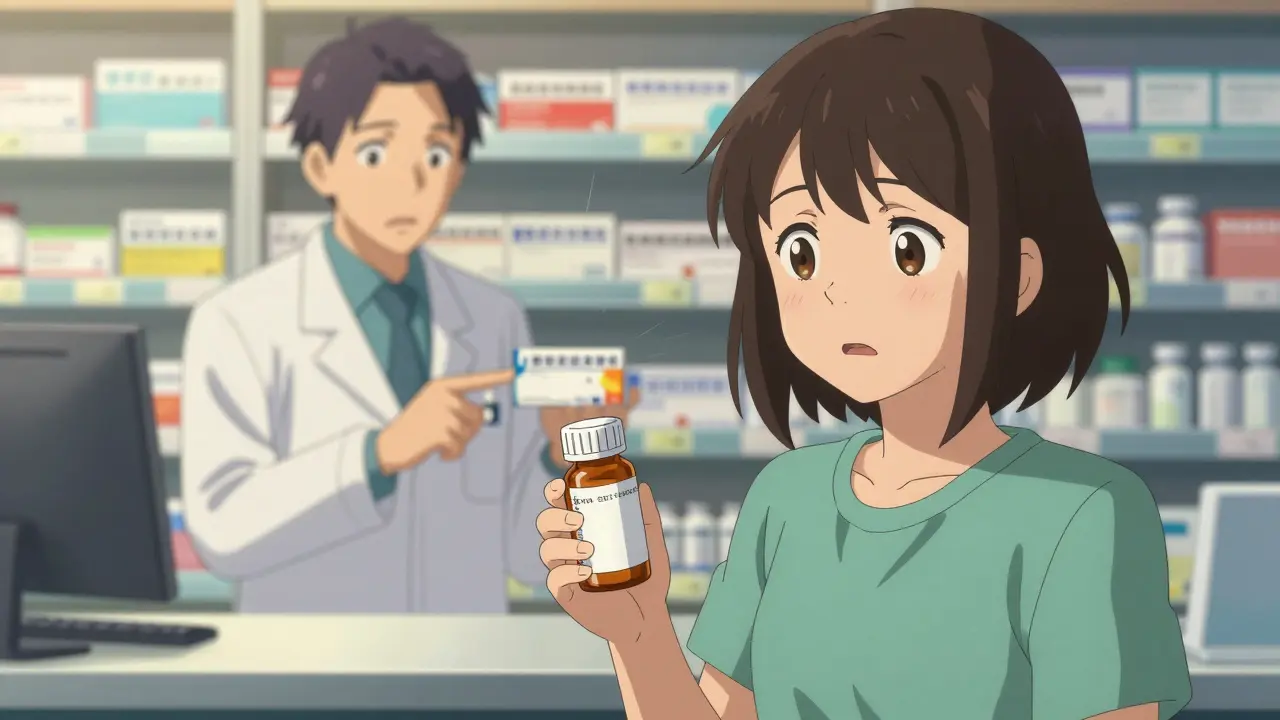
When you pick up a prescription, you might notice the pill looks different than last time. The name on the bottle changed. The price dropped. That’s not a mistake - it’s pharmacy substitution. In most states, pharmacists can swap your brand-name drug for a cheaper generic version without asking you first. But not everywhere. And not always. Some states require your permission. Others block substitutions for certain drugs entirely. If you’re on a chronic medication - say, for high blood pressure, epilepsy, or an autoimmune condition - this isn’t just about saving money. It’s about safety, consistency, and knowing your rights.
What Exactly Is Pharmacy Substitution?
Pharmacy substitution means a pharmacist replaces the brand-name drug your doctor prescribed with a generic version. Generics have the same active ingredient, dose, and intended effect as the brand-name drug. They’re not knockoffs. They’re approved by the FDA as therapeutically equivalent. The big difference? Price. Generics cost 80-85% less. That’s why most states encourage substitution - it saves billions every year. In 2023, generics made up 90% of all prescriptions filled in the U.S. but only 23% of total drug spending. But here’s the catch: not all drugs are equal when it comes to substitution. For small-molecule drugs like metformin or lisinopril, switching is usually safe. For others - like warfarin, phenytoin, or levothyroxine - even tiny differences in how the drug is made can affect how your body absorbs it. These are called narrow therapeutic index (NTI) drugs. A small change can lead to serious side effects or treatment failure. That’s why some states ban substitution for these medications entirely.How State Laws Vary - And Why It Matters
All 50 U.S. states and Washington, D.C. have laws about substitution. But they don’t agree on much else. There are three main types of state rules:- Mandatory substitution: The pharmacist must switch to a generic unless the doctor says no. This applies in 19 states, including California, New York, and Texas.
- Permissive substitution: The pharmacist can switch, but doesn’t have to. This is the rule in 31 states plus D.C.
- Restrictive rules: Certain drugs are off-limits for substitution, no matter what. These usually include NTI drugs and, increasingly, biosimilars.
Do You Need to Give Permission?
In 7 states and D.C., pharmacists must get your explicit consent before substituting a drug. That means they have to ask you - in person or in writing - and you have to say yes. In 31 states and D.C., they only have to notify you after the fact. You might find out when you get the receipt, or when you check your pharmacy app. In 19 states, there’s no legal requirement to tell you at all. You could be on a new generic for months before you realize. That’s a problem if you’re sensitive to changes in medication. One 2009 study found that states requiring patient consent had 25% lower generic substitution rates. That might sound like a downside - but it also means fewer unexpected switches.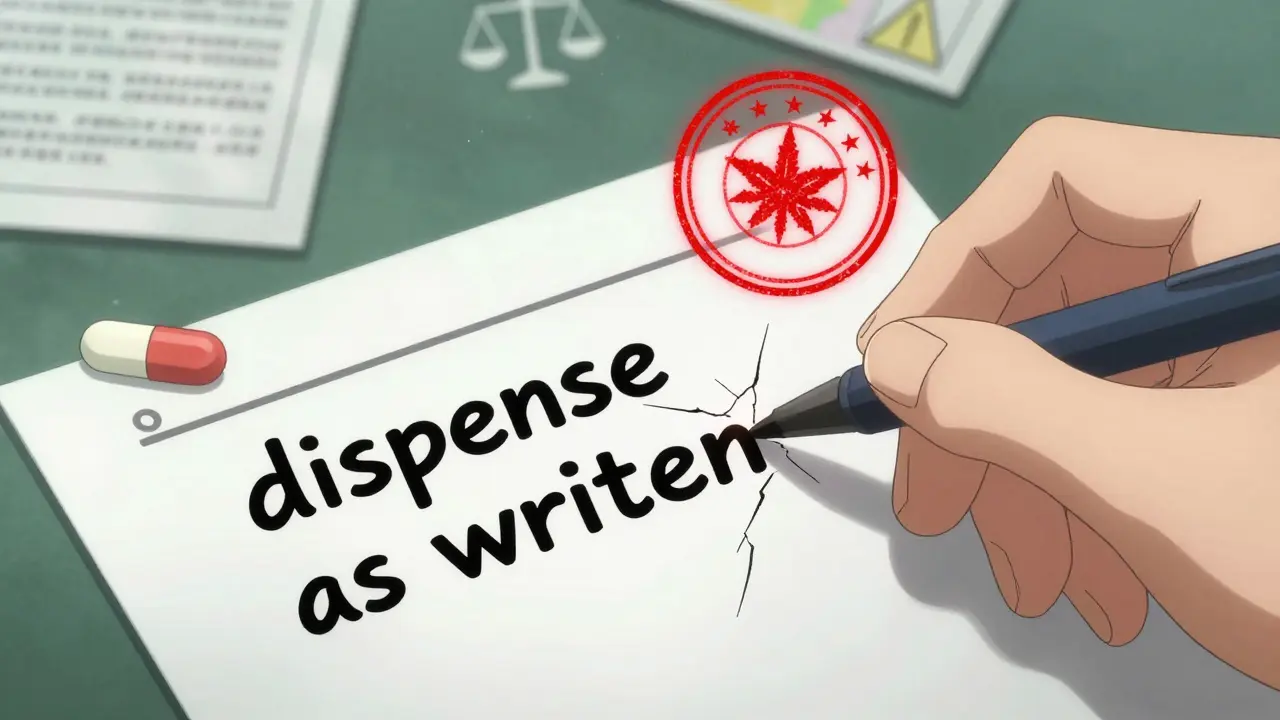
Biosimilars Are a Whole Different Ballgame
If you’re taking a biologic drug - like Humira, Enbrel, or Remicade - you might see a new option: a biosimilar. These aren’t generics. They’re complex, large-molecule drugs made from living cells. Because they’re so complicated, the FDA doesn’t call them “interchangeable” unless they’ve passed extra tests proving they work exactly like the original. As of late 2023, only 10 biosimilars out of 38 approved in the U.S. have that “interchangeable” status. And even then, state rules add layers. Forty-five states have stricter rules for biosimilars than for regular generics. Thirty-seven states require the pharmacist to notify your doctor within days of the switch. Twelve states require your doctor to approve the substitution before it happens. Fifteen states won’t let you switch if the biosimilar costs more than the brand - even if your insurance covers it. States like Florida, Georgia, and Illinois require dual notification: you and your doctor both get a letter. Alabama and Mississippi? Just document it in your file. That kind of inconsistency makes it hard for pharmacies to follow the rules - and for patients to know what’s happening.What You Can Do: Your Rights as a Patient
You have more power than you think.- Ask: When you pick up your prescription, ask, “Is this the brand or the generic?” Don’t assume. Read the label. Compare it to your last fill.
- Refuse: You can say no to substitution in every state. You don’t need a reason. Just tell the pharmacist: “I want the brand.” They have to honor it.
- Request “dispense as written”: If you’re on a sensitive medication, ask your doctor to write “dispense as written” or “no substitution” on your prescription. In 28 states, doctors must give a reason for this - but you still have the right to ask.
- Check your state’s rules: Visit your state board of pharmacy’s website. Most have a section on drug substitution laws. Search “[Your State] board of pharmacy substitution laws.”

How Pharmacists Handle the Confusion
Pharmacists are caught in the middle. Sixty-three percent of independent pharmacists say state substitution laws are too complicated to manage, especially if they serve patients from multiple states. One pharmacist in Ohio told a survey: “I had a patient come in from Kentucky with a prescription for phenytoin. I couldn’t substitute it. But the next day, another patient from Indiana got the same drug - and I could swap it. It’s like playing by two different rulebooks.” Many pharmacies use software to block substitutions based on state rules. But errors happen. That’s why it’s your job to double-check.What’s Changing in 2025?
The landscape is shifting. More biosimilars are getting “interchangeable” status. California and New York updated their laws in 2023 to require clearer patient notices. The National Association of Boards of Pharmacy is pushing for standardized rules across states. Twenty-two states have already adopted parts of their model legislation. By 2030, biosimilars could make up 70% of the biologics market - if the laws catch up. But until then, you’re the best defense against unwanted switches. Know your drug. Know your state. Know your rights.Quick Checklist: What to Do Today
- Check your last prescription bottle - is it the brand or generic?
- If you’re on a NTI drug (warfarin, levothyroxine, phenytoin, etc.), ask your doctor to write “dispense as written.”
- Call your state board of pharmacy and ask: “Does my state require patient consent for generic substitution?”
- When you pick up your next prescription, say: “I want to know if this was substituted.”
- If you notice a change in how you feel after a switch, contact your doctor immediately.
Can my pharmacist substitute my brand-name drug without telling me?
In 19 states, yes - they can substitute without asking, as long as the doctor didn’t say “dispense as written.” In 31 states and D.C., they can choose to substitute but aren’t required to. In 7 states and D.C., they must get your permission first. In 19 states, there’s no legal requirement to notify you at all - even after the fact. Always check your prescription label and ask if you’re unsure.
What if I don’t want a generic drug?
You can refuse any substitution, no matter what your state’s law says. Just tell the pharmacist: “I want the brand-name drug.” They must fill your request. You don’t need to explain why. If they push back, ask to speak to the pharmacist-in-charge. Your doctor can also write “dispense as written” on your prescription to prevent substitution entirely.
Are all generic drugs safe to substitute?
For most drugs, yes. But for narrow therapeutic index (NTI) drugs - like warfarin, levothyroxine, phenytoin, or digoxin - even small differences in how the drug is absorbed can be dangerous. Many states ban substitution for these drugs. If you’re on one, always confirm with your doctor before switching. Don’t rely on the pharmacist to know the risk.
What’s the difference between a biosimilar and a generic?
Generics are exact chemical copies of small-molecule drugs. Biosimilars are similar, but not identical, copies of complex biologic drugs made from living cells. The FDA requires extra testing for biosimilars to be labeled “interchangeable.” Only 10 of the 38 approved biosimilars in the U.S. have that status. Even then, state laws often require doctor notification or prior approval before substitution.
How do I find out my state’s substitution rules?
Go to your state’s board of pharmacy website. Search “[Your State] board of pharmacy drug substitution laws.” Most have a downloadable guide or FAQ. You can also call them directly. The National Association of Boards of Pharmacy (NABP) offers a state-by-state reference tool, but your state’s official site is the most reliable source.
Can my insurance force me to take a generic?
Insurance can require you to try a generic first - that’s called “step therapy.” But they can’t force your pharmacist to substitute a drug without following state law. If your insurance denies coverage for the brand-name drug, you can appeal. You can also ask your doctor to write “dispense as written” if the generic isn’t right for you. Your right to refuse substitution is separate from your insurance’s coverage rules.
 Medications
David Chase
December 29, 2025 AT 23:24Tamar Dunlop
December 30, 2025 AT 07:20Emma Duquemin
December 31, 2025 AT 05:28Joe Kwon
January 1, 2026 AT 06:08Himanshu Singh
January 2, 2026 AT 23:27Jasmine Yule
January 3, 2026 AT 15:17Greg Quinn
January 5, 2026 AT 05:19Lisa Dore
January 6, 2026 AT 08:15Sharleen Luciano
January 6, 2026 AT 18:07Teresa Rodriguez leon
January 7, 2026 AT 04:12Manan Pandya
January 7, 2026 AT 08:56Nisha Marwaha
January 8, 2026 AT 00:26Paige Shipe
January 9, 2026 AT 15:37Kevin Lopez
January 10, 2026 AT 14:32