
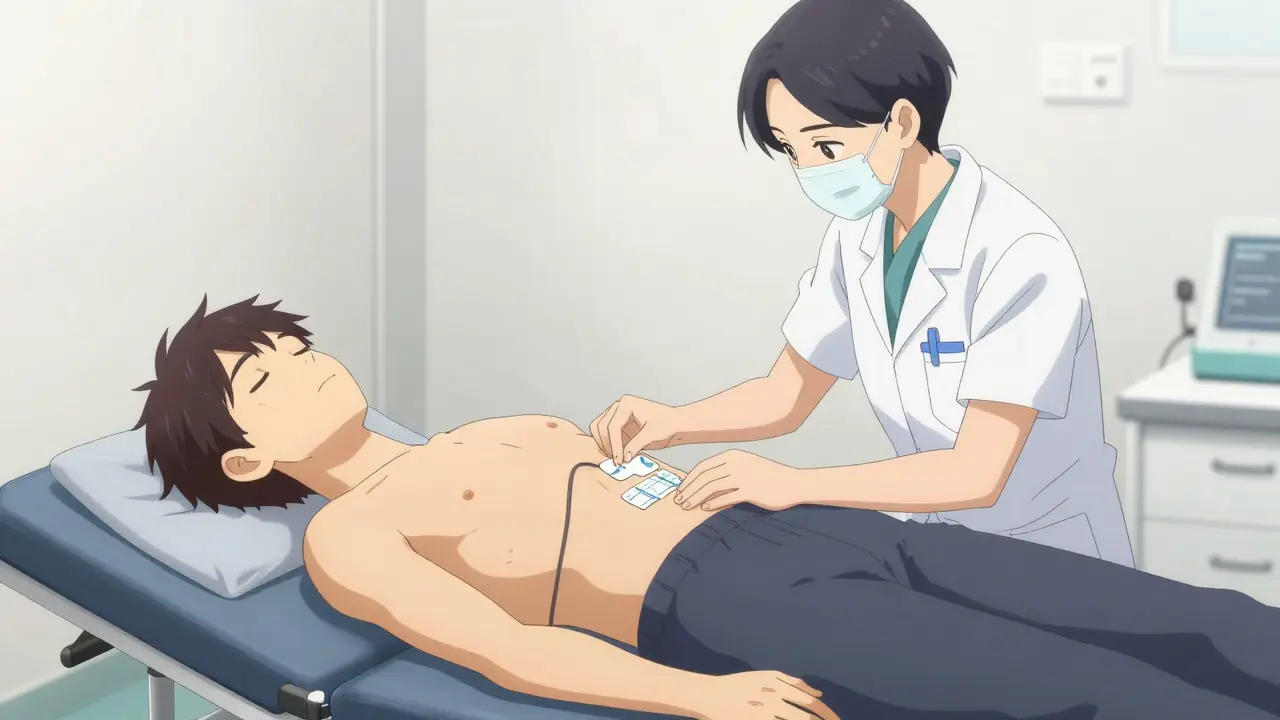
Walking into a cardiology clinic for the first time can be nerve-wracking. You might be feeling a strange tightness in your chest or perhaps your doctor just wants to check your heart health during a routine physical. Most of the time, the first step is a set of non-invasive tests. You've likely heard of an ECG or a stress test, but what do they actually do? While they both look at your heart's electrical signals, they serve very different purposes. One is like a snapshot of your heart at rest, while the other is more like a movie of your heart under pressure.
| Feature | Standard ECG | Stress Test |
|---|---|---|
| Goal | Check baseline rhythm & history | Evaluate heart under exertion |
| Duration | 3-5 minutes | 15-60 minutes |
| State of Heart | Resting | Stressed (Physical or Chemical) |
| Key Detection | Arrhythmias, past heart attacks | Ischemia, blockages (CAD) |
What is an ECG and how does it work?
An ECG (or EKG), short for electrocardiogram, is essentially a recording of the electrical impulses that make your heart beat. This technology dates back to 1903, thanks to Willem Einthoven, and it's still the gold standard for a quick heart check. To do this, a technician places electrodes on your chest, arms, and legs. These aren't sending electricity into you; they are simply listening to the electricity your heart is already producing.
The resulting graph tells a story. It shows the heart rate, the rhythm, and how the electrical wave moves through the heart chambers. Cardiologists use this to spot arrhythmias (irregular heartbeats), signs of an enlarged heart, or evidence that you've had a silent heart attack in the past. It's a fast, painless process, though the actual recording only takes a few minutes-most of the time is spent just getting the stickers in the right spot.
When a resting test isn't enough: The Stress Test
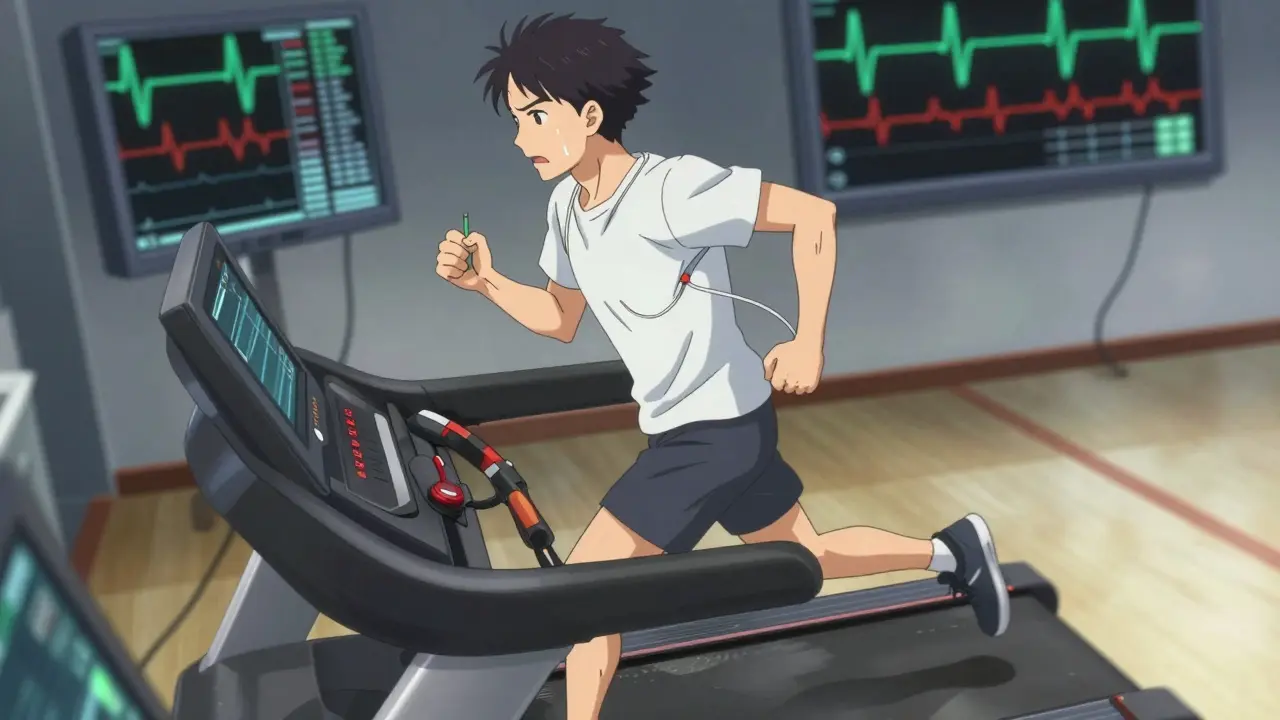
Here is the catch: some heart problems are invisible when you're lying still on a table. If a coronary artery is partially blocked, your heart might get enough oxygen while you're resting, but it will struggle the moment you start climbing stairs or jogging. That's where the stress test comes in. It forces your heart to work harder, which reveals whether the blood flow is sufficient when the demand is high.
The most common method is the treadmill test using the Bruce protocol. You start at a slow walk on a slight incline, and every three minutes, the speed and steepness increase. The goal is to reach a target heart rate (usually 85% of your predicted maximum, calculated as 220 minus your age). While you walk or run, the team monitors your blood pressure, heart rate, and ECG waveforms in real-time. If the ECG shows specific changes-like ST-segment depression-it's a strong signal that the heart muscle isn't getting enough oxygen, pointing toward coronary artery disease (CAD).
Options for those who can't exercise
Not everyone can jump on a treadmill. If you have severe arthritis, respiratory issues, or are recovering from surgery, doctors use a chemical stress test. Instead of physical exertion, they use pharmacological agents like adenosine, dipyridamole, or dobutamine to mimic the effects of exercise on the heart. These drugs either dilate the arteries or make the heart beat faster and harder.
Chemical tests are highly effective but can feel a bit strange. Some patients report a feeling of shortness of breath or chest pressure for a few minutes while the medication is active. It takes longer than a treadmill test-usually 30 to 60 minutes-but it provides critical data for patients who otherwise couldn't be safely tested. It's a vital alternative that ensures no one is left without a diagnosis just because they can't run a mile.
Advanced Imaging: Echo and Nuclear Tests
Sometimes a standard ECG during a stress test doesn't give a clear enough answer. In those cases, doctors add imaging to see exactly what the heart muscle is doing. A stress echocardiography combines the stress test with ultrasound. By comparing ultrasound images of the heart at rest and during peak exercise, doctors can see if certain parts of the heart wall aren't pumping as strongly as they should. This is particularly useful for women, as traditional ECG stress tests can sometimes produce false negatives in premenopausal women due to differences in cardiac physiology.
Then there's the nuclear stress test. This involves injecting a small amount of radioactive tracer (like thallium-201) into the bloodstream. A special camera then tracks how the tracer distributes in the heart muscle. If a specific area doesn't "light up," it indicates a lack of blood flow. While nuclear tests have higher sensitivity (around 85%) for detecting CAD, they do expose the patient to a small amount of radiation-roughly equivalent to a few years of natural background radiation.
What to expect and how to prepare
If you've been scheduled for one of these tests, a little preparation goes a long way. The most important rule is to avoid caffeine for 24 hours before the test. Why? Because caffeine can interfere with the chemical agents used in pharmacological stress tests and can mess with your resting heart rate, potentially skewing the results.
Wear comfortable clothes and sneakers. You'll be hooked up to electrodes, so wearing a two-piece outfit (like a t-shirt and pants) makes it easier for the technician to place the sensors. Most people find the process straightforward, and about 85% of facilities can give you preliminary results before you even leave the building. However, don't be surprised if the results are "inconclusive." About 25% of intermediate-risk patients require follow-up tests to get a definitive answer.
The future of heart diagnostics
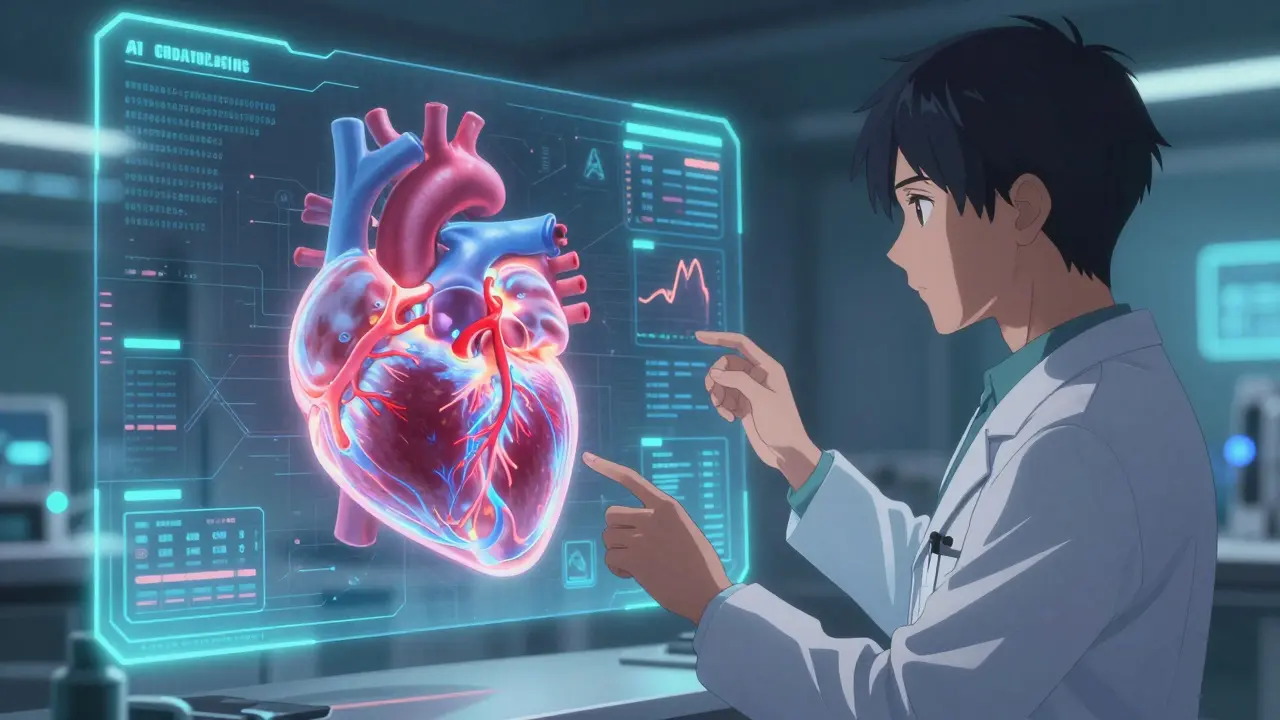
We are moving toward a world where AI does the heavy lifting. New machine learning algorithms are now improving the accuracy of stress test interpretations by up to 22%. We're also seeing the rise of portable equipment, allowing these tests to happen outside of massive hospitals. Moreover, new techniques like speckle-tracking strain analysis are helping doctors find microvascular dysfunction-small vessel issues that used to be nearly impossible to detect.
While the basic principles of the ECG and stress test remain, the precision is increasing. Whether it's through a simple resting EKG or a high-tech nuclear scan, the goal remains the same: catching heart issues early enough to treat them effectively. Every extra minute you can manage on a stress test is actually a good sign-research shows that each additional minute of exercise duration is linked to a lower risk of future cardiac events.
Is a stress test dangerous?
For most people, it is very safe because you are monitored by medical professionals the entire time. However, it is generally avoided if you've had a heart attack in the last two days, have unstable arrhythmias, or are suffering from acute heart failure. Your doctor will screen you for these risks before the test begins.
Why did my resting ECG come back normal if I have chest pain?
A resting ECG only captures a moment in time. If your chest pain is caused by a partial blockage that only restricts blood flow during exertion (ischemia), the heart may look perfectly healthy while you're lying still. This is exactly why a stress test is used as a secondary step.
What is the difference between a nuclear test and an echo stress test?
A stress echo uses ultrasound (sound waves) to look at the physical movement of the heart walls and involves no radiation. A nuclear stress test uses a radioactive tracer to look at blood flow (perfusion) and is generally more sensitive at picking up blockages, though it involves radiation exposure.
How long does it take to get results?
Preliminary results for a standard ECG or stress test are often available immediately after the procedure. However, a full detailed report from a cardiologist may take a few days, especially if the images need to be carefully compared by a specialist.
Can a stress test tell me if I have a heart attack?
A resting ECG is typically used to diagnose an active or past heart attack. A stress test is used to predict the likelihood of a future event by finding the blockages that could cause one. If you are currently having symptoms of a heart attack, you would not be given a stress test; you would receive emergency care.
 Medications