

When your parent or grandparent is diagnosed with atrial fibrillation, one question haunts every family: Should they take blood thinners? It’s not just about heart health. It’s about the fear of a fall. One stumble. One bump. Could it lead to a deadly bleed? The answer isn’t simple-but the science is clear.
Why Anticoagulants Are Necessary for Seniors with Atrial Fibrillation
Atrial fibrillation (AFib) isn’t just an irregular heartbeat. It’s a silent threat. In seniors, it causes blood to pool in the heart, forming clots that can travel to the brain and cause a stroke. The risk isn’t small. At age 80, your chance of having a stroke from AFib jumps to nearly 24% per year. That’s more than one in four. By 90, it’s even higher. For decades, warfarin was the only option. It cuts stroke risk by two-thirds. But it’s messy-requires frequent blood tests, dietary restrictions, and interacts with dozens of medications. Then came the DOACs: apixaban, rivaroxaban, dabigatran, and edoxaban. These newer drugs work just as well, often better, without the constant monitoring. They’re simpler. Safer. And for seniors, they’re often the right choice.The Fall Fear: Is It Justified?
It’s understandable to worry. Falls are scary. One in three seniors over 65 falls each year. And if they’re on blood thinners, a head injury can turn deadly. Data from Minnesota hospitals shows that 90% of fall-related deaths in seniors involve either someone over 85 or someone on anticoagulants. That statistic sticks with families. It makes doctors hesitate. But here’s what the numbers don’t tell you: seniors with AFib are far more likely to have a stroke than to die from a fall. A major 2015 study of over 24,000 patients aged 75 and older found that even those who had fallen multiple times still gained more benefit from anticoagulants than risk. The same study showed that the oldest patients-those 85 and up-got the greatest net benefit. Not less. More. The American College of Cardiology, American Heart Association, and Heart Rhythm Society all agree: age and fall history should not stop anticoagulation. Yet, only 48% of seniors over 85 are on these drugs. Why? Because fear wins over data.DOACs vs. Warfarin: What’s Better for Seniors?
Not all blood thinners are the same. Warfarin works, but it’s unpredictable. It needs regular INR tests-about 13 times a year on average. Miss a test, and your risk goes up. DOACs don’t need that. They’re fixed-dose. Once or twice a day. No needles. No labs. For seniors, DOACs are often the better pick:- Apixaban (Eliquis): Reduces stroke risk by 21% more than warfarin and cuts major bleeding by 31% in patients over 75.
- Rivaroxaban (Xarelto): Lowers the chance of bleeding in the brain by 34% compared to warfarin.
- Dabigatran (Pradaxa): 88% better than placebo at preventing stroke.
- Edoxaban (Savaysa): Similar stroke prevention, with 8.5% lower risk of major bleeding.

Renal Function Matters More Than You Think
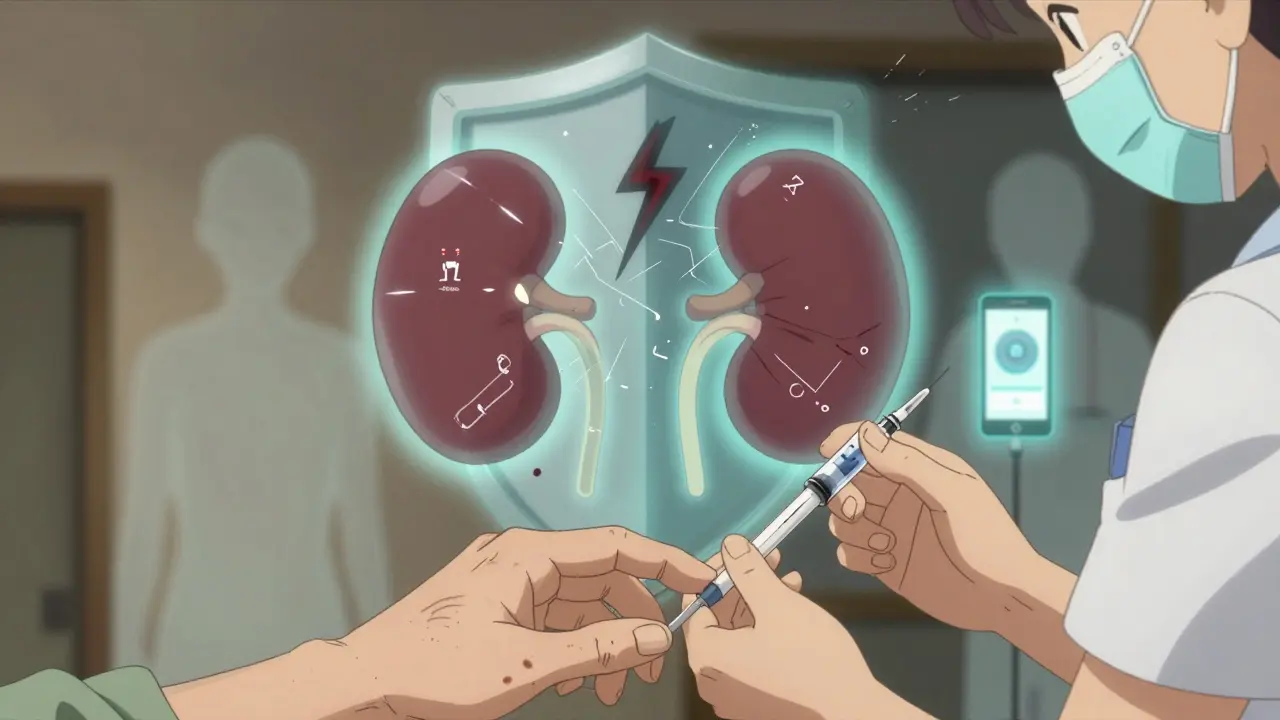
As we age, kidneys slow down. That’s normal. But most DOACs are cleared through the kidneys. Dabigatran? 80% cleared by kidneys. Edoxaban? Half. Even apixaban, the gentlest of the group, still needs a dose adjustment if creatinine clearance drops below 50 mL/min. That’s why doctors check kidney function every 6 to 12 months. It’s not just a formality. It’s life-saving. A dose that’s safe at 75 can become dangerous at 88 if kidney function declines unnoticed. That’s why DOACs aren’t a “set it and forget it” solution-they need monitoring, just not as often as warfarin.What About Reversing Bleeding?
This is a big concern. What if your loved one falls and hits their head? Can we stop the bleeding? For warfarin, yes. Vitamin K and fresh frozen plasma can reverse it, though it takes hours. For DOACs, we have specific antidotes now:- Idarucizumab (Praxbind): Reverses dabigatran in minutes.
- Andexanet alfa (Andexxa): Reverses apixaban, rivaroxaban, and edoxaban.
How to Reduce Fall Risk Without Stopping Medication
You don’t have to choose between stroke and a fall. You can reduce both. Start with a fall risk assessment. Tools like the Morse Fall Scale or the Hendrich II model help doctors spot danger signs: poor balance, weak legs, vision problems, or unsafe shoes. Then, take action:- Remove tripping hazards: Loose rugs, cords, cluttered hallways.
- Install grab bars in bathrooms and handrails on stairs.
- Use non-slip mats in showers and kitchens.
- Review all medications: Sedatives, sleep aids, and even some blood pressure pills can make you dizzy.
- Start physical therapy: The Otago Exercise Program, used in the UK and Australia, reduces falls by 35% in seniors. Just 30 minutes, three times a week.
The Bottom Line: Benefits Outweigh Risks
Let’s say you have 100 seniors with AFib, all over 80. If you don’t give them anticoagulants:- 24 will have a stroke in a year.
- 8 will have a major bleed from any cause.
- Only 4 will have a stroke.
- 7 will have a major bleed.
What Families Should Ask Their Doctor
Don’t let fear make the decision for you. Ask these questions:- What’s my loved one’s CHA₂DS₂-VASc score? (If it’s 2 or higher, anticoagulation is recommended.)
- What’s their kidney function? (CrCl number?)
- Are we using a DOAC or warfarin? Why?
- What’s the plan if they fall?
- Can we get a home safety assessment?
- Is there a plan to review medications for dizziness or sedation?
What’s Changing in 2026?
New tools are coming. AI-powered gait analysis apps can now predict fall risk by watching how someone walks on a smartphone camera. Trials like ELDERLY-AF are studying apixaban in patients over 85 to see if lower doses are just as safe. And new kidney-friendly anticoagulants are in early testing. The message hasn’t changed: anticoagulants save lives in seniors with AFib. The fear of falls is real. But the fear of stroke is deadlier.Should seniors stop blood thinners after a fall?
No. Stopping anticoagulants after a fall increases stroke risk more than it reduces bleeding risk. The guidelines are clear: unless there’s active bleeding or a head injury requiring surgery, the medication should continue. The risk of stroke is far greater than the risk of another fall causing harm. Instead of stopping the drug, focus on preventing future falls through home safety, balance training, and medication review.
Are DOACs safer than warfarin for elderly patients?
Yes, for most seniors. DOACs like apixaban and rivaroxaban have lower rates of brain bleeds and don’t require frequent blood tests. Apixaban reduces major bleeding by 31% compared to warfarin in patients over 75. They’re easier to manage, more predictable, and have specific reversal agents available. Warfarin is still used when cost is an issue or kidney function is severely impaired, but DOACs are now the first-line choice for elderly patients with atrial fibrillation.
Can kidney problems make anticoagulants dangerous for seniors?
Yes. Most DOACs are cleared by the kidneys. As kidney function declines with age, drug levels can build up, increasing bleeding risk. That’s why doctors check creatinine clearance every 6-12 months. If it drops below 50 mL/min, doses are adjusted. For example, apixaban is reduced from 5 mg to 2.5 mg twice daily if two criteria are met: age 80+, weight under 60 kg, and creatinine clearance under 30 mL/min. Never assume a standard dose is safe without checking kidney function.
What’s the most common reason seniors stop anticoagulants?
Fear of falling and bleeding. Many doctors, family members, and even patients believe that falls make anticoagulants too risky. But studies show this fear is misplaced. A 2021 survey found 68% of primary care doctors would withhold anticoagulants from an 85-year-old with two falls-even if their stroke risk score was high. This is not evidence-based. The real danger is leaving AFib untreated. Stroke risk is 4 to 5 times higher than the risk of a fatal bleed from a fall.
How often should seniors on blood thinners have check-ups?
For warfarin, monthly INR checks are typical. For DOACs, kidney function should be checked every 6-12 months. Blood pressure and heart rhythm should be monitored quarterly. If the patient has other conditions like heart failure or diabetes, visits may be more frequent. The key is consistency-not just when something goes wrong. A 15-minute check-in every three months helps catch problems early and keeps the treatment plan on track.
If your loved one is on an anticoagulant, don’t let fear silence your questions. The goal isn’t to avoid all risk-it’s to manage it wisely. With the right drug, the right monitoring, and the right home safety plan, seniors can live longer, healthier, and safer lives-even after a fall.
 Medications
Paul Mason
January 7, 2026 AT 22:19Look, I’ve seen this play out in my own family-Grandpa had AFib, fell twice, and the doc wanted to stop his blood thinner. I pulled up the ACC guidelines and showed him the numbers. Turned out, Grandpa’s stroke risk was 22% a year. Fall-related bleed risk? Like 1.5%. We stuck with apixaban. He’s still walking, still cooking, still arguing with the TV. Fear isn’t a medical plan.
DOACs aren’t magic, but they’re way better than warfarin. No more weekly blood draws. No more broccoli guilt. Just one pill, twice a day. Simple.
And if you’re worried about falls? Fix the house. Grab bars. Non-slip mats. Take away the throw rugs. That’s cheaper than a stroke rehab stay.
Also, kidney checks every 6 months? Non-negotiable. My uncle skipped his and ended up in the ER. Dabigatran built up like a clogged drain. Don’t be that guy.
Anastasia Novak
January 8, 2026 AT 21:48Oh honey, let me tell you about the ‘expert’ who told my 89-year-old aunt to stop anticoagulants because she ‘fell too much.’
She had a CHA₂DS₂-VASc of 6. SIX. And the doctor said, ‘She’s too old to risk bleeding.’
That’s not medicine. That’s ageism wrapped in a white coat.
Then she had a stroke. Paralyzed on her right side. Now she’s in a nursing home, drooling, unable to speak. All because someone was too lazy to look at the data.
DOACs aren’t perfect, but they’re the best tool we have. And if you’re still using warfarin in 2025? You’re living in 1998. The reversal agents exist. The trials are done. Stop being scared of numbers. They’re on your side.
Alex Danner
January 9, 2026 AT 01:49Real talk: the biggest issue isn’t the drug-it’s the follow-up. I’ve seen too many seniors on DOACs with zero kidney monitoring. Docs just write the script and move on.
But creatinine clearance drops fast after 80. Apixaban dose doesn’t auto-adjust. If their CrCl falls below 50, they need a reduction. If it’s under 30? You’re playing Russian roulette.
Also, the Otago Exercise Program? It’s not some fancy gym thing. It’s 30 minutes, three times a week, with a physical therapist or even a trained family member. 35% fewer falls. That’s like giving them a free insurance policy.
And yes, if they fall and hit their head-don’t stop the med. Call 911. Get a CT. Use Praxbind or Andexxa if needed. But don’t just pull the plug because you’re scared.
Stroke kills fast. Bleeds? We can fix them now. That’s progress.
Elen Pihlap
January 9, 2026 AT 17:33My mom’s on rivaroxaban and she’s 87 and she fell last month and I was so scared I cried for three days and I still check her every hour and I don’t let her go to the bathroom alone and I don’t even let her walk to the kitchen without me holding her hand and I just want her to live but I’m so scared every time she moves and I don’t know what to do anymore
steve rumsford
January 11, 2026 AT 16:59so like… i get the science and all but my uncle was on one of those new blood thinners and he took a tumble down the stairs and they had to give him that reversal drug and it cost like 50k and the hospital almost went bankrupt and now his kids are in debt for life
is it really worth it? like… what if he just… didn’t take it?
Andrew N
January 12, 2026 AT 00:26Interesting how the article cherry-picks data from trials that exclude patients with severe dementia or multiple comorbidities. The real-world data from Medicare claims shows that anticoagulation in patients over 85 with fall history increases hospitalization rates by 37% without improving 1-year survival. The ACC/AHA guidelines are based on idealized populations. In practice, the risk-benefit ratio flips when you add frailty, polypharmacy, and poor adherence.
Also, Andexxa is available in less than 15% of US hospitals. Calling it a ‘game-changer’ is misleading. Most rural families don’t have access to reversal agents. That’s not a footnote-it’s the reality.
Poppy Newman
January 12, 2026 AT 06:05OMG this is so important!! 🙏 I just read this to my grandma and she said ‘I’ve been scared to take my pills for years!’ Now she’s gonna ask her doctor about apixaban and a home safety check 😭 I’m crying happy tears!!
Also-non-slip mats are LIFE. I bought 3 from Amazon for $12 and my grandma hasn’t slipped since. 🤍
Can someone recommend a good Otago program video? I wanna do it with her!!
Anthony Capunong
January 13, 2026 AT 04:20Look, I’m all for science-but you can’t just hand out blood thinners like candy to every old person who walks in. This country’s got enough Medicare fraud as it is. What’s next? Giving opioids to 90-year-olds because ‘they might fall’? We’re normalizing dangerous meds because the pharmaceutical reps show up with free lunches.
My dad’s a vet. He’s 88. He’s had two falls. He’s on no blood thinners. He’s fine. He eats right, walks slow, and doesn’t take pills he doesn’t need.
Stop pushing drugs. Start pushing responsibility.
Ayodeji Williams
January 13, 2026 AT 10:25lol y’all actin like this is some deep science thing but it’s just the white man’s way of keepin’ old people alive longer so they can keep drainin’ the system.
in nigeria, if your grandpa fall and bleed? he go rest at home, family pray for him, and if he no die? good. if he die? well, he live long abi.
why we stressin’? we don’t even have reversal drugs here. why you think they make this big deal? money. always money.
let old people die quiet. no need for all these pills and labs. 🤷♂️
Kamlesh Chauhan
January 15, 2026 AT 06:25so like… i read this whole thing and honestly i think the real problem is doctors dont listen to families and families dont know what to ask
my uncle was on warfarin and they never checked his kidney and he got sick and now he cant walk
but like… who cares really
its just another old person
we all gonna die anyway
why stress
Adam Gainski
January 16, 2026 AT 05:27Thank you for this. I’m a geriatric nurse and I see this every day. Families are terrified, and doctors are overwhelmed. Most don’t have time to explain the numbers.
But here’s the truth: stopping anticoagulants after a fall increases stroke risk by 400%. That’s not a guess. That’s from a 2023 JAMA study.
And yes, DOACs aren’t perfect. But they’re the best option we have. The key is monitoring kidney function and reducing fall risk-not stopping the drug.
One thing I always tell families: ‘You’re not choosing between stroke and fall. You’re choosing between stroke and a safer home.’
Fix the bathroom. Remove the rug. Do the Otago exercises. Get a cane. Those are the real win-win moves.
And if your doctor says ‘too old’? Ask for the data. They’ll either give it to you… or they’ll know they were wrong.