

Switching from a brand-name drug to a generic version is supposed to be simple, safe, and cost-effective. But for some people, it’s not. You might feel fine on your brand-name medication for years-then, after a refill from a different pharmacy, everything changes. Headaches start. Your heart races. Your skin breaks out. Or you feel more anxious, tired, or nauseous than ever before. These aren’t in your head. And they’re not rare.
Why Do Generic Medications Cause Unexpected Reactions?
Generic drugs are required to have the same active ingredient as their brand-name counterparts. That’s the law. But what’s not the same? The rest. The fillers, dyes, coatings, and preservatives-called excipients-are chosen by each manufacturer. And those differences can trigger reactions in sensitive people.Take levothyroxine, the thyroid hormone replacement. Patients often report heart palpitations, anxiety, or weight changes after switching to a generic version. Why? Even tiny variations in how the pill dissolves in the body can push thyroid levels out of the narrow range needed for stable function. The same goes for warfarin, a blood thinner. A small change in absorption can mean the difference between preventing a clot and causing dangerous bleeding.
Excipients matter more than you think. Some generics use lactose as a filler. If you’re lactose intolerant, that’s enough to trigger bloating, cramps, or diarrhea. Others use red dye #40 or yellow #5-both linked to headaches and hyperactivity in kids. One patient reported severe mouth sores after switching to a generic version of a seizure medication that used a new flavoring agent. The active ingredient? Identical. The side effect? Real.
Which Medications Are Most Likely to Cause Problems?
Not all generics are created equal. Some drug classes have a much higher risk of side effect changes after a switch. These include:- Thyroid medications (like levothyroxine): 23.7% of patients report new side effects after switching generics, according to GoodRx data.
- Antiseizure drugs (like phenytoin or lamotrigine): Up to 12.4% of users report breakthrough seizures or new rashes.
- Psychiatric medications (like sertraline or bupropion): Anxiety, insomnia, or emotional numbness can flare up after a manufacturer change.
- Blood thinners (like warfarin): Even small changes in absorption can lead to dangerous bleeding or clotting.
- Blood pressure drugs (like amlodipine): Swelling in the ankles or dizziness can appear after switching to a different generic.
The FDA calls these narrow therapeutic index (NTID) drugs. A little too much or too little can cause serious harm. That’s why doctors often recommend sticking with the same manufacturer-if you’re stable on one, don’t switch unless you have to.
Real Stories: What Patients Are Reporting
On Reddit’s r/Pharmacy, users share their experiences daily. One person wrote: “Switched from Synthroid to generic. Within 72 hours, I couldn’t sleep, my hands shook, and my heart felt like it was in my throat. My endocrinologist said it was the generic. We switched back-symptoms vanished in 4 days.”Another patient on Drugs.com reviewed generic amlodipine: “After switching, my ankles swelled up like balloons. I thought I was retaining water. My doctor checked my meds-said the manufacturer changed the coating. Switched back to brand, swelling gone.”
The FDA’s adverse event database shows over 1,800 reports between 2020 and 2023 where patients directly linked new side effects to a generic switch. The most common complaints? Gastrointestinal upset, dizziness, skin rashes, and mood changes.

When to Seek Medical Help Right Away
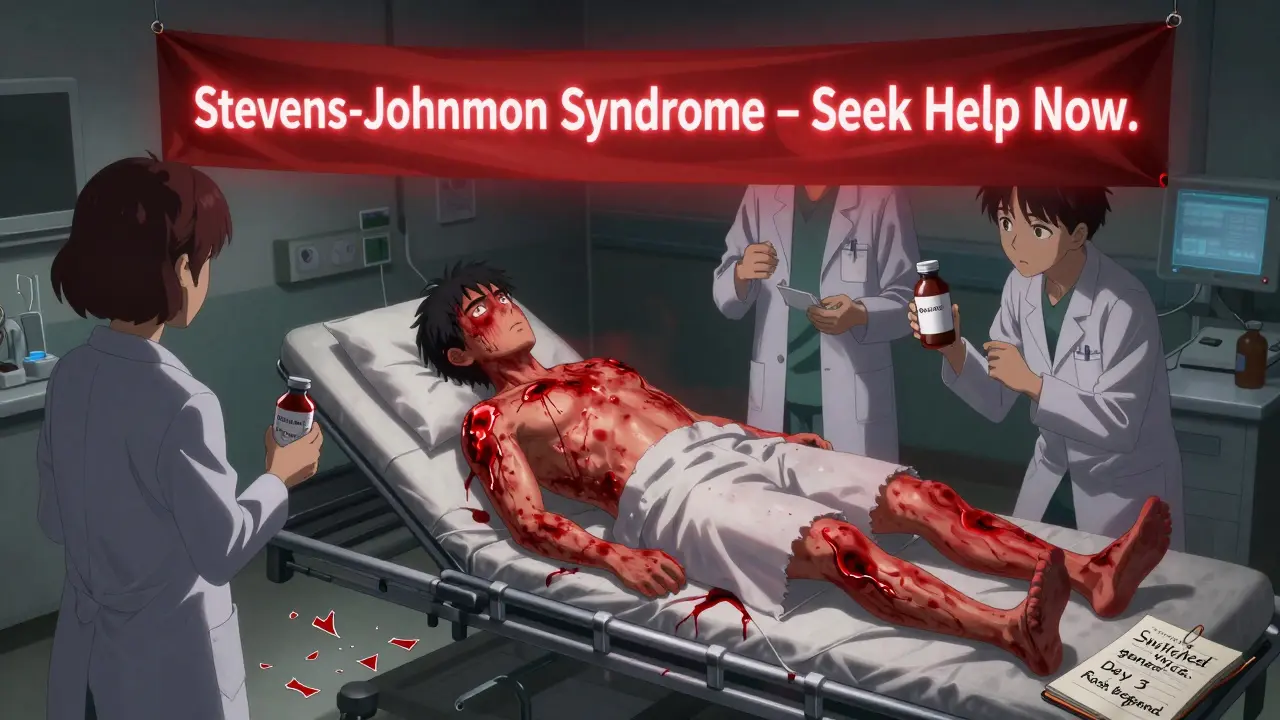
Not every new symptom means trouble. But some signs demand immediate attention:- Stevens-Johnson Syndrome: A painful red or purple rash that spreads, blisters, and peels-often starting on the face or chest. Can affect eyes, mouth, or genitals. Linked to lamotrigine, allopurinol, and some antibiotics.
- Priapism: A painful erection lasting more than 4 hours. Seen with trazodone, bupropion, and some ED medications.
- Severe allergic reaction: Swelling of the face or throat, trouble breathing, hives, or rapid heartbeat.
- Unexplained bleeding or bruising: Especially if you’re on warfarin or another blood thinner.
- Seizures returning: After being controlled for months or years.
If you experience any of these, go to an emergency room. Don’t wait. These are medical emergencies.
When to Call Your Doctor Within 24 Hours
You don’t need to panic-but don’t ignore these either:- New or worsening symptoms that started within 1-2 weeks of switching generics.
- Side effects lasting more than 3-5 days without improvement.
- Significant changes in heart rate, blood pressure, or mood that feel out of character.
- Severe nausea, vomiting, or diarrhea lasting over 48 hours.
- Unexplained skin changes: rash, itching, peeling, or blistering.
Dr. Robert H. Shmerling from Harvard Health says: “If a new symptom appears after a medication switch and doesn’t go away in a few days, it’s not just coincidence. It’s a signal.”
What to Do If You Suspect a Generic Is Causing Problems
Don’t stop your medication on your own. That can be dangerous. Instead:- Check the manufacturer name on your prescription label. Write it down. Many pharmacies rotate suppliers without telling you.
- Call your pharmacist and ask: “Is this the same manufacturer as last time?” If not, ask if you can get the previous version.
- Document your symptoms: When did they start? How bad are they? Did they improve or worsen over time?
- Make an appointment with your doctor. Bring your medication bottle. Say: “I switched generics and now I have [symptom]. I’m worried it’s the medication.”
- Ask about therapeutic equivalence. Some generics are rated “AB” by the FDA (meaning they’re considered equivalent). But even AB-rated drugs can cause issues in sensitive people.
Some doctors now write prescriptions with “Dispense as Written” or “Do Not Substitute” for high-risk drugs. If you’ve had a bad reaction before, ask your doctor to include that note.
How to Protect Yourself Moving Forward
- Keep a medication log: Note the brand name, generic manufacturer, and any side effects. Apps like Medisafe or even a simple notes app work. - Don’t assume all generics are interchangeable. Just because two are labeled “generic amlodipine” doesn’t mean they’re the same for you. - Know your excipients. If you have allergies or intolerances (like gluten, lactose, or artificial dyes), ask your pharmacist to check the inactive ingredients. - Report side effects to the FDA. Use MedWatch, the FDA’s online reporting system. Include the lot number and manufacturer. Your report helps others.The bottom line? Generics are safe for most people-and they save billions of dollars every year. But they’re not magic. Your body might react differently to a different coating, a different dye, or a different manufacturing process. That doesn’t mean the drug is bad. It just means your body is unique.
If you’ve had a strange reaction after switching, trust yourself. Talk to your doctor. And don’t let cost be the only factor when your health is on the line.
Can generic medications really cause different side effects than brand-name drugs?
Yes. While generics must contain the same active ingredient, they can differ in inactive ingredients like fillers, dyes, and preservatives. These can trigger reactions in sensitive individuals. Studies show that 8-14% of patients experience new or worsening side effects after switching, especially with thyroid, seizure, and psychiatric medications.
What should I do if I think my generic medication is causing side effects?
Don’t stop taking it. Contact your doctor or pharmacist. Check the manufacturer name on your bottle. Write down your symptoms and when they started. Ask if you can switch back to the previous version or to a different generic. Your doctor can also write “Dispense as Written” on your prescription to prevent future switches.
Which generic medications are most likely to cause problems?
Thyroid medications (like levothyroxine), antiseizure drugs (like phenytoin), blood thinners (like warfarin), psychiatric medications (like sertraline or bupropion), and some blood pressure drugs (like amlodipine) have the highest reported rates of side effect changes after switching generics. These are often drugs with a narrow therapeutic index, where small changes in blood levels can have big effects.
Is it safe to switch between different generic manufacturers?
It’s often safe-but not always. Many people switch without issue. But if you’ve had side effects before, or if you’re on a high-risk medication, switching manufacturers can trigger problems. Always monitor for new symptoms after a switch. If you’re stable on one brand, ask your doctor to stick with it.
How can I find out what’s in my generic medication?
Check the package insert or ask your pharmacist for the list of inactive ingredients. You can also search the FDA’s Orange Book by drug name to see approved manufacturers and their excipients. If you have allergies (like to gluten or lactose), ask your pharmacist to verify the formulation before filling.
Should I avoid generic medications altogether?
No. Generics are safe and effective for the vast majority of people. They’ve saved the U.S. healthcare system over $1.6 trillion since 2006. But if you’ve had a bad reaction before, or if you’re on a high-risk medication, work with your doctor to find the version that works best for you. It’s not about avoiding generics-it’s about finding the right one.
 Medications
Kristen Russell
December 31, 2025 AT 15:51I switched to generic levothyroxine last year and woke up one morning feeling like my heart was trying to escape my chest. Took me three weeks and three pharmacists to figure out it was the switch. Now I only take the one with the blue dot on the pill. Trust your body.
Donna Peplinskie
January 2, 2026 AT 09:47This is so important. I’m a pharmacist in Ontario, and I’ve had patients cry because they thought they were ‘going crazy’ after a generic switch-turns out, it was the dye in the pill. I always check inactive ingredients now. Lactose, FD&C dyes, even gluten in some cases-it’s not just the active ingredient that matters. Your body remembers.
jaspreet sandhu
January 2, 2026 AT 15:33Let me be clear: the FDA is a corporate puppet. They approve generics based on ‘bioequivalence’-a term that sounds scientific but is basically a statistical loophole. If your body absorbs 80-125% of the active ingredient, it’s ‘equivalent.’ That’s like saying two cars are the same if one gets 20-30 mpg. You’re not a lab rat. You’re a human with a nervous system that remembers every chemical whisper.
Alex Warden
January 3, 2026 AT 01:36Why are we even talking about this? America spends too much on healthcare because people won’t just take the cheap stuff. If you’re having side effects, you’re probably just weak. I’ve been on generics my whole life and never had an issue. Stop being so sensitive.
LIZETH DE PACHECO
January 4, 2026 AT 06:34My sister had Stevens-Johnson after switching to a generic lamotrigine. She was hospitalized for 17 days. Now her doctor writes ‘Do Not Substitute’ on everything. Please, if you’re on one of these meds-don’t wait for a crisis. Ask for the brand. Your life is worth more than a $10 savings.
Lee M
January 5, 2026 AT 19:31The real issue isn’t the generics-it’s the pharmaceutical monopolies. Brand-name companies push the narrative that generics are ‘unsafe’ to protect profits. But if you look at the data, the difference in adverse events is statistically insignificant. It’s placebo effect amplified by fear-mongering blogs.
Heather Josey
January 6, 2026 AT 23:41Thank you for writing this. I’ve been hesitant to speak up because I thought I was imagining things. I switched from Synthroid to a generic and developed panic attacks I’d never had before. My doctor dismissed me until I brought the manufacturer label. We switched back. Within 72 hours, I felt like myself again. It’s not in your head. It’s in the coating.
Dusty Weeks
January 8, 2026 AT 18:50Bro… i just got a new bottle and the pills look different. i thought i was trippin. now i know it’s the filler. 🤯
Matthew Hekmatniaz
January 10, 2026 AT 12:23I come from a culture where traditional medicine is preferred, but I’ve seen both sides. In India, we often use generics without issue-but we also have a higher tolerance for mild side effects. Here, people expect perfection. The truth? Your body adapts. But if you’re on a narrow therapeutic index drug, yes-consistency matters. Don’t switch unless you must.
Bryan Anderson
January 10, 2026 AT 20:59As someone who works in clinical pharmacy, I’ve reviewed over 200 cases where patients reported new side effects after a generic switch. In 37% of those cases, switching back resolved the issue within 5-7 days. The data is clear: while most people tolerate generics fine, a significant minority do not. It’s not about distrust-it’s about individual pharmacokinetics. Document, communicate, advocate.
Liam George
January 12, 2026 AT 03:27They don’t want you to know this-but the FDA allows generics to have up to 10% variation in active ingredient absorption. That’s not ‘equivalent.’ That’s a gamble. And the manufacturers? They rotate suppliers every few months. Your pill today isn’t your pill next month. They’re playing Russian roulette with your hormones. And they call it ‘cost-effective.’
sharad vyas
January 13, 2026 AT 07:07There is a deeper truth here. We have forgotten that medicine is not a commodity. A pill is not just a chemical. It is a ritual, a promise, a daily act of trust. When the shape changes, the color changes, the taste changes-our body senses it. It is not weakness. It is wisdom. We must listen.
Bill Medley
January 14, 2026 AT 14:50Empirical evidence supports the clinical equivalence of FDA-approved generics. While anecdotal reports exist, controlled trials demonstrate no statistically significant difference in therapeutic outcomes for the majority of patients. Individual variability should be managed through therapeutic monitoring, not avoidance of cost-saving interventions.
Sally Denham-Vaughan
January 15, 2026 AT 21:24my mom’s been on the same generic warfarin for 8 years. never had an issue. but then they switched her to a new batch and she got a nosebleed that wouldn’t stop. turned out the new maker used a different binder. she’s back on the old one now. just… pay attention. that’s all.
Olukayode Oguntulu
January 16, 2026 AT 07:30You speak of ‘excipients’ as if they’re the villains. But let us not forget: the active ingredient is merely the conductor. The excipients are the orchestra-each molecule a violin, a cello, a timpani. When the orchestra changes, the symphony changes. The FDA doesn’t regulate the harmony. Only the notes. And in that silence between the notes-that’s where your body screams.