
When you pick up a generic pill at the pharmacy, you’re getting the same active ingredient as the brand-name version - but not necessarily the same safety story. Generic drugs make up 90% of prescriptions filled in the U.S., yet they’re approved without new clinical trials. Instead, regulators rely on bioequivalence: proving the generic releases the drug into the body at the same rate and amount as the original. That’s efficient. But it leaves a gap. What happens when thousands, even millions, of people take it daily for years? That’s where post-market studies on generic drug safety come in.
Why Generic Drugs Need Extra Monitoring
Brand-name drugs go through years of testing. Clinical trials involve thousands of patients under controlled conditions. But generics? They skip that. The FDA approves them based on lab tests showing they’re chemically identical and absorb the same way. It’s fast. It’s cheap. And it works for most people. But real life isn’t a clinical trial. People take multiple meds at once. Older adults have slower metabolisms. Kids process drugs differently. Women on birth control or pregnant may react unpredictably. And some generics - especially complex ones like inhalers, patches, or injectables - can have subtle differences in inactive ingredients, coating, or dissolution rates that don’t show up in lab tests but can change how the drug behaves in the body. A 2021 study in JAMA Internal Medicine found that 68% of serious adverse events linked to cardiovascular generics weren’t listed on the label when the drug was approved. That’s not a failure of the system - it’s proof that you can’t predict everything before a drug hits the market.How the FDA Tracks Generic Drug Safety After Launch
The FDA doesn’t just approve and walk away. Once a generic drug is on the shelf, the monitoring kicks into high gear. The agency uses several tools to catch problems early:- MedWatch: This is the FDA’s voluntary reporting system where doctors, pharmacists, and patients can report side effects. In 2022, over 1.3 million reports were filed - and 27% of those involved generic drugs.
- FAERS (Adverse Event Reporting System): A database that compiles all MedWatch reports and pulls in data from manufacturers, who are legally required to report serious side effects within 15 days.
- Sentinel Initiative: Launched in 2008 and fully active by 2016, Sentinel analyzes electronic health records from over 300 million patients across hospitals, clinics, and insurers. It can spot patterns - like a spike in kidney problems among users of a specific generic blood pressure med - within weeks.
- Drug Recalls: In 2022, 1,247 generic drug recalls happened - 78% of all drug recalls that year. Most were due to quality issues: tablets that didn’t dissolve properly, patches that fell off, or injectables with unexpected particles.
Who’s Responsible for Reporting Problems?
Manufacturers are on the hook. Every generic drug company must have a pharmacovigilance system in place - meaning they track, analyze, and report every adverse event tied to their product. They’re required to submit reports to the FDA within strict deadlines: serious events within 15 days, non-serious ones in quarterly or annual summaries. But here’s the catch: patients rarely know which manufacturer made their pill. A bottle of metformin might say “Generic” with no brand name. If someone has a bad reaction, they might report “metformin” - not “Metformin made by Teva” or “Metformin made by Mylan.” That makes it hard to tell if the problem is with the drug itself or a specific batch from one company. In 2022, only 35% of generic drug adverse event reports included the manufacturer’s name. That’s a major blind spot. The FDA is pushing for better labeling - like putting the manufacturer’s name on the bottle - but it’s slow going.
Real-World Problems: What Patients and Doctors Are Seeing
Doctors are noticing things patients don’t always connect to their meds. A 2022 survey of 1,500 physicians by the American Medical Association found that 42% had seen possible differences in how patients responded to different generic versions of the same drug - especially with narrow therapeutic index medications like warfarin, levothyroxine, or seizure drugs. One pharmacist on Reddit shared a pattern: three patients developed heart palpitations after switching from one generic levothyroxine brand to another. All three needed dose adjustments. That’s not rare. Similar stories pop up for thyroid meds, antidepressants, and blood thinners. Other common complaints from patient reports:- Transdermal patches falling off too early (27% of patch-related reports)
- Tablets dissolving too fast or too slow (23%)
- Unexpected nausea or stomach upset (19%)
Big Players, Big Challenges
The generic drug market is dominated by a handful of companies. The top 10 control 65% of the U.S. market. But there are over 100 manufacturers total. That means the same drug - say, amlodipine - might be made by five different companies, each with slightly different processes. Large manufacturers - like Teva, Mylan, and Sandoz - invest heavily in surveillance tech. About 78% of the top 20 generic companies use AI tools to scan reports for hidden signals. Smaller companies? Most still rely on manual reviews. That’s risky. A single missed report can delay action on a dangerous trend. In 2021, the FDA issued a warning letter to Teva for failing to properly report adverse events. The result? A six-month delay in approving new generic products. That’s a wake-up call. Compliance isn’t optional.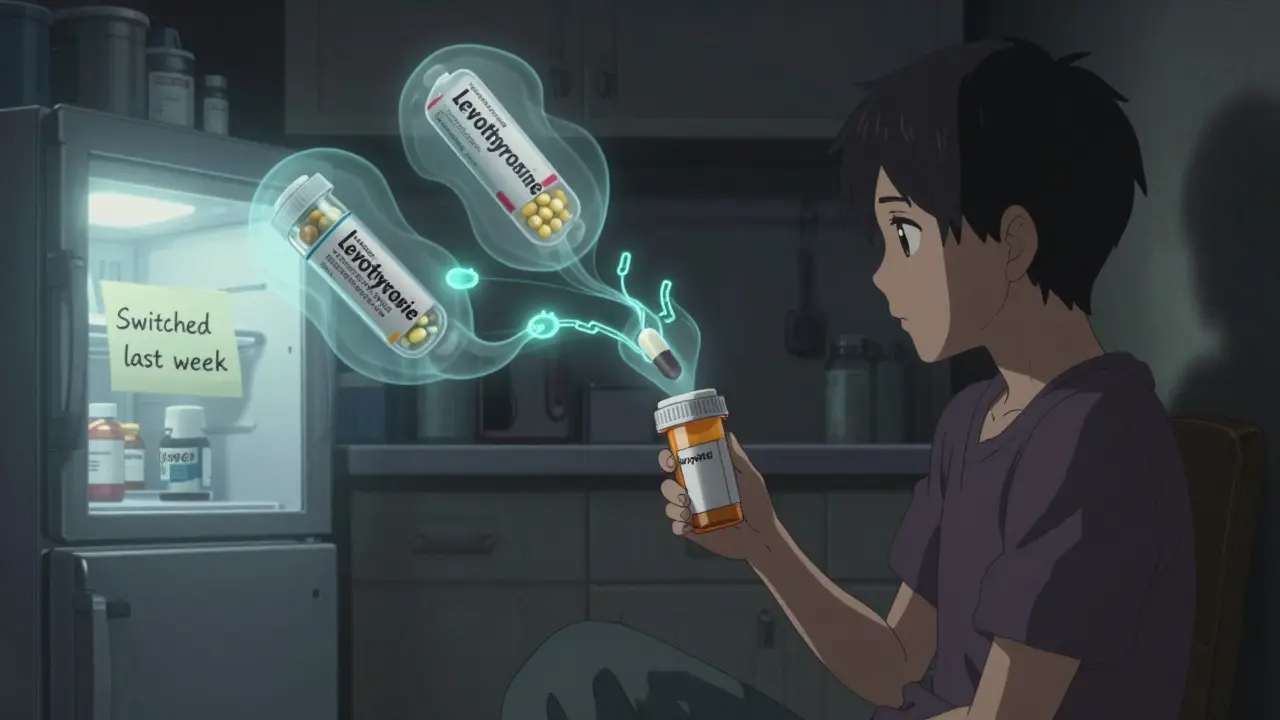
What’s Changing - and What’s Coming
The system is evolving. In 2023, the FDA launched GDUFA III, a new funding plan that includes $15 million specifically for improving generic drug safety monitoring. The agency is also expanding its Sentinel system to include social determinants of health - things like income, zip code, and access to care - to see if safety issues hit certain groups harder. By 2025, the FDA plans to create product-specific surveillance plans for high-risk generics. That means a patch for hormone replacement therapy might get different monitoring than a simple antibiotic pill. One promising innovation? Blockchain. Five major generic companies are testing blockchain tech to track each batch from factory to pharmacy. If a problem arises, they can trace it back to the exact production line - not just the drug name.What You Should Know as a Patient
You don’t need to fear generics. For most people, they’re safe, effective, and save hundreds a year. But be aware:- If you’ve been stable on a generic version and suddenly feel worse after switching - talk to your doctor. It might be a different manufacturer.
- Keep the bottle. Note the manufacturer name. If you have a reaction, you’ll need that info.
- Report side effects. Even if you think it’s “just a headache.” The FDA needs data.
- Don’t assume all generics are the same. For critical meds like thyroid or epilepsy drugs, stick with one brand if it works for you.
Are generic drugs less safe than brand-name drugs?
No - generic drugs are not inherently less safe. They contain the same active ingredient and must meet the same FDA standards for quality, strength, and purity. But because they’re approved without new clinical trials, some safety issues only appear after widespread use. That’s why post-market monitoring is critical - it catches problems that pre-approval studies miss.
Why do some people have different reactions to different generic versions of the same drug?
Generic drugs must be bioequivalent, but they can differ in inactive ingredients - like fillers, dyes, or coatings. For most people, this doesn’t matter. But for those taking narrow therapeutic index drugs (like levothyroxine or warfarin), even small changes in how the drug dissolves or absorbs can affect blood levels. That’s why some patients do better on one manufacturer’s version than another.
How does the FDA decide which generic drugs to monitor more closely?
The FDA uses a risk-based approach. Complex products - like inhalers, injectables, patches, or drug-device combos - get more attention because small formulation changes can impact safety. Drugs with known issues, high usage, or reports of adverse events are also prioritized. In 2022, 40% of safety reviews focused on these high-risk generics.
Can I report a side effect from a generic drug myself?
Yes. You can report side effects directly to the FDA through MedWatch, either online or by phone. You don’t need to be a doctor. If you notice a new symptom after starting or switching a generic drug, your report helps the agency spot patterns. Include the drug name, manufacturer (if known), dosage, and what happened.
Do generic drug manufacturers conduct their own clinical studies after approval?
Unlike brand-name companies, generic manufacturers aren’t required to run new clinical trials after approval. But they must still monitor safety through adverse event reporting, quality control, and compliance with FDA regulations. Some larger companies voluntarily run post-market studies to improve their products - especially for complex generics - but it’s not mandatory.
 Medications
Bobbi-Marie Nova
January 16, 2026 AT 15:19So let me get this straight - we’re trusting our lives to pills made in factories we’ve never heard of, with ingredients we can’t pronounce, and the FDA just hopes nobody dies? 😅 I mean, I get the cost savings, but if my thyroid meds start making me feel like a hummingbird on espresso, I’m blaming the guy who printed ‘Generic’ on the bottle.
Allen Davidson
January 17, 2026 AT 16:39Look, generics aren’t perfect, but they’re not the enemy. The system’s flawed, sure - but shutting them down isn’t the answer. Millions rely on these drugs just to survive. Instead of ranting, we should push for better labeling, mandatory batch tracking, and patient education. We can fix this without panic.
Samyak Shertok
January 18, 2026 AT 14:30Ah yes, the great capitalist illusion: ‘Same active ingredient’ - as if the soul of a medicine resides only in its molecules and not in the hands that mold it, the machines that press it, the water that cleans it, the sweat that packs it. We treat pills like widgets, but the body is not a factory. It’s a temple. And temples don’t care about bioequivalence - they care about harmony. When your levothyroxine makes you shake like a leaf in a hurricane… is that science? Or just capitalism with a prescription pad?
Corey Sawchuk
January 20, 2026 AT 11:09Been on generic metformin for 5 years. Switched brands last year. Got a weird stomach ache for a week. Went back to the old one. Fine. No big deal. I just keep the bottle. Easy fix. No drama.
Nick Cole
January 22, 2026 AT 06:39My aunt had a seizure after switching generic seizure meds. They told her it was stress. Turns out the new batch dissolved too slow. She’s fine now, but it took six months to trace it. This isn’t theoretical. People are getting hurt because we don’t track who made what. End of story.
Riya Katyal
January 22, 2026 AT 07:32Ohhh so now we’re blaming the manufacturers? Funny how no one talks about how these companies cut corners to make $0.02 more profit per pill. And then they wonder why people get sick? Wake up. It’s greed. Always greed.
Henry Ip
January 24, 2026 AT 05:58Good breakdown. The real issue isn’t generics - it’s the lack of transparency. If every bottle had the maker’s name and batch #, we’d catch problems faster. Simple. Why isn’t this already law?
waneta rozwan
January 26, 2026 AT 05:19Ugh. Another ‘trust the system’ lecture. You know what’s funny? The same people who scream ‘Big Pharma bad!’ when brand-name drugs cost $500 a pill are suddenly all ‘Oh but generics are fine!’ when it’s their own meds. Hypocrisy much? The system is rigged. Period.
Nicholas Gabriel
January 27, 2026 AT 18:48Can we please, PLEASE, make manufacturers print the company name on the bottle? Like, right there, next to the drug name? It’s 2024. We have QR codes. We have barcodes. We have apps that tell us what our coffee is made of. Why can’t we know who made the pill that keeps us alive? This isn’t asking for much. It’s asking for basic dignity.
Cheryl Griffith
January 27, 2026 AT 22:11I switched from one generic levothyroxine to another and felt like I’d been hit by a truck for three weeks. My doctor said it was ‘just adjustment.’ I didn’t believe it. I kept the old bottle. Went back to it. Instantly better. I told the pharmacist. She said, ‘We’ve had three others say the same thing.’ If this keeps happening, why aren’t we doing something?
swarnima singh
January 29, 2026 AT 11:19we all know the truth… the system is broken. but who cares? as long as the pills are cheap and the rich people get their fancy brand names, the rest of us just… survive. i dont even know what my meds are made of. i just hope they dont kill me. its sad. but its real.