

Did you know nearly half of all patients misunderstand their prescription instructions? That's not just a statistic-it's a real risk to your health. Special instructions on medication labels aren't extra text. They're critical details that can mean the difference between a safe recovery and a dangerous mistake. These aren't just random notes. They're precise directions designed to keep you safe and make your medicine work properly.
What Special Instructions Really Mean
Special instructions go beyond basic dosage. They're specific directions that ensure the medication works safely and effectively. For example, take with food might seem simple, but it actually means taking the medication during a meal to reduce stomach upset or improve absorption. The FDA regulates these instructions to prevent dangerous mistakes. According to the Agency for Healthcare Research and Quality, medication errors cost the U.S. healthcare system $42 billion annually. Clear special instructions can cut those errors by 38%, making them vital for public health.
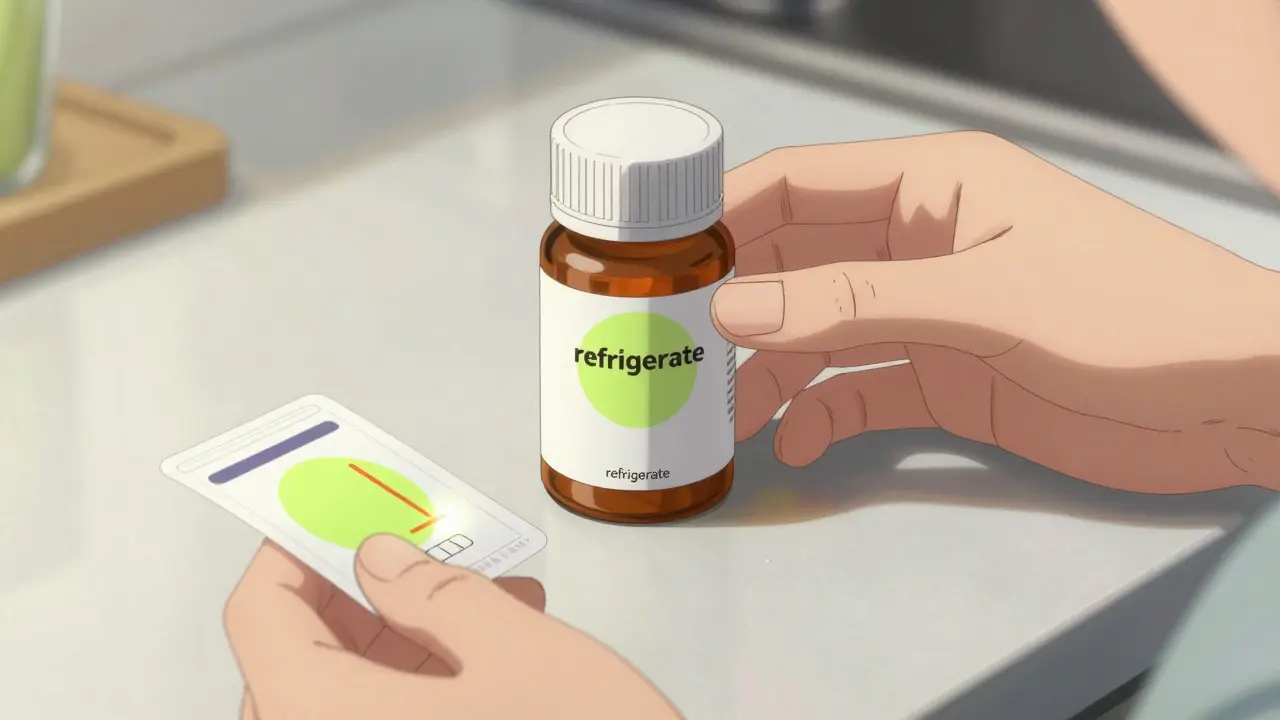
Other common instructions include "avoid sunlight" (for drugs that make skin sensitive), "refrigerate" (to keep medicine stable), or "do not crush" (for pills that must pass through the digestive system intact). These aren't suggestions. They're science-backed requirements for your safety.
Where to Find These Instructions on Your Prescription
Special instructions don't always appear in one place. They can be on three different parts of your prescription:
- Directly on the primary label (32% of cases)
- On a supplemental sticker stuck to the bottle (47% of cases)
- In separate printed materials from the pharmacy (21% of cases)
This means you must check all parts of your prescription package. A 2020 Cleveland Clinic study found patients often miss instructions because they only look at the main bottle label. For example, a diabetes medication might have "take with breakfast" on the bottle, but "do not mix with grapefruit juice" only on a small insert. Always check everything.
Common Misinterpretations and Their Risks
Even clear instructions can be misunderstood. Take "take with food"-41% of patients think it means "with the first bite," 33% believe it means "during the meal," and 26% interpret it as "within 30 minutes of eating." This confusion leads to mistakes. A 2021 Harvard Health study found patients who misinterpret this instruction are 50% more likely to experience stomach issues or reduced drug effectiveness.
Timing instructions are especially tricky. "Take one tablet every 12 hours" sounds simple, but 53% of patients take doses too close together. This can cause dangerous side effects. For antibiotics like amoxicillin, taking doses too close can make the drug less effective and increase antibiotic resistance.
Health literacy plays a huge role. Patients with below-basic health literacy (36% of U.S. adults) misinterpret instructions at a rate of 62%, compared to 28% for those with proficient literacy. Spanish-speaking patients face even higher risks-3.2 times more likely to misunderstand "take with food" instructions than English speakers, according to a 2022 UCSF study.
How to Verify Special Instructions Correctly
The Dana-Farber Cancer Institute recommends a simple 3-step process:
- Identify all special instruction locations: Check the main label, any stickers, and separate inserts.
- Clarify ambiguous terms with your pharmacist. For example, "with food" could mean a full meal or a small snack-ask for specifics.
- Create personalized reminders. Use alarms on your phone or a physical chart to track timing.
This method works. Patients who follow these steps reduce medication errors by 41%, according to a 2019 Johns Hopkins study. Don't guess. Always ask for clarification when unsure.
Tools and Strategies to Stay Safe
Modern tools make following instructions easier. Pill organizers with time compartments reduce timing errors by 47%, per Mayo Clinic research. Medication reminder apps like Medisafe or MyMedSchedule help 62% of users stay on track. These apps send alerts for doses and track refills.
Large-print labels are available at 94% of U.S. pharmacies. If you have vision issues, ask your pharmacist for bigger text. For injectable medications like insulin, the FDA requires concentration-specific instructions like "1mg/1mL" on 89% of vials. Always check these details before use.
For complex regimens, consider using a medication management service. Many pharmacies offer free counseling sessions to explain instructions in plain language. These sessions typically last 7.3 minutes per prescription, though actual counseling often lasts only 2.1 minutes. Be proactive-request extra time if needed.

What's Changing in Medication Labeling
Regulators are improving label clarity. The FDA launched a pilot program in June 2023 testing augmented reality labels. When scanned with a smartphone, these labels show video instructions for complex medications. Early results show 78% of users understood instructions better than with printed text alone.
New regulations are coming. The FDA proposed Rule 2023-0489 in August 2023, which will standardize 12 critical special instructions across all prescription labels by 2026. This includes clear definitions for terms like "with food" and "on empty stomach." The American Medical Association also introduced billing code 99444 in 2023, reimbursing providers $27.63 for 5-minute medication instruction sessions.
Pharmacies are testing AI-driven customization. According to Drug Topics' 2023 survey, 63% of major chains now adjust label language based on patient health literacy levels. This means simpler wording for those who need it, without changing the medical meaning.
When to Ask Your Pharmacist for Help
Your pharmacist is your best resource for understanding special instructions. They're trained to explain complex details in plain language. If you're unsure about anything, don't hesitate to ask. A 2023 American Pharmacists Association report found 89% of positive pharmacy reviews mention "helpful clarification of special instructions" as a key factor in patient satisfaction.
Always bring your medication to the pharmacy for questions. Seeing the actual label helps pharmacists explain specific instructions. For example, if a bottle says "shake well before use," the pharmacist can show you how much to shake and why. They can also identify if instructions conflict with other medications you're taking.
Never skip a dose or change instructions without talking to your pharmacist. Even small changes can cause serious problems. For instance, stopping blood pressure medication suddenly can lead to heart attack or stroke. Your pharmacist will guide you safely through any adjustments.
| Feature | Prescription Labels | OTC 'Drug Facts' Labels |
|---|---|---|
| Average special instructions per label | 3.7 | 1.2 |
| Minimum font size for critical instructions | 10-point | Not specified |
| Medication Guides required | Yes (for 250 drugs) | No |
| Placement of instructions | Primary label (32%), stickers (47%), inserts (21%) | Main label only |
What does 'take with food' really mean?
"Take with food" means taking the medication during a meal, not just before or after. Studies show 41% of patients think it means "with the first bite," but it actually requires eating a full snack or meal. This ensures proper absorption and reduces stomach irritation. For example, antibiotics like doxycycline work best when taken with a light meal. Ask your pharmacist for specifics about your medication.
Where should I look for special instructions on my prescription bottle?
Check three places: the main label on the bottle, any stickers attached to it, and separate printed materials inside the bag. A 2020 Cleveland Clinic study found 47% of special instructions appear on stickers and 21% on inserts. Missing these can lead to dangerous mistakes. For example, a blood thinner might have "avoid grapefruit" only on a sticker, not the main label.
How can I avoid timing mistakes with my medication?
Use a medication reminder app like Medisafe or MyMedSchedule. These apps send alerts for doses and track refills. Pill organizers with time compartments also reduce timing errors by 47%, per Mayo Clinic research. For "every 12 hours" instructions, set alarms 12 hours apart-not "twice a day"-since that can lead to inconsistent dosing. Always confirm exact timing with your pharmacist.
What should I do if I'm unsure about my prescription instructions?
Call your pharmacist immediately. They're trained to explain complex details in plain language. Never guess-incorrect use can cause serious harm. For example, taking a blood pressure medication at the wrong time might lead to dangerously low blood pressure. Pharmacists also check for interactions with other medications you're taking. Most pharmacies offer free counseling sessions; request extra time if needed.
Are there tools to help me remember special instructions?
Yes. Medication reminder apps like Medisafe (used by 62% of patients) send alerts for doses and refills. Pill organizers with time compartments reduce timing errors by 47%. Large-print labels are available at 94% of U.S. pharmacies for vision issues. Some pharmacies also offer free medication management services where pharmacists review your entire regimen. Ask about these options when picking up prescriptions.
 Medications
Ariel Edmisten
February 6, 2026 AT 10:21Always check the sticker-it's where most instructions hide.
Ashley Hutchins
February 7, 2026 AT 18:50People dont read labels properly its why so many errors happen
Lakisha Sarbah
February 9, 2026 AT 06:20Actually its not always the patients fault. Pharmacies should make instructions clearer.
Niel Amstrong Stein
February 9, 2026 AT 07:06It's a system issue, not just the patient. 🤷♂️ We need better labeling. Also, maybe some meds need simpler instructions.
Paula Sa
February 11, 2026 AT 01:18You're right. Collaboration between pharmacists and patients is key. Maybe a simple checklist could help everyone.
Mary Carroll Allen
February 11, 2026 AT 21:21I've seen so many people miss the 'take with food' details! Its crazy how much confusion there is. Always ask your pharmacist to clarify.
Joey Gianvincenzi
February 13, 2026 AT 08:43Your observation is correct. However, the onus is on the pharmaceutical industry to standardize instructions. Patient education alone is insufficient.
Amit Jain
February 13, 2026 AT 09:00Actually, most people read labels just fine. The real issue is overcomplicated prescriptions. Stop blaming patients!
Sarah B
February 14, 2026 AT 03:46Americans should know how to read labels No excuses
Tola Adedipe
February 14, 2026 AT 13:15Agree with the need for responsibility but global standards are needed. Not just US.
Eric Knobelspiesse
February 15, 2026 AT 02:09The real problem is the lack of standardized instructions across all medications. Its a systemic failure.
Heather Burrows
February 16, 2026 AT 13:27Pseudo-philosophical. The real issue is patients not reading. It's simple.
Mayank Dobhal
February 18, 2026 AT 13:25Agree. Standardization is key. Need better labels everywhere.