
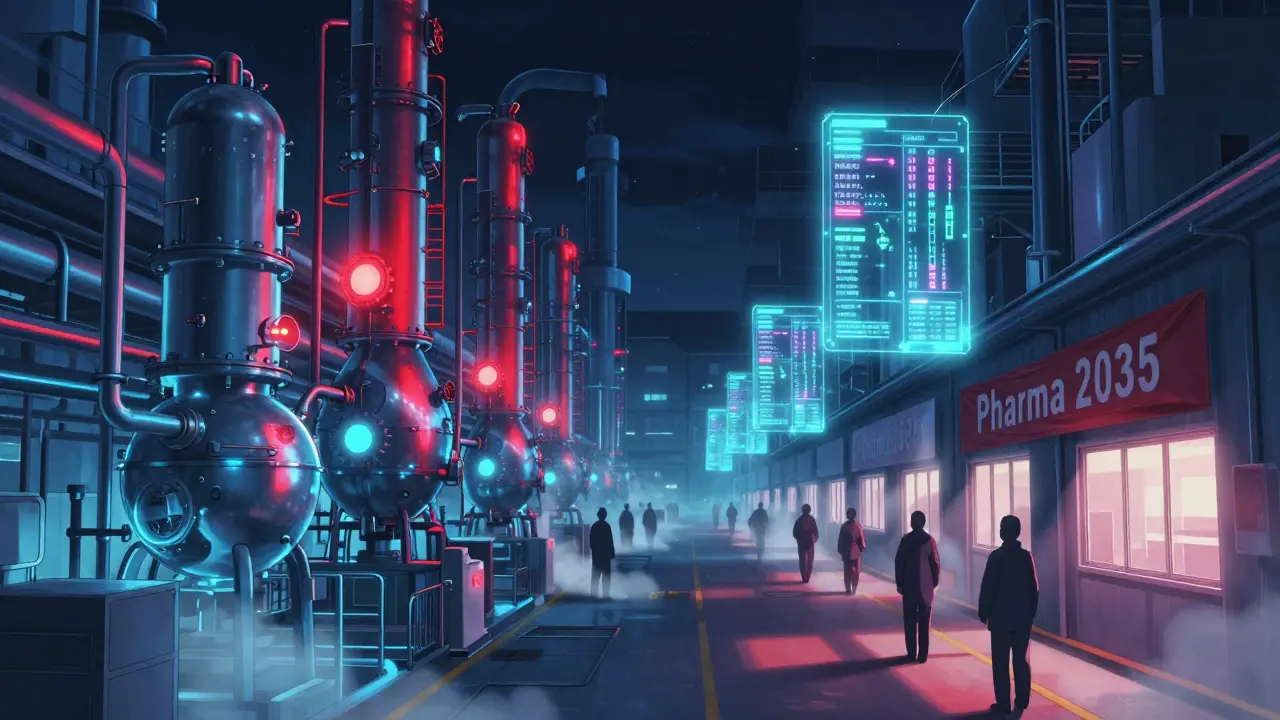
When you take a generic pill for high blood pressure, diabetes, or antibiotics, there’s a better than 70% chance the active ingredient inside came from a factory in China. That’s not speculation-it’s fact. As of 2023, Chinese manufacturers supplied 80% of the world’s active pharmaceutical ingredients (APIs), the raw chemical building blocks of nearly every generic drug sold globally. But behind the low price tag lies a complex, and often troubling, reality: quality control gaps, regulatory blind spots, and supply chain risks that could affect millions of patients.
Why China Dominates Generic Drug Production
China didn’t become the world’s API powerhouse by accident. After joining the World Trade Organization in 2001, the government poured billions into building chemical manufacturing infrastructure. State-backed subsidies, relaxed environmental rules, and aggressive pricing strategies allowed Chinese companies to undercut Western producers by 30-40%. Today, giants like Sinopharm and Shijiazhuang Pharma Group produce 500 to 2,000 metric tons of APIs annually-enough to fill thousands of hospital shelves. The real advantage? Vertical integration. Chinese manufacturers control nearly 70% of the production chain-from raw chemicals to final API-cutting out middlemen and slashing costs. This works brilliantly for simple, high-volume drugs like metformin, amoxicillin, or losartan. But it’s a different story for complex biologics or injectables, where China holds less than 5% of the global market despite spending over $15 billion since 2018 to catch up.The Quality Gap: What the FDA Keeps Finding
Cost efficiency doesn’t always mean quality. The U.S. Food and Drug Administration (FDA) has issued hundreds of warning letters to Chinese API facilities over the past five years. A 2023 analysis of FDA inspection data found that 78% of Chinese plants had inadequate laboratory controls. That means drug samples weren’t properly tested for purity. Another 65% failed to validate their manufacturing processes-meaning they couldn’t prove their method produced the same result every time. And 52% had data integrity issues: records were altered, deleted, or fabricated. The numbers don’t lie. In a 2023 FDA study, 12.7% of API samples from China failed purity tests. Compare that to 2.3% from Europe and 1.8% from the U.S. That’s more than five times the failure rate. One major recall in 2023 involved 1.2 million bottles of blood pressure medication from Zydus Pharmaceuticals. The root cause? Sub-potent API from Huahai Pharmaceutical in China. The drug didn’t contain enough active ingredient to work properly.Manufacturing Methods: Outdated Tech, High Risk
While Western drugmakers have shifted toward continuous manufacturing-where chemicals flow through a closed system like a pipeline-65% of Chinese API production still relies on old-school batch processing. That’s like baking cookies one tray at a time instead of using a conveyor oven. Batch methods are harder to control, more prone to contamination, and generate more waste. They also make it easier to hide problems. If one batch fails, it’s easy to bury the data. And then there’s the chemistry. Chinese factories often handle the most dangerous steps in API synthesis: fluorination, reactions using cyanide or azide compounds, and high-pressure processes that require extreme temperatures. These steps are highly toxic and require advanced safety systems. Many Western and Indian producers stopped doing them years ago-not because they couldn’t, but because the risk wasn’t worth the cost. China stepped in because regulations were looser and labor was cheaper.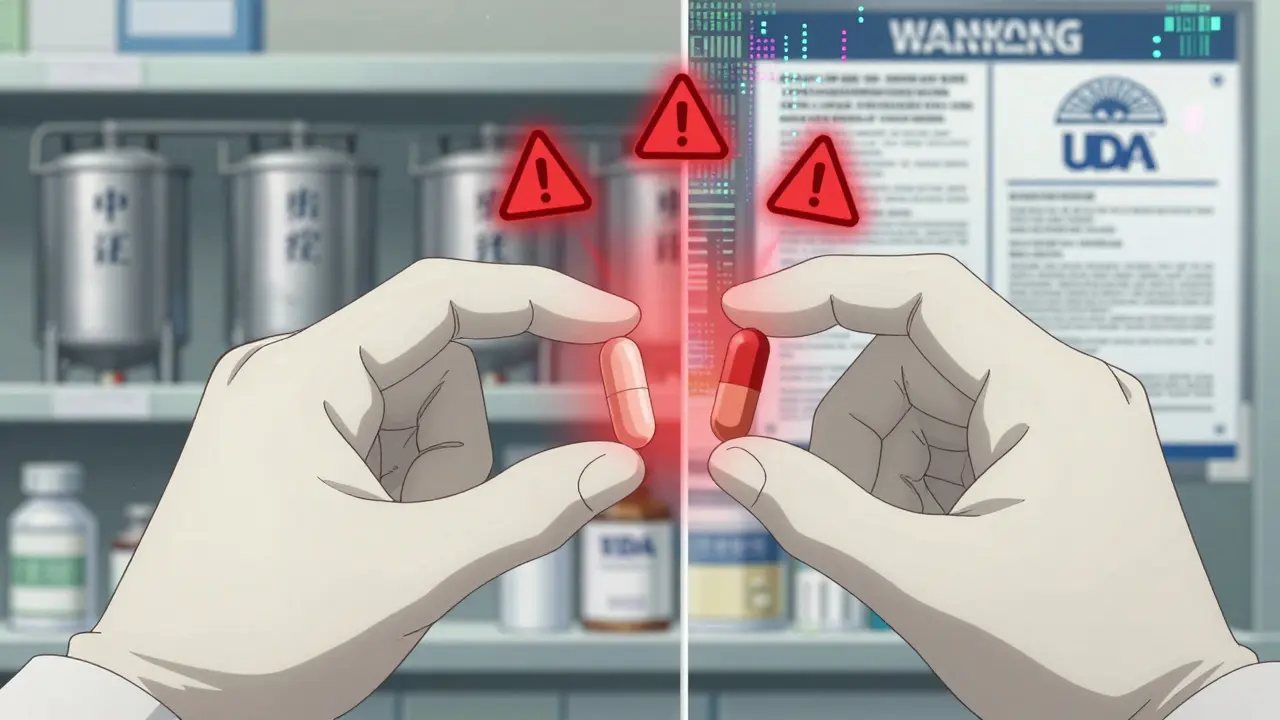
Who’s Buying? And Why?
The U.S. is China’s biggest customer, importing $18.2 billion worth of pharmaceuticals in 2023. But here’s the twist: China doesn’t export finished pills. It exports the raw chemicals. India buys 65% of its APIs from China and turns them into pills, then ships them to the U.S., Europe, and Africa. So when you buy a generic drug labeled “Made in India,” the core ingredient might still be Chinese. Why do companies keep buying? Price. A kilogram of API from China costs $50-$150. The same from Europe or the U.S. runs $200-$400. For companies squeezed by Medicare reimbursement cuts and competitive bidding, the savings are irresistible. A 2024 Gartner survey found Chinese suppliers scored 4.7 out of 5 for pricing and 4.5 for production capacity. But only 3.2 for quality consistency. One procurement manager on Reddit admitted switching to Chinese metformin saved his company $4.2 million a year-even though rejection rates jumped 15%. Another QA specialist reported needing to retest 37% of Chinese-sourced API batches, compared to just 8% from India. That’s extra labor, extra time, extra cost. But it’s still cheaper than paying Western prices.China’s Efforts to Fix the Problem
It’s not all bad news. Since 2016, China’s National Medical Products Administration (NMPA) has run the Generic Consistency Evaluation (GCE) program, requiring generics to prove they work the same as brand-name drugs. As of 2024, only 35% of approved generics have passed it. But the program has already shut down 4,500 non-compliant factories, reducing the number of generic manufacturers from 7,000 to 2,500. China’s 2024 “Pharma 2035” plan promises $22 billion to upgrade technology, adopt continuous manufacturing, and increase FDA-inspected facilities from 187 to 500 by 2027. They’ve also mandated electronic submissions for all new API applications and require 30% of high-volume drugs to use continuous processes by 2026. Dr. Liangping Liu from China’s National Institute for Food and Drug Control claims 95% of GMP-certified plants now follow international guidelines. But experts remain skeptical. Former FDA Commissioner Dr. Margaret Hamburg testified in 2024 that the FDA inspects Chinese facilities at one-tenth the rate of U.S. plants. Why? Access restrictions. China doesn’t always let inspectors in. And even when they do, follow-up inspections are rare.The Bigger Picture: Supply Chain Risk
China’s dominance isn’t just a quality issue-it’s a national security issue. Dr. Andrew von Eschenbach warned in 2023 that China controls the key starting materials for 90% of essential medicines. If trade were disrupted-by war, sanctions, or a pandemic-the U.S. could face shortages of antibiotics, heart meds, or insulin. That’s why the U.S. CHIPS and Science Act now includes $500 million for domestic API production. The EU’s 2024 Pharmaceutical Strategy aims to cut dependency on China from 80% to 40% by 2030. India, Vietnam, and Mexico are investing heavily to fill the gap. McKinsey forecasts China’s API market share will drop from 78% in 2023 to 65% by 2030.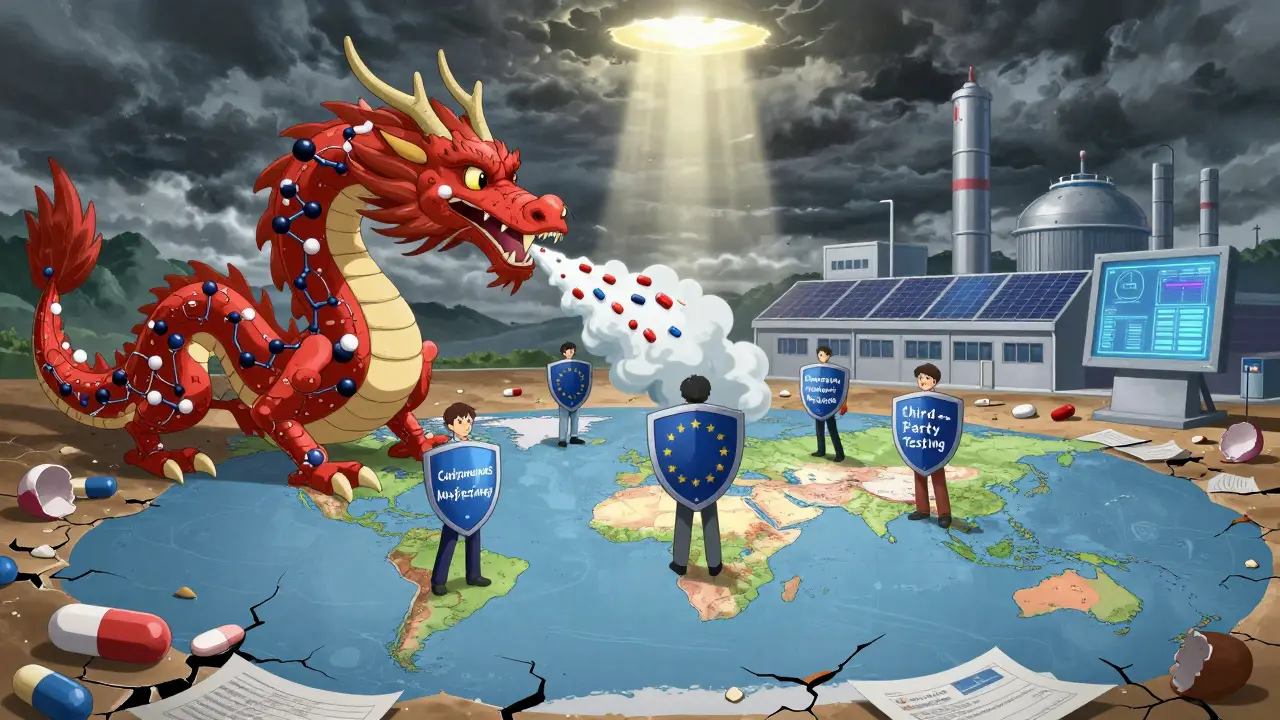
 Medications
Takeysha Turnquest
December 20, 2025 AT 06:20It's not capitalism it's negligence
And we're all complicit
Emily P
December 21, 2025 AT 21:15Alex Curran
December 22, 2025 AT 19:11Western labs document everything even when its pointless
Chinese factories optimize for output not paperwork
Both have tradeoffs
Allison Pannabekcer
December 23, 2025 AT 15:54Imagine if your child needed insulin and the batch was off by 10%
It's not about nationalism its about basic human safety
We can't keep betting lives on price tags
Sarah McQuillan
December 24, 2025 AT 06:35Now we're mad they won?
Wake up we made this bed
And now we're scared to sleep in it
Aboobakar Muhammedali
December 26, 2025 AT 05:11Its not ideal but its real
We test every batch twice
And we still lose 12 every month
Its not China's fault alone its our system
Laura Hamill
December 26, 2025 AT 20:24Look at the timeline
Right after the 2020 pandemic they started flooding us with cheap meds
Its a bioweapon
And the FDA is in on it
They dont inspect because they dont want to find out
They know
They know
Alana Koerts
December 27, 2025 AT 11:45Most are minor impurities
And the US ones have worse documentation
Stop the fearmongering
Gloria Parraz
December 28, 2025 AT 05:39Not to panic but to fix it
Patients deserve better
And so do the workers in those factories
Its not about blame its about building something better
Sahil jassy
December 28, 2025 AT 19:21We are the middleman
Our pills have Chinese DNA
And we dont even label it
Thats not smart thats lazy
Kathryn Featherstone
December 30, 2025 AT 02:09We switched to a Chinese supplier last year
Cost dropped 40
But our rejection rate went from 5 to 22
We lost 3 weeks of inventory
And 2 patients had bad reactions
Its not worth it
Nicole Rutherford
December 31, 2025 AT 13:43China doesn't care if you live or die
They care about GDP
And they're winning
Every time you buy a cheap pill you're funding their military
Wake up
Chris Clark
December 31, 2025 AT 20:33Met a guy who worked in a pharma lab
He said they use the same machines as 20 years ago
But now they have cameras everywhere
They're scared of being caught
So they're changing
Slowly but changing
William Storrs
January 2, 2026 AT 01:37Its not too late
Invest in domestic production
Support ethical suppliers
Demand transparency
Its not about being anti-China its about being pro-safety
Nina Stacey
January 2, 2026 AT 05:58I dont care if its from China or Canada
But I need to know the lab that tested it
And who signed off on it
And if they got paid to look the other way
Its not about patriotism its about trust
And right now I dont trust anything